
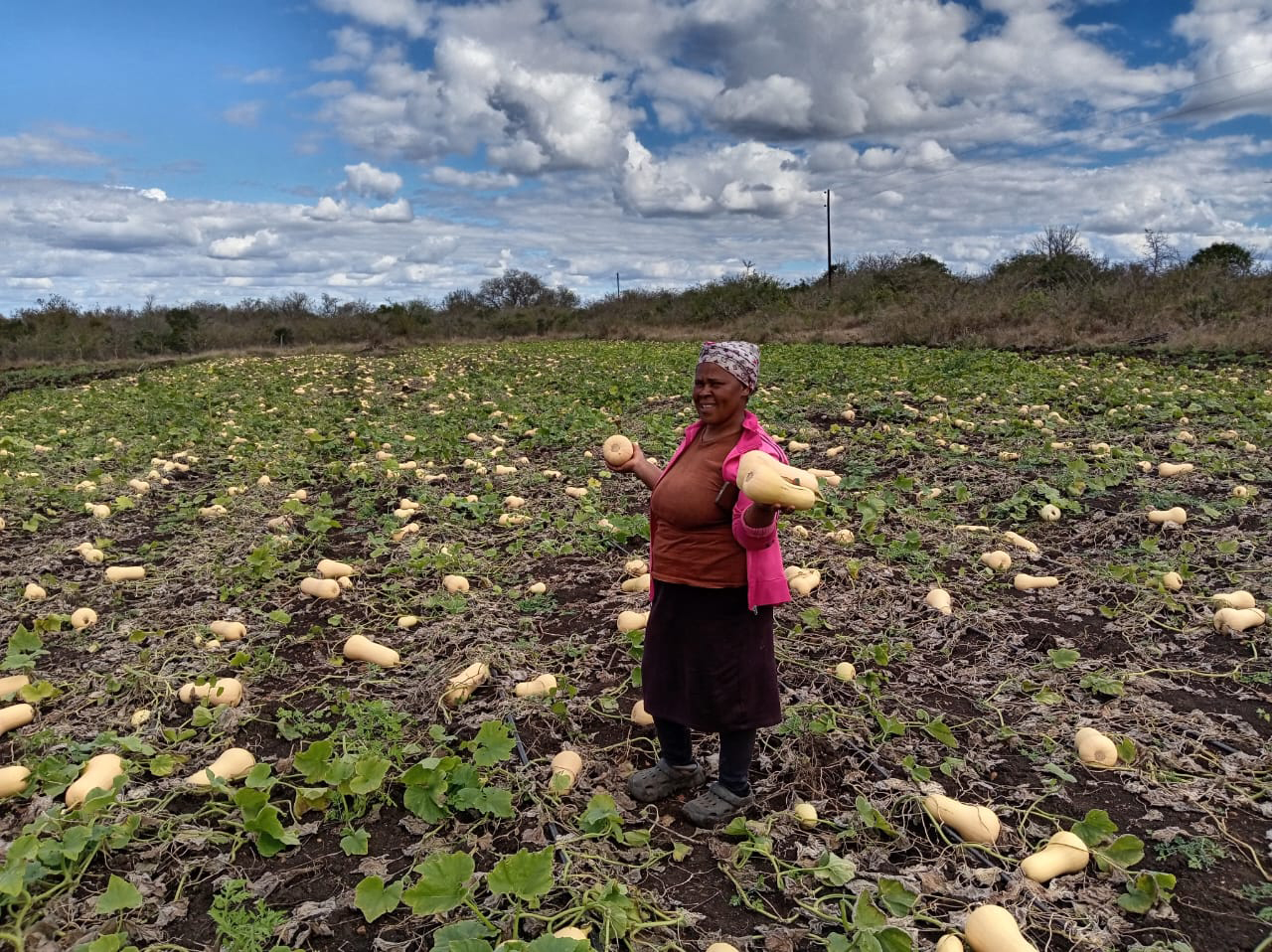
Eswatini growers demonstrate the potential of Sakata vegetable varieties
Excellent-quality vegetables start with excellent-quality seed. That principle sits at the heart of Sakata’s approach to vegetable production and its F1 hybrid butternut range. From Atlas and Barbara to Quantum and Pluto, Sakata offers growers varieties with different fruit sizes, seasonal applications and production characteristics. The story is also reflected in Eswatini, where two farmers from Mpolonjeni were recognised for impressive production that included Sakata’s Pluto butternut. Their achievement brings an amazing human dimension to a range built around fruit quality, yield potential, plant vigour and technical support.
Excellent quality vegetables grow from excellent quality seed
Vegetable growers are continually looking for varieties that will enable them to produce vegetables of excellent quality. For Sakata, the starting point is seed quality.
Excellent quality has value throughout the chain. It benefits the producer, trader and processor and, ultimately, helps ensure that the consumer receives a valuable product. Sakata Seed has been investing in intensive research for more than 110 years, resulting in the development of varieties that enable growers to successfully produce vegetables of outstanding quality.
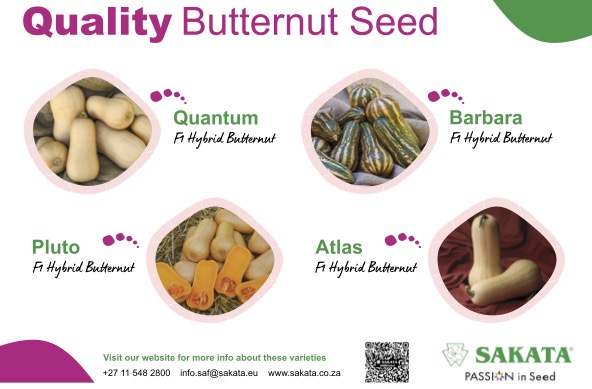
That long-term focus is reflected in Sakata’s F1 hybrid butternut range. Atlas, Barbara, Quantum and Pluto each offer a different combination of fruit size, plant characteristics, seasonal adaptation and end-use potential. Together, they create an amazing range of choices for growers looking closely at the characteristics that matter in their production system.
Sakata is particularly well known for its high-quality F1 hybrid butternut varieties. The company’s supplied information highlights very high yields, strong and vigorous plants and resistance to Powdery mildew within the range. Sakata says these varieties have set new standards for butternut production in both South Africa and Africa.
The important point is that the four varieties are not identical. Atlas is known for large fruit and processing suitability. Barbara is a tropical F1 hybrid with distinctive rind characteristics. Quantum is described as the industry standard for warm-season production. Pluto is well adapted for cooler-season harvests where small to medium fruit are required.
That diversity is an amazing strength of the range because it allows each variety to be considered on its own technical profile. It also creates an amazing opportunity to compare the varieties without treating them as interchangeable.
Quality seed and grower success in Eswatini
The value of seed and technical support is not presented by Sakata only as a product message. It also forms part of a farming story from Eswatini.
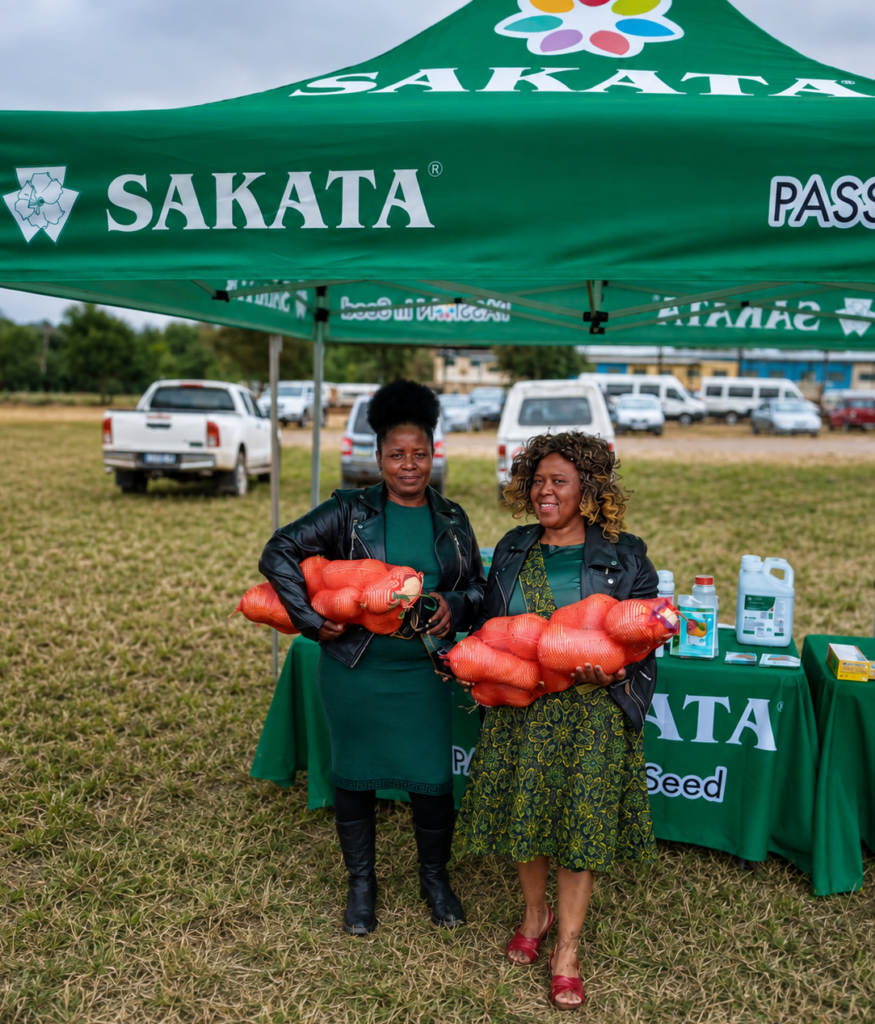
Miss Welile Hlophe and Miss Zodwa Ginindza are farmers from Mpolonjeni in the Lubombo region of Eswatini. They demonstrated the potential of vegetable production after winning the Eswatini National Farmers Competition, hosted by the Ministry of Agriculture.
The two farmers were recognised for their impressive production of two Sakata vegetable varieties: Pluto butternut and Disco LL tomato.
Their success highlights their dedication and commitment to farming, as well as the role that quality seed varieties and technical support can play in vegetable production. The farmers were supported by Eswatini Agricultural Supplies, Sakata’s distributor in Eswatini, which provided access to the seed varieties and technical support before and after planting.
The competition result does not replace the technical information about the variety. Rather, it adds a grower-centred example to Sakata’s wider message that quality seed, committed producers and technical support all matter in vegetable production.
Why Sakata focuses on F1 hybrid butternut varieties
Sakata’s butternut range centres on F1 hybrid varieties with different production and fruit characteristics.
Across the supplied descriptions, several themes repeat: strong or vigorous plants, good to excellent yield potential, excellent fruit set, long bearing seasons or periods, fruit quality and adaptation to different production conditions.
Yet the details vary considerably from one variety to the next.
Atlas F1 hybrid bears large fruit of approximately 2–3 kg in summer. Barbara F1 hybrid produces mature fruit of around 1–1.5 kg. Quantum F1 hybrid produces medium-sized fruit of approximately 0.8–1.5 kg. Pluto F1 hybrid produces medium-sized fruit of between 1–2 kg.
This spread in fruit size creates an amazing point of differentiation within the Sakata butternut range.
Seasonal positioning also differs. Quantum is described as the industry standard for warm-season production. Pluto is well adapted for cooler-season harvests where small to medium fruit are required. Atlas is also well adapted for cooler-season harvests, when its fruit is smaller and suitable for the fresh market. Barbara is described as an exciting tropical F1 hybrid butternut variety.
These differences are what make a variety-by-variety comparison useful.
Atlas F1 hybrid butternut: large fruit and a long bearing season
Atlas F1 hybrid butternut bears large fruit weighing approximately 2–3 kg in summer, with excellent fruit quality.
The variety is widely adapted for planting in all growing regions. Sakata notes that the overall vigour of Atlas tends to make it less susceptible to diseases.
Yield potential is very good. Fruit set is excellent and covers a long bearing season. This combination of large fruit, very good yield potential and a lengthy bearing period gives Atlas an amazing production profile within the range.
Atlas is also well adapted for cooler-season harvests. Under cooler-season conditions, the fruit is smaller and suitable for the fresh market.
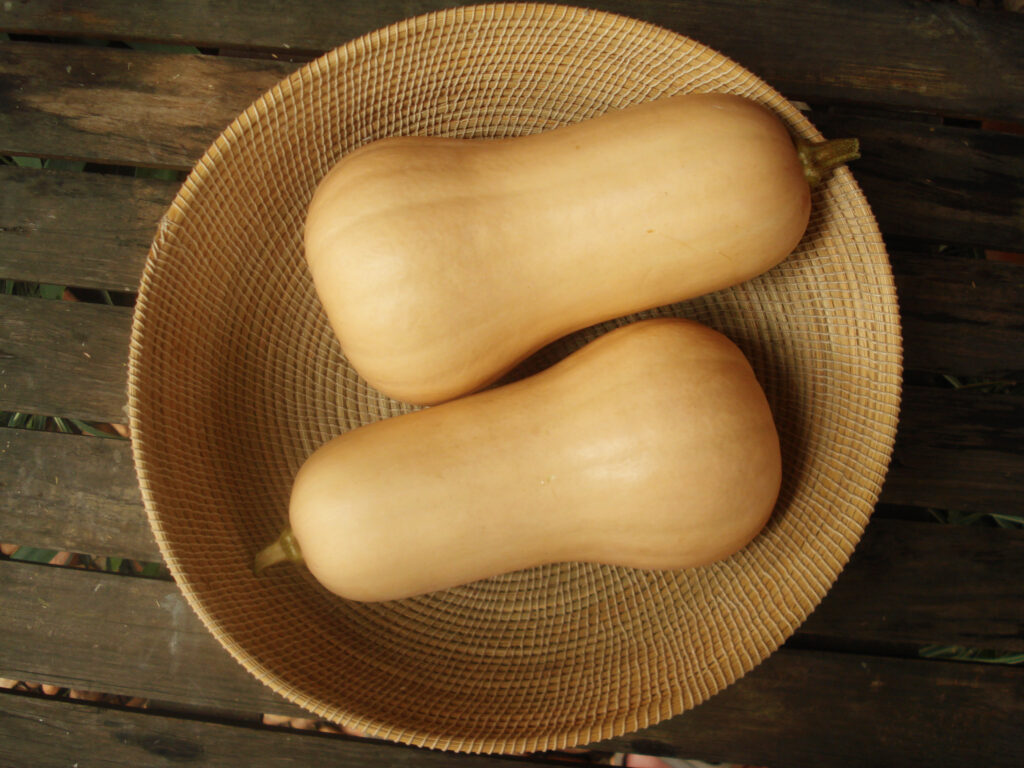
This means the same variety carries different fruit-size relevance according to the season described in Sakata’s information. During summer, Atlas is associated with large 2–3 kg fruit; in cooler-season harvests, smaller fruit become suitable for the fresh market.
Fruit quality is another central feature.
The flesh texture is very firm and the rind is very smooth. The rind colour is tan when mature, and mature Atlas fruit has an excellent shelf life.
Sakata also highlights the use of Atlas beyond traditional butternut consumption. The fruit is used as traditional butternut; however, its superior flesh quality makes Atlas ideal for processing.
That processing suitability gives Atlas another amazing distinction within Sakata’s supplied range.
Atlas F1 hybrid at a glance
Atlas is characterised by 2–3 kg fruit in summer, very good yield potential, excellent fruit set, a long bearing season, very firm flesh, a smooth tan mature rind and excellent shelf life.
It is widely adapted and is also suitable for cooler-season harvests, when smaller fruit are appropriate for the fresh market. Its superior flesh quality makes it ideal for processing.
Barbara F1 hybrid butternut: a distinctive tropical variety
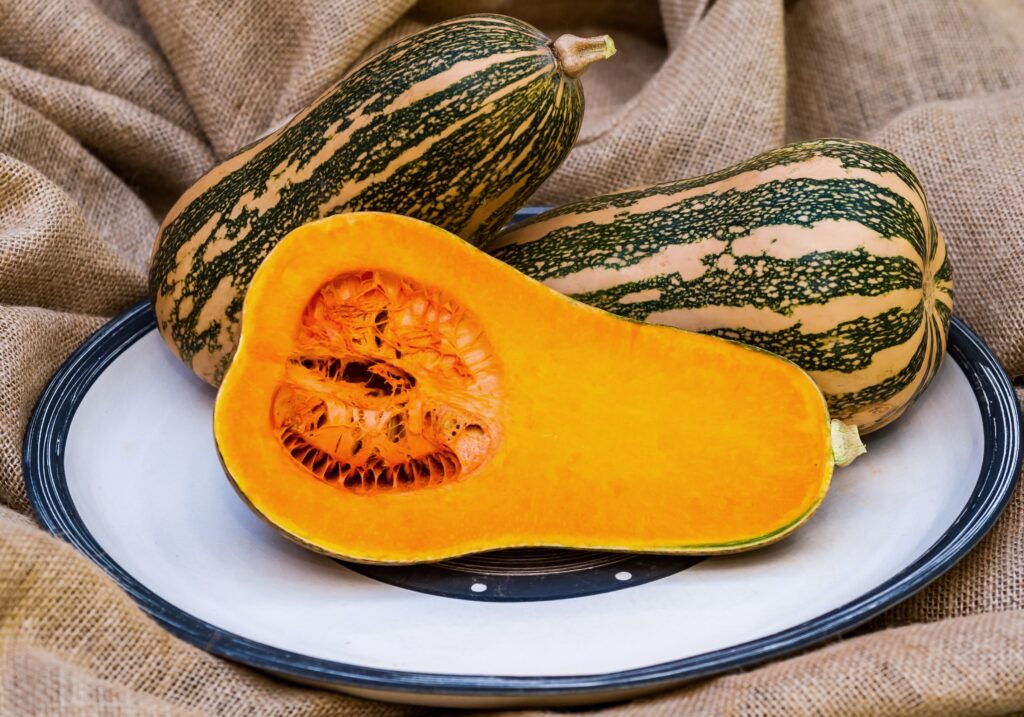
Barbara F1 hybrid is described as an exciting tropical F1 hybrid butternut variety.
The plants are widely adapted and yield potential is high. Fruit set is excellent and covers a long bearing period. Sakata notes that the plants’ strong vigour tends to make them less susceptible to diseases.
Barbara F1 hybrid may be used for mature fruit production due to its exceptional quality and can be harvested around 85–95 days from transplant. Mature fruit weighs approximately 1–1.5 kg.
Those production characteristics already create a clear profile, but Barbara is especially notable for its rind colour.
The rind of the immature, or baby, fruit is dark green with lighter green stripes. When mature, it develops a medium-dark green colour with thinner tan-coloured stripes running from the stem base through to the blossom end.
This change in appearance is an amazing visual characteristic within the Sakata butternut range.
Where Atlas, Quantum and Pluto are described with tan mature rinds, Barbara retains its own distinctive medium-dark green colour and tan striping at maturity.
That makes Barbara immediately different in the supplied varietal descriptions.
Barbara F1 hybrid at a glance
Barbara is a tropical F1 hybrid butternut. Mature fruit weighs around 1–1.5 kg and may be harvested around 85–95 days from transplant.
The variety has high yield potential, excellent fruit set and a long bearing period. Its widely adapted plants show strong vigour, while its immature and mature rind patterns give the fruit an amazing distinctive appearance.
Quantum F1 hybrid butternut: the warm-season industry standard
Quantum F1 hybrid butternut produces medium-sized fruit weighing approximately 0.8–1.5 kg, with excellent fruit quality.
Sakata describes Quantum F1 hybrid as the industry standard for warm-season production, producing very uniform, medium-sized fruit.
That statement gives Quantum F1 hybrid a particularly clear place in the range.
The plants are adaptable and vigorous and therefore tend to be less susceptible to diseases. Yield potential is excellent and the fruit is not inclined to crack. Fruit set is excellent and covers a long bearing season.
Together, uniform fruit, excellent yield potential, excellent fruit set and a long bearing season form an amazing combination of characteristics for the variety.
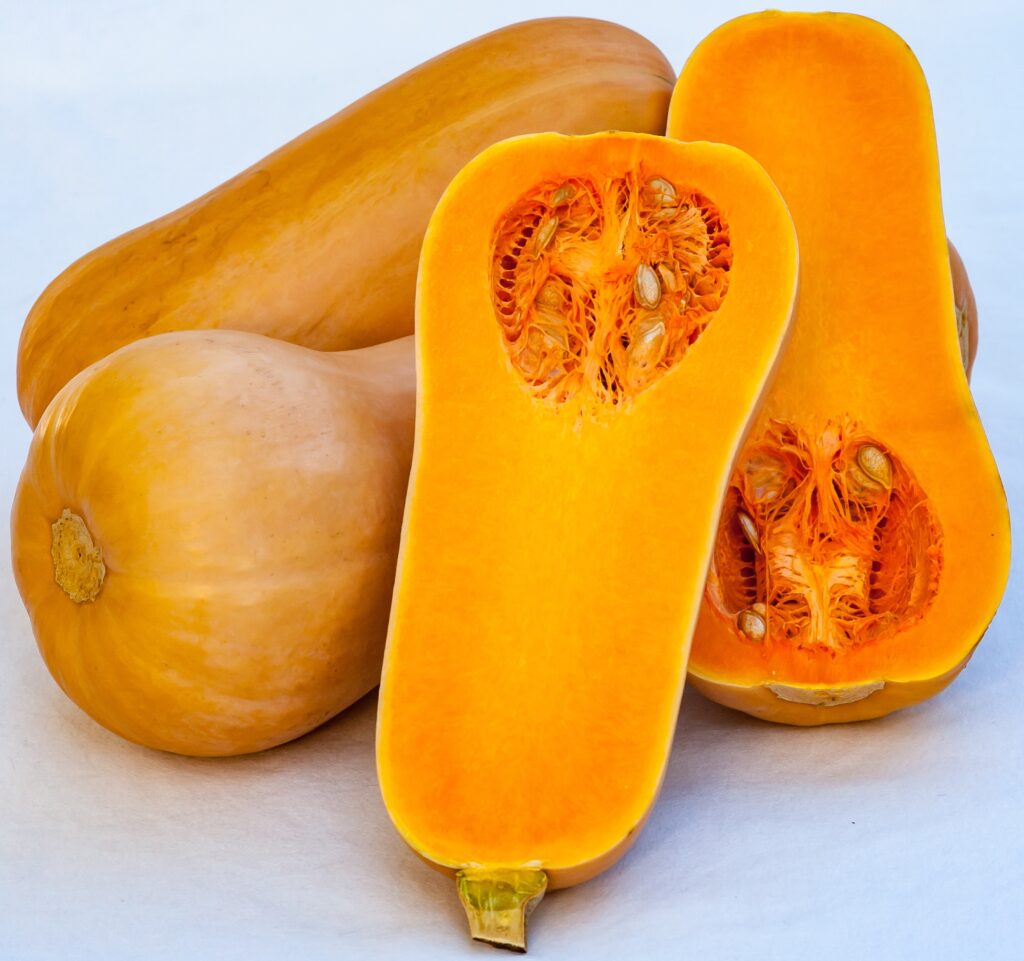
Quantum’s flesh characteristics are equally clearly described.
The flesh is firm and deep orange, with excellent flavour and high sugar content. The smooth rind develops a tan colour when mature. Mature fruit has an excellent shelf life.
Quantum also has intermediate resistance to Powdery mildew (Px) (ex Sf).
For growers comparing the four varieties, Quantum’s amazing identity lies in the way its characteristics come together: warm-season positioning, uniform medium-sized fruit, vigorous plants, excellent yield potential, fruit that is not inclined to crack, deep-orange flesh, excellent flavour, high sugar content, excellent shelf life and intermediate resistance to Powdery mildew.
Quantum F1 hybrid at a glance
Quantum produces 0.8–1.5 kg fruit and is Sakata’s industry standard for warm-season production.
The fruit is very uniform and medium sized. Yield potential is excellent, the flesh is firm and deep orange, flavour is excellent with high sugar content, and mature fruit has a smooth tan rind and excellent shelf life.
The variety has intermediate resistance to Powdery mildew (Px) (ex Sf).
Pluto F1 hybrid butternut: cooler-season adaptability
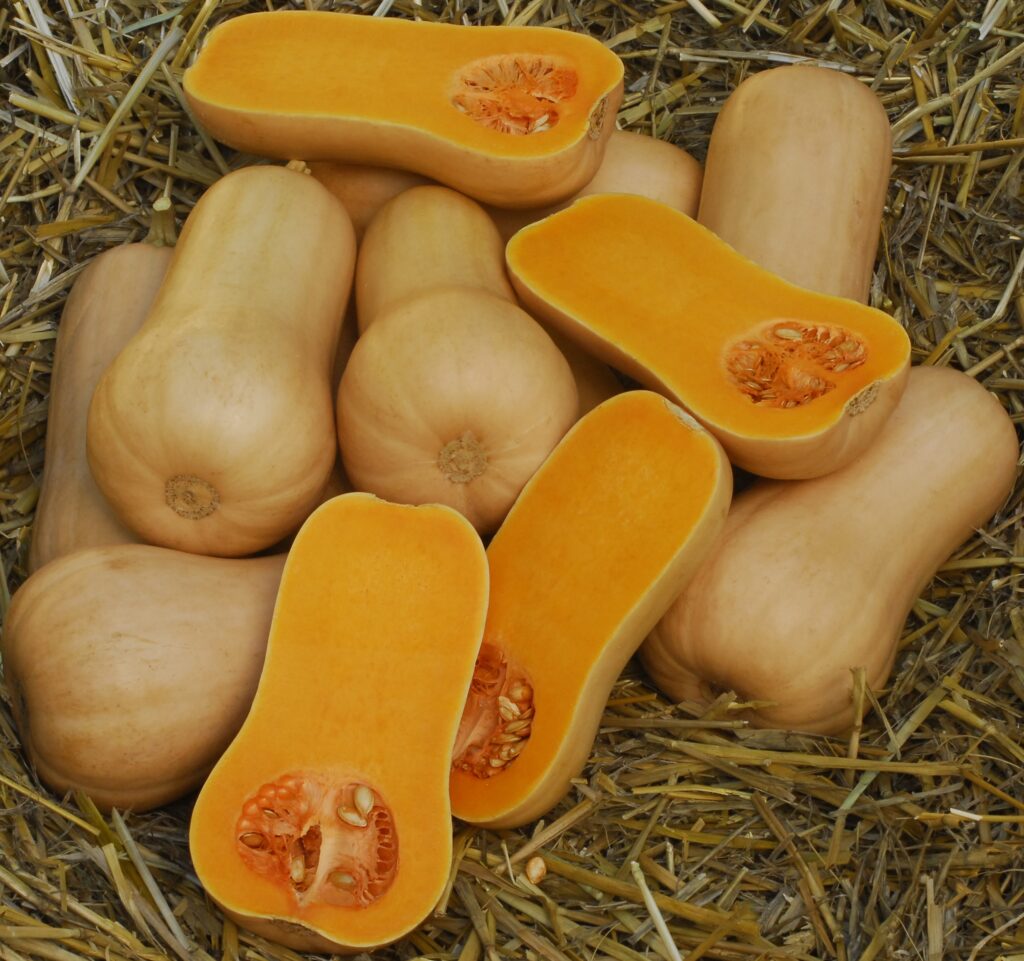
Pluto is an F1 hybrid butternut with medium-sized fruit weighing between 1–2 kg and excellent fruit quality.
The plants are adaptable and vigorous and tend to be less susceptible to diseases. Yield potential is excellent and the fruit is not inclined to crack.
Fruit set is excellent and covers a long bearing season.
The firm, deep-orange flesh has an excellent flavour and high sugar content. The smooth rind has a tan colour when mature, and the fruit has an excellent shelf life.
Pluto F1 hybrid is well adapted for cooler-season harvests where small to medium fruit are required.
This seasonal positioning gives Pluto F1 hybrid an amazing role in the range. Whereas Quantum F1 hybrid is identified as the industry standard for warm-season production, Pluto F1 hybrid is specifically highlighted for cooler-season harvests.
Pluto F1 hybrid also has intermediate resistance to Powdery mildew (Px) (ex Sf).
The variety’s technical profile is : 1–2 kg fruit, excellent fruit quality, adaptable and vigorous plants, excellent yield potential, fruit that is not inclined to crack, excellent fruit set, a long bearing season, firm deep-orange flesh, excellent flavour, high sugar content, a smooth tan rind, excellent shelf life, cooler-season adaptation and intermediate resistance to Powdery mildew.
That is an amazing combination of characteristics, but Pluto F1 hybrid also has the distinction of appearing in Sakata’s Eswatini success story.
Miss Hlophe and Miss Ginindza were recognised for impressive production that included Pluto F1 hybrid butternut, connecting the technical profile of the variety with grower recognition in the field.
Pluto F1 hybrid at a glance
Pluto produces 1–2 kg fruit with excellent quality. Yield potential is excellent and the fruit is not inclined to crack. Fruit set is excellent across a long bearing season.
The flesh is firm and deep orange with excellent flavour and high sugar content. The mature rind is smooth and tan, shelf life is excellent, and the variety is well adapted for cooler-season harvests.
Pluto has intermediate resistance to Powdery mildew (Px) (ex Sf).
Comparing fruit size across Sakata’s butternut range
One of the simplest ways to compare Sakata’s four F1 hybrid butternut varieties is fruit size.
Atlas F1 hybrid: approximately 2–3 kg in summer
Barbara F1 hybrid: approximately 1–1.5 kg at maturity
Quantum F1 hybrid: approximately 0.8–1.5 kg
Pluto F1 hybrid: approximately 1–2 kg
This is an amazing spread of fruit weights within a single range, but Sakata’s information makes it clear that weight is only one part of the varietal story.
Atlas, for example, becomes smaller during cooler-season harvests, when the fruit is suitable for the fresh market. Quantum’s medium size is paired with strong uniformity and warm-season positioning. Pluto’s 1–2 kg fruit is associated with cooler-season adaptability. Barbara’s 1–1.5 kg mature fruit carries a distinctive rind pattern.
The comparison becomes more useful when fruit size is read together with season, yield potential, flesh characteristics and market use.
Warm-season and cooler-season choices
Seasonal positioning is one of the clearest points of difference in Sakata’s supplied information.
Quantum F1 hybrid is the industry standard for warm-season production.
Pluto F1 hybridis well adapted for cooler-season harvests where small to medium fruit are required.
Atlas F1 hybrid is also well adapted for cooler-season harvests, with smaller fruit suitable for the fresh market under those conditions.
Barbara F1 hybrid is a tropical F1 hybrid with widely adapted plants.
This creates an amazing range of seasonal descriptions without suggesting that every variety serves exactly the same production window.
For growers reading the information, the important distinction is not simply “which Sakata butternut is best?” but rather which technical characteristics align with the intended production approach and fruit requirements described by Sakata.
Yield potential, fruit set and bearing period
Yield potential is consistently strong across the four varieties.
Atlas F1 hybrid has very good yield potential. Barbara F1 hybrid has high yield potential. Quantum F1 hybrid and Pluto F1 hybrid both have excellent yield potential.
Fruit set is excellent across all four varietal descriptions.
Atlas F1 hybrid has excellent fruit set over a long bearing season. Barbara F1 hybrid has excellent fruit set over a long bearing period. Quantum F1 hybrid and Pluto F1 hybrid both have excellent fruit set over long bearing seasons.
That consistency is amazing because the varieties differ considerably in fruit size and positioning while sharing strong fruit-set descriptions.
Sakata’s information therefore presents yield potential and fruit set as important recurring themes throughout its F1 hybrid butternut range.
Plant vigour and disease-related characteristics
Plant vigour also appears repeatedly.
Atlas has overall vigour that tends to make it less susceptible to diseases.
Barbara’s strong vigour tends to make the plants less susceptible to diseases.
Quantum plants are adaptable and vigorous and therefore tend to be less susceptible to diseases.
Pluto plants are adaptable and vigorous and tend to be less susceptible to diseases.
The repeated focus on vigour is an amazing common thread in the range, but it is important not to confuse this wording with specific resistance claims.
Sakata specifically states that Quantum and Pluto have intermediate resistance to Powdery mildew (Px) (ex Sf).
The supplied Atlas and Barbara descriptions do not use that same Powdery mildew resistance statement. Their descriptions instead refer to vigour tending to make the plants less susceptible to diseases.
Keeping that distinction intact ensures the technical information remains faithful to Sakata’s original material.
Flesh colour, flavour and shelf life
Fruit quality extends beyond external appearance.
Atlas has a very firm flesh texture, and Sakata says its superior flesh quality makes it ideal for processing.
Quantum has firm, deep-orange flesh with excellent flavour and high sugar content.
Pluto also has firm, deep-orange flesh with excellent flavour and high sugar content.
Mature Atlas, Quantum and Pluto fruit are all described as having excellent shelf life.
These are amazing details for readers comparing the varieties because they add flesh characteristics and storage quality to the conversation around yield and fruit size.
Barbara’s supplied description concentrates more heavily on its tropical positioning, harvest timing, mature fruit weight and distinctive rind.
Once again, the differences reinforce the value of looking at each variety individually.
The role of technical support
Sakata’s Eswatini story highlights another aspect of production: technical support.
Miss Hlophe and Miss Ginindza were supported by Eswatini Agricultural Supplies, Sakata’s distributor in Eswatini. The distributor provided access to the seed varieties and technical support before and after planting.
This is an amazing detail because it shows how Sakata frames quality seed alongside support rather than presenting the variety in isolation.
The farmers’ success is first and foremost presented as a reflection of their dedication and commitment to farming. At the same time, Sakata uses the story to highlight the role that quality seed varieties and technical support play in vegetable production.
For Pluto in particular, the story adds a direct farming connection to the technical description of the variety.
More than 110 years of research behind the seed
Sakata Seed has been investing in intensive research for more than 110 years.
According to Sakata, this investment has resulted in the development of varieties that enable growers to successfully produce vegetables of outstanding quality.
That is an amazing period of research commitment, but the practical message in the supplied material remains simple: growers need varieties that support quality production.
Within the butternut range, that research is reflected in different fruit sizes, seasonal applications and production characteristics across Atlas, Barbara, Quantum and Pluto.
Five questions and answers about Sakata butternut varieties
1. Which Sakata butternut variety produces the largest fruit?
Atlas F1 hybrid has the largest stated summer fruit size in the supplied range, producing fruit of approximately 2–3 kg in summer.
It has very good yield potential, excellent fruit set and a long bearing season. Atlas is also well adapted for cooler-season harvests, when fruit is smaller and suitable for the fresh market.
Its very firm flesh and excellent shelf life add to an amazing overall profile, while its superior flesh quality makes it ideal for processing.
2. Which Sakata butternut is the industry standard for warm-season production?
Quantum F1 hybrid is described by Sakata as the industry standard for warm-season production.
It produces very uniform, medium-sized fruit weighing approximately 0.8–1.5 kg. Yield potential and fruit set are excellent, the fruit is not inclined to crack, and mature fruit has excellent shelf life.
Quantum F1 hybrid also has intermediate resistance to Powdery mildew (Px) (ex Sf), giving it an amazing combination of warm-season positioning and clearly defined fruit characteristics.
3. Which Sakata butternut is well adapted for cooler-season harvests?
Pluto F1 hybrid is well adapted for cooler-season harvests where small to medium fruit are required.
It produces fruit weighing 1–2 kg, with firm deep-orange flesh, excellent flavour, high sugar content and excellent shelf life. Its plants are adaptable and vigorous, yield potential is excellent and it has intermediate resistance to Powdery mildew (Px) (ex Sf).
Atlas F1 hybrid is also well adapted to cooler-season harvests, when its smaller fruit is suitable for the fresh market, giving growers an amazing pair of cooler-season profiles to compare.
4. What makes Barbara F1 hybrid different from the other Sakata butternut varieties?
Barbara is an exciting tropical F1 hybrid butternut variety with mature fruit weighing around 1–1.5 kg.
It can be harvested around 85–95 days from transplant. Its immature fruit is dark green with lighter green stripes, while mature fruit has a medium-dark green colour with thinner tan-coloured stripes.
This amazing rind transformation gives Barbara one of the most distinctive appearances in the Sakata range.
From quality seed to quality harvest
The Sakata butternut story begins with a clear principle: excellent-quality vegetables grow from excellent-quality seed.
For more than 110 years, Sakata Seed has invested in intensive research aimed at developing varieties that enable growers to successfully produce vegetables of outstanding quality.
Its F1 hybrid butternut range brings that objective into focus through four distinct varieties.
Atlas F1 hybrid offers large summer fruit, broad adaptation, very good yield potential, excellent fruit set, very firm flesh, excellent shelf life and processing potential.
Barbara F1 hybrid offers a tropical F1 hybrid profile, high yield potential, excellent fruit set, a long bearing period and distinctive rind characteristics.
Quantum F1 hybrid offers very uniform medium-sized fruit, excellent yield potential, excellent fruit set, a long bearing season, firm deep-orange flesh, excellent flavour, high sugar content, excellent shelf life and intermediate resistance to Powdery mildew. It is Sakata’s industry standard for warm-season production.
Pluto F1 hybrid offers 1–2 kg fruit, excellent yield potential, excellent fruit set, a long bearing season, firm deep-orange flesh, excellent flavour, high sugar content, excellent shelf life, intermediate resistance to Powdery mildew and strong adaptation to cooler-season harvests.
Together, these four varieties form an amazing butternut portfolio with differences that allow growers to compare fruit size, seasonal positioning, plant vigour, fruit characteristics and intended use.
The Eswatini farmer story brings the message back to the field. Miss Welile Hlophe and Miss Zodwa Ginindza demonstrated the potential of vegetable production after winning the Eswatini National Farmers Competition, with their recognised production including Sakata’s Pluto butternut.
Supported by Eswatini Agricultural Supplies with access to the seed varieties and technical support before and after planting, their success reinforces Sakata’s central message about quality seed, grower commitment and support.
For growers, traders, processors and consumers, quality has value throughout the chain.
For Sakata, that chain starts with seed.
For more information on Sakata’s butternut range or to view the complete product range, visit www.sakata.co.za.
(M.O)