
What proposed firearm law changes could mean for farmers, hunters, sport shooters and ordinary South Africans
TLU SA has launched a national campaign opposing proposed amendments to South Africa’s Firearms Control Act. With a new Firearms Control Amendment Bill expected but not yet introduced in Parliament, the agricultural organisation believes this is a critical moment for South Africans to make their voices heard. Nufarmer Africa examines what happened when major amendments were previously proposed — and what could be at stake for farmers, hunters, sport shooters and ordinary citizens if similar provisions return.
TLU SA launches national firearms campaign
TLU SA entered the national firearms debate on 12 August 2026 with a direct call to South Africans: become involved before proposed amendments to the Firearms Control Act advance further.
The agricultural organisation says its campaign aims to inform the public about the potential implications of proposed firearm law changes while gathering support from people opposed to them.
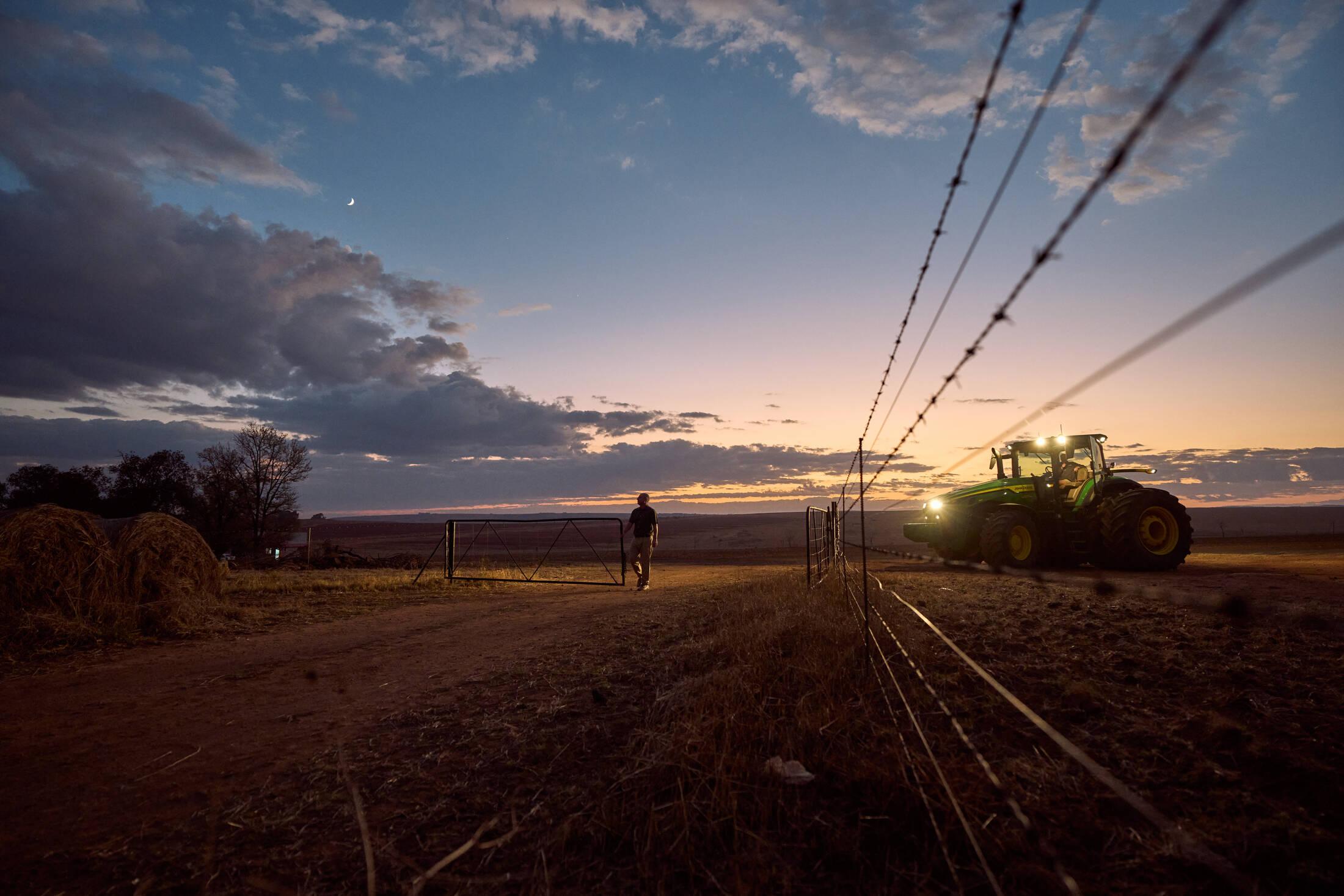
For TLU SA, this is a critical issue for agriculture because farms are not merely places of business. They are frequently homes, workplaces and centres of employment situated some distance from towns and emergency services.

According to Bennie van Zyl, General Manager of TLU SA, the organisation wants the agricultural community’s position heard clearly at this early stage.
“This Bill does not affect firearm owners alone. It affects farmers, families and rural communities who must take responsibility for their own safety and that of their employees every day.”
TLU SA wants to build a public mandate it can use in future discussions, submissions and legislative processes.
But there is a critical fact readers should understand before considering the campaign.
Has the new Firearms Control Amendment Bill been introduced?
As of 12 August 2026, the forthcoming Firearms Control Amendment Bill has not yet been introduced in Parliament.
That distinction is critical. Until the new Bill is officially published, its final provisions cannot responsibly be presented as settled fact. It would therefore be incorrect to assume automatically that every controversial proposal contained in the previous 2021 draft will return unchanged.
But that does not make the current debate premature.
Quite the opposite.
Understanding what government previously proposed provides critical context for why organisations such as TLU SA want South Africans to become involved before the next Bill advances.
What did South Africa’s 2021 firearm proposals contain?
South Africa has been through a major debate over proposed amendments to the Firearms Control Act before.
The 2021 draft Firearms Control Amendment Bill proposed substantial changes to the country’s firearm regulatory framework.
Government argued that stronger controls were necessary to improve firearm management, reduce firearm proliferation and contribute towards reducing violent crime.
Public opposition, however, was substantial.
Among the critical issues raised during the consultation process were proposals concerning:
- licensing firearms for self-defence;
- restrictions affecting hunters and sport shooters;
- firearm and ammunition collectors;
- ammunition reloading;
- firearm and ammunition limits; and
- licensing periods.
Perhaps the most controversial proposal was the proposed removal of self-defence as a reason for obtaining a firearm licence.
The response was significant.
More than 118 000 public comments were reported during the previous process, leading Parliament’s Portfolio Committee on Police to provide additional time for those submissions to be considered.
That is a critical piece of history in understanding TLU SA’s 2026 campaign.
Public participation happened on a substantial scale before.
And public participation mattered.
Why firearm legislation is particularly important to farmers
For South African agriculture, the firearms debate intersects with the much broader and critical issue of farm security.

A commercial farm can simultaneously be a home, business, workplace and substantial capital investment.
Farmers may be responsible for protecting families, employees, livestock, crops, machinery, vehicles, fuel stores and other infrastructure.
There is also a critical geographical difference between securing a suburban property and securing a farm.
Agricultural properties can cover large areas and may be situated considerable distances from police stations, towns, neighbours or private security services.
That does not mean a firearm should be regarded as the complete answer to farm security.
Far from it.
Modern farm security requires multiple layers, potentially including access control, cameras, alarms, lighting, communication systems, physical barriers, community security structures, private security and relationships with the South African Police Service.
But legally owned firearms currently form part of the security strategy chosen by some farmers.
Under existing firearm legislation, self-defence remains a recognised purpose for which an appropriately qualified South African may apply for a firearm licence.
That makes any future proposal affecting self-defence licensing critical to the agricultural community.
If provisions comparable to those proposed in 2021 were to return, an obvious question would arise:
What would removing self-defence as a licensing purpose mean for South Africans living and working in isolated rural areas?
We do not yet know whether the forthcoming Bill will contain such a provision.
That uncertainty is precisely why following the legislative process is critical.
Hunting: firearm legislation meets the rural economy
The next critical consideration is hunting.
South Africa has both a substantial domestic hunting community and an established international hunting-tourism industry.
For agriculture, this matters because hunting is connected to a much larger rural value chain.
Game ranchers, professional hunters, trackers, skinners, accommodation establishments, catering businesses, taxidermists, transport providers and other rural enterprises can participate in the economic activity generated by hunting.
Research associated with North-West University has estimated the broader annual economic contribution of domestic and international hunting tourism at approximately R44 billion, including multiplier effects through the wider economy.
The distinction between direct spending and wider economic effects is critical when interpreting that figure. It does not mean hunters simply hand R44 billion directly to hunting operators every year.
It does demonstrate, however, that hunting’s economic footprint reaches substantially further than the hunter pulling the trigger.
This makes the relationship between firearm legislation and hunting a critical economic consideration.
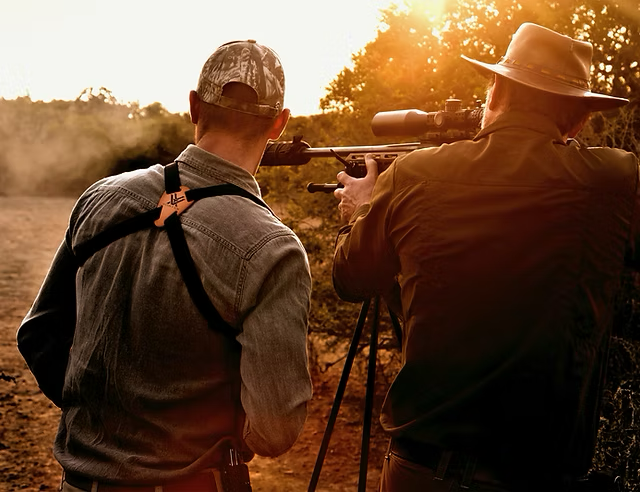
Existing South African firearm legislation recognises occasional hunting, dedicated hunting and professional hunting within the licensing system.
If future legislation were to impose new restrictions affecting firearm numbers, ammunition, licensing periods or administrative requirements, the consequences could potentially extend into the wider hunting economy.
That is particularly critical when considering international hunting.
South Africa competes with other destinations for international hunting-tourism expenditure. Regulatory changes that significantly affect visiting hunters, professional hunters or hunting businesses therefore need to be assessed not only from a firearm-control perspective, but also from a tourism and rural-economy perspective.
What could firearm law changes mean for sport shooters?
South Africa also has an established sport-shooting community operating within the country’s firearm licensing system.
Existing legislation distinguishes between occasional and dedicated sport shooting.

Dedicated sport shooters operate through accredited organisations and must satisfy prescribed requirements.
This distinction becomes critical when considering previous proposals to change the number of firearms and quantities of ammunition that hunters and sport shooters may possess.
Competitive shooting can require firearms designed for different disciplines and applications.
Consequently, changes that may appear relatively simple when expressed as firearm limits can have more complicated implications for people actively participating in shooting sports.
Again, Nufarmer Africa is not suggesting that those previous provisions will necessarily return.
The critical question is what the new Bill actually says when it is published.
Until then, claims about its precise restrictions should be treated cautiously.
Self-defence could take the debate far beyond agriculture
Perhaps the most critical issue for the broader South African public is self-defence.
Under South Africa’s current Firearms Control Act, a person who satisfies the applicable competency and licensing requirements can apply for a firearm licence for self-defence.
Applicants are subject to regulation, training, competency requirements and individual firearm licensing.
The 2021 proposals sought to remove self-defence as a licensing purpose.
That is important because it demonstrates just how substantial amendments to the Firearms Control Act can potentially become.
For people supporting lawful firearm ownership, the critical argument is whether a competent, law-abiding citizen should be allowed to possess a licensed firearm for personal protection.
Those supporting stronger firearm regulation approach the issue from another direction.
Government has previously argued that reducing firearm proliferation and strengthening firearm controls could contribute towards reducing violent crime.
That argument deserves consideration too.
South Africa’s firearm debate should therefore not be reduced to a simplistic contest between people who “support guns” and those who “oppose guns”.
The critical policy question is more difficult:
Where should South Africa draw the line between reducing firearm-related violence and allowing competent, law-abiding citizens access to firearms for legitimate purposes?
That question affects considerably more people than farmers alone.
What happens if South Africans say nothing?
This brings us to the central argument behind TLU SA’s campaign.
Failing to join TLU SA’s campaign does not mean that the previous 2021 proposals automatically become law.
There will be legislative processes and opportunities for public participation once legislation formally progresses.
That distinction is critical.
But there is also a difference between expressing concerns while policy is still being formulated and waiting until government’s legislative position has already been converted into a Bill.
TLU SA wants to demonstrate opposition at the earlier stage.
Its campaign seeks a public mandate that can be used during future discussions, submissions and legislative processes.
For South Africans who share TLU SA’s concerns, the critical opportunity is therefore to become informed before the Bill arrives rather than discovering its implications afterwards.
The experience of 2021 demonstrates that public engagement can occur on a considerable scale.
More than 118 000 comments were received during that process.
Public participation is not a guarantee that government will accept every objection raised. Nor does opposition automatically prevent legislation from advancing.
But it gives citizens and organisations an opportunity to place their arguments, evidence and concerns formally into the democratic process.
And that is critical.
The Bill is not here yet — and that is the point
South Africa does not yet know precisely what the next Firearms Control Amendment Bill will contain.
When it is published, the legislation should be assessed on what it actually proposes — not rumours, social-media claims or assumptions based entirely on previous drafts.
Government should be able to explain why particular restrictions are necessary and what evidence supports them.
Likewise, organisations opposing those restrictions should be expected to support their arguments with evidence.
For farmers, there is a critical additional question: how would any changes interact with the realities of rural security?
For hunters, there are implications for hunting, game ranching and the broader rural economy.
For sport shooters, the details of firearm and ammunition provisions matter.
And for ordinary citizens, any change affecting self-defence licensing could transform the debate into a much wider national issue.
That is why the period before legislation is finalised can be critical.
TLU SA has decided not to wait.
Whether South Africans support its position or disagree with it, the organisation’s campaign has brought an important question back into public discussion:
What should South Africa’s future firearm laws look like — and who should have a say in deciding them?
5 Questions South Africans Should Ask
1. Has the new Firearms Control Amendment Bill already been introduced?
No.
As of 12 August 2026, the forthcoming Firearms Control Amendment Bill has not yet been introduced in Parliament.
Until the text is officially published, claims about precisely what the new Bill will prohibit or permit should be treated cautiously.
The previous 2021 draft provides useful context, but it should not automatically be presented as the forthcoming Bill.
2. Could South Africans lose the ability to license a firearm for self-defence?
Such a change was previously proposed.
The 2021 amendment process included a proposal to remove self-defence as a purpose for firearm licensing.
Under the law currently in force, self-defence remains a recognised licensing category.
Whether a similar proposal will appear in the forthcoming Firearms Control Amendment Bill will only be known once its provisions are published.
3. What could firearm law changes mean for farmers?
That depends on the final legislation.
However, proposals affecting self-defence, hunting firearms, ammunition or firearm licensing could have particular significance for agricultural communities because firearm ownership can intersect with both farming activities and rural security.
Farmers should therefore follow the actual legislative process closely and distinguish official proposals from speculation.
4. Could hunters and sport shooters be affected?
Potentially.
Previous proposals included measures affecting hunters and sport shooters, while current legislation specifically recognises occasional and dedicated hunting and sport shooting.
The extent of any future impact will depend entirely on the wording of the new Bill.
5. How can ordinary South Africans have their say?
TLU SA is currently asking South Africans who support its position to participate in its campaign so that the organisation can demonstrate public support during its engagement with government and future legislative processes.
This should not be confused with Parliament’s formal public-participation process.
When the legislation formally progresses, South Africans should also watch for official opportunities to submit comments and participate in parliamentary consultation.
The previous process attracted more than 118 000 comments.
Whatever your position on firearm ownership, becoming informed and participating in the democratic process matters.
Why Public Participation Matters Before the Bill Reaches Parliament

FULL MEDIA STATEMENT FROM TLU SA — 12 AUGUST 2026
The following media statement is reproduced in full as issued by TLU SA. It has not been edited by Nufarmer Africa.
TLU SA launches campaign against proposed amendments to the Firearms Control Act
TLU SA has launched a national campaign to garner support against the proposed amendments to the Firearms Control Act, which the organisation believes could have far-reaching consequences for farmers, rural communities and lawful firearm owners.
The campaign will focus on informing the public about the potential implications of the proposed legislative amendments and gaining the support of South Africans who wish to voice their opposition to the Bill.
According to Bennie van Zyl, General Manager of TLU SA, it is important for the voice of the agricultural community to be heard clearly at this early stage.
“This Bill does not affect firearm owners alone. It affects farmers, families and rural communities who must take responsibility for their own safety and that of their employees every day. We want to ensure that the government takes note of the extent of the opposition before any further decisions are made.”
Van Zyl says TLU SA’s campaign aims to obtain a public mandate that can be used during further discussions and legislative processes concerning the proposed amendments.
“We are not merely asking people to add their names to a list. We are asking them to show their support for retaining lawful firearm ownership and the right of law-abiding citizens to protect themselves, their families and their livelihoods.”
The organisation encourages all interested parties to support the campaign by submitting their details via TLU SA’s website. The support gathered will be used to strengthen TLU SA’s further actions and submissions concerning the proposed legislative amendments.
“Every voice counts. The greater the public support, the stronger the message that law-abiding citizens expect to be consulted when legislation with such far-reaching consequences is being considered,” Van Zyl concludes.
ISSUED BY TLU SA
Date: 12 August 2026
MEDIA INQUIRIES:
Bennie van Zyl
General Manager of TLU SA
082 466 4470