
South Africa’s 2026 private-land hunting season still offers real opportunity, but it no longer rewards relaxed planning. The old pattern of choosing a province, booking a farm, checking the rifle and worrying about the rest later is no longer enough. This year, a hunt is shaped not only by game numbers, veld condition and lodge quality, but by provincial rules, written permissions, FMD movement controls, cold-room capacity, packaging discipline and the very practical business of getting venison home lawfully. That is the defining shift of the season, and it is why planning has become essential.
This is not an argument for panic. Private land remains the backbone of South African plains-game hunting, and the country still offers deep opportunity across kudu, impala, swartwitpens, eland and springbok. But 2026 is not carefree. It is a season in which the difference between a smooth hunt and an expensive administrative mess may depend as much on what happens after the shot as on what happens before it. For that reason, this article is written not for the novice asking about calibre choice or bullet weight, but for the serious hunter, landowner and outfitter who needs a practical guide to what is now essential.
This web article should also sit clearly alongside the Nufarmer Africa magazine May/June 2026 feature, South Africa’s Private-Land Hunting Season in 2026 and FMD. The print piece gives the sharp overview. This version goes deeper into the permits, the movement rules, the timing, the veterinary reality and the consequences of getting the chain wrong. That deeper layer is now essential, because in an FMD year the hunt does not end at the shot. It ends when the meat is home lawfully, safely and in good condition.
Why 2026 is different
Foot-and-mouth disease is no longer a livestock story sitting somewhere outside the hunting sector. South Africa’s official FMD technical report dated 31 March 2026 recorded unresolved outbreaks in every province, and the Department of Agriculture says infected properties are immediately placed under quarantine, with movement of live cloven-hoofed animals and unprocessed products off the farm not allowed. The same report makes clear that if movement control cannot be applied effectively, authorities may move to a Disease Management Area, with all properties in that epidemiological unit subjected to the same movement-control conditions. That is why FMD has become essential to the hunting conversation: it directly affects the farm, the carcass, the product and the road home.
Government has also made it clear that this is not a short sprint. In January 2026, the Minister of Agriculture said the national strategy would be phased over ten years and stressed that vaccination is not a silver bullet. The plan explicitly links recovery to surveillance, laboratory support, movement control and traceability, which means hunters and hunting farms should not treat current restrictions as a passing inconvenience. They are part of the operating environment, and that makes compliance essential from the moment the booking is discussed.
Many private hunting farms also carry domestic livestock, or sit in farming districts where wildlife, cattle, sheep and goats exist close together. That matters because once FMD is active in the broader agricultural system, the farm itself stops being just a venue. It becomes a veterinary environment, a compliance environment and a movement-control environment. In another year, that might sound overly technical. In 2026, it is simply the truth, and it is essential to how experienced hunters should think about the season.
The essential planning order for a 2026 hunt
1. Start with the species and the province
One of the biggest mistakes hunters still make is to start with the farm and only later ask whether the legal framework actually suits the trip they have in mind. In 2026, the essential order is species, province, area, then farm. South Africa does not work on one national hunting opening day. Provincial regulation remains central to the season, and species windows can differ sharply even within the same province. The Western Cape’s 2026 hunting notice is an obvious example: impala and springbok are listed from 1 January to 31 December, while eland is listed only from 1 July to 31 August. CapeNature’s own guidance explains that the annual hunting notice determines which species may be hunted, where, when and in what numbers.
That means the first essential question is never simply, “Who has availability?” It is, “Which species, in which province, under which current notice?” A hunter planning kudu and impala in one province, or springbok and eland in another, needs to work from the current provincial legal position, not from what happened on the same farm last year, not from WhatsApp hearsay, and not from a general idea of the South African season. The law moves province by province, species by species, and that makes the first part of trip planning essential rather than casual.
2. Then judge the area, not just the map pin
Once the species and province make sense, the area becomes essential too. A province can be legally open and still be the wrong practical choice for the week or weekend being planned. Wetter conditions and fuller cover early in the season may make bushveld hunts slower and more tactical. Open-country hunts can come right earlier. In another year that might only affect comfort and stalking style. In an FMD year it also affects carcass recovery, cooling, processing timing and the broader logistics chain. A good 2026 booking is therefore not simply legal. It is legal and practical. That is an essential distinction.
3. Finally, audit the farm as a full operating system
Only after species, province and area have been checked should the hunter settle on the property itself. In 2026 the farm is not just where the hunt happens. It is the place where legal permission, veterinary reality, slaughter handling, chilling, deboning, packaging and transport either work together or fall apart. That is why the essential questions for a hunting farm are now more demanding than before. Does the farm carry domestic livestock? Does it understand its FMD environment? Is there a proper slaughter point? Is there a cold room? Can carcasses hang correctly? Can the meat be portioned, labelled and packed properly? Can management explain what happens to the product from the moment the animal is shot until it is loaded for the road? The farms that answer those questions clearly are the farms that understand what this season really is. The farms that cannot are asking for trouble.
The permits that matter before the hunt
Landowner permission: what it is, when you need it, why it matters
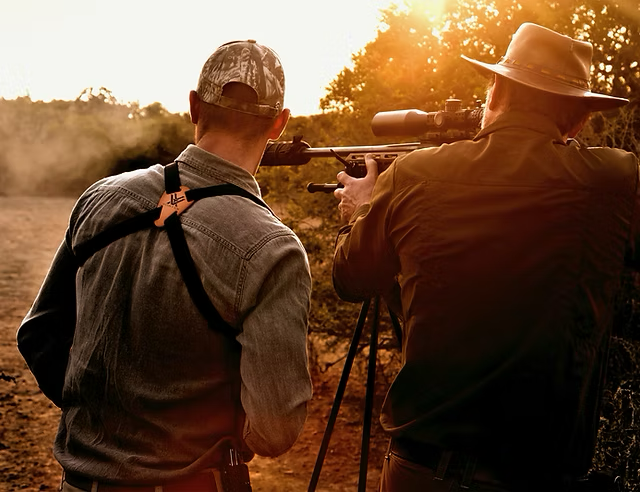
Written landowner permission is still one of the most essential documents in South African private-land hunting. In the Eastern Cape, the law is explicit that no owner may authorise another person to hunt a wild animal on the land, or remove a wild animal or its carcass from the land, unless it is done in accordance with the Act, and that the permission is not valid unless it is reduced to writing before the hunt, signed and dated, and records the owner and hunter details, the species, the number and sex of animals, and the dates and land concerned. The same Act states that no person may hunt on another person’s land or remove a carcass from that land without that permission.
The practical answer to the user’s questions is therefore clear. What is needed? A written permission from the landowner or authorised party. When is it needed? Before the hunt. Why is it needed? Because without it, the hunt and carcass removal are not lawful. How long does it take to obtain? That is usually immediate once the farm issues it, but it must exist before the hunt begins. What happens if it is not done? In the Eastern Cape, a person found in possession of the wild animal or carcass is guilty of an offence unless he or she holds the written permission contemplated in the Act. That makes this document far more than a courtesy letter. It is an essential legal foundation for the whole trip.
Provincial hunting licences and hunting-season permits
Because hunting is regulated at provincial level, there is no single national permit that answers every hunt. That is one of the most essential points in this whole discussion. In the Western Cape, CapeNature states that a hunting licence is required to hunt any protected wild animal during any hunting season, and that such licences are only valid for species reflected in the annual hunting notice. CapeNature also publishes something many authorities do not: a stated turnaround time. For a standard hunting licence, it says the licence will take 2 to 5 working days to issue after the application and supporting documents are submitted.
That gives hunters a useful example, but it must not be overgeneralised. What is needed? The answer depends on the province, the species and the status of the land. When is it needed? Before the hunt, and ideally before travel is finalised. Why is it needed? Because it is the licence that makes hunting a protected wild animal during the season lawful in that province. How long does it take? In the Western Cape, the official published answer is 2 to 5 working days for a hunting licence. Elsewhere, a single national turnaround is not published, which means hunters should never assume a short lead time. In 2026, that uncertainty alone makes early confirmation essential.
Prohibited hunting method permits
Most private-land plains-game hunters will not need these for an ordinary rifle hunt, but they become essential the moment the method changes. CapeNature states that hunting wild animals using certain methods, at certain times, or in certain places is treated as prohibited and requires a permit. Its examples include hunting with artificial light, hunting on or from a public road, hunting at night, hunting with traps and hunting by means of a bow and arrow. CapeNature says these permits should be issued within 3 to 30 working days, depending on the species, the method and the purpose.
That means the answer here is also fairly precise. What is needed? A prohibited hunting method permit if the hunt falls into one of those prohibited categories. When is it needed? Before the hunt. Why is it needed? Because those methods are not lawful without a permit. How long does it take? In the Western Cape, officially, between 3 and 30 working days. What happens if it is not done? The hunt is no longer a lawful ordinary hunt; it becomes a prohibited-method hunt without permit cover. For hunters who like to improvise method or timing at the last minute, that should be a warning. In this season, improvisation is not freedom. It is risk.
Firearm licences for South African hunters
For South African residents, the firearm chain remains essential and starts before the hunting booking is even relevant. SAPS states that once the hunter has completed accredited training and received the training certificate, he or she must apply for a competency certificate using SAPS 517. Only after obtaining the competency certificate does the hunter complete SAPS 271, the application for a licence to possess a firearm. The Firearms Control Act then distinguishes between a licence for occasional hunting, dedicated hunting and professional hunting.
That gives a clean answer. What is needed? Accredited training, a competency certificate, then the relevant firearm licence. When is it needed? Long before the hunt; this is not something solved a week before departure. Why is it needed? Because every firearm possessed must be lawfully licensed. How long does it take? SAPS publishes the process and the forms, but not a simple national turnaround time. One should work on anything from 4 months to eight months. What happens if it is not done? The hunter cannot lawfully rely on that firearm as a licensed hunting firearm. In a season already full of pressure points, this is one area where sloppiness is simply not acceptable.
Temporary firearm import permits for foreign hunters
For foreign hunters, the process is more exact and more time-sensitive. SAPS states that a direct application submitted to the Central Firearms Control Register must be lodged at least 21 days in advance. At the port of entry, SAPS says a temporary import permit will only be issued for eligible applicants, including foreign visitors hunting in South Africa, if the applicant is 21 or older, the rifle is not semi-automatic or fully automatic for ordinary port-of-entry issue, the import is for only one firearm per calibre, and the ammunition does not exceed 200 rounds per firearm. SAPS also states that the temporary import permit will not be issued for longer than six months.
So again the practical answers are clear. What is needed? The SAPS temporary import process, usually using SAPS 520 and the supporting documents. When is it needed? Ideally at least 21 days before travel if submitted directly to the Central Firearms Control Register. Why is it needed? Because the firearm must be lawfully imported for hunting. How long does it take? SAPS gives the clearest published lead time in this whole chain: at least 21 days for a direct pre-submitted application. What happens if it is not done? The hunter is left depending entirely on port-of-entry processing and eligibility, or risks not being able to regularise the import correctly. In a 2026 season already shaped by FMD admin, that is a completely unnecessary risk.
The permits documents that matter after the shot
Meat movement permits under FMD
This is where 2026 truly departs from older hunting habits. In many districts, especially where FMD controls are active, the most essential permit may no longer be the one used to start the hunt, but the one needed to finish it properly. The KwaZulu-Natal FMD Disease Management Area protocol is the clearest published example. It states that all applications for veterinary movement permits must be submitted at least 5 working days before the intended movement, and where a risk assessment is required, at least 28 days before the intended movement. It also states that movement permits are valid only for a limited period and one consignment only, and that no movement permit will be issued without correct and complete information and all supporting documents.
For cloven-hoofed game meat, the KZN protocol is even more specific. It says such meat may move out of, within or through the DMA only with a movement permit if it is for own consumption, limited to one carcass per hunter or accompanying person, provided the skin is removed, the carcass is portioned, and the meat is dry, drip free and matured. It must also be labelled with species, place of origin and weight, packaged to prevent exposure, and the head, feet and offal may not be moved from the property where the animal was slaughtered. Fully cooked or dried “break-dry” meat products, by contrast, are not subject to those same restrictions under the protocol.
That makes the movement-permit chain brutally practical. What is needed? A movement permit where the protocol requires it, plus compliant processing and packaging. When is it needed? Before the meat moves, not once the vehicle is already packed. Why is it needed? Because the protocol does not allow that product to move lawfully without it. How long does it take? The official KZN answer is at least 5 working days, or 28 days where a risk assessment is required. What happens if it is not done? The product cannot lawfully move under the protocol, and the trip home can collapse after an otherwise successful hunt. In 2026, this is one of the most essential planning stages in the entire season.
Documents for donation, sale and onward distribution
Hunters often think only in terms of personal consumption, but once meat or a carcass is passed on to someone else, another document chain can become essential. In the Eastern Cape, the law states that no person may donate or sell any wild animal or its carcass to another person unless, when delivering it, the giver furnishes the recipient with a signed written document containing both parties’ full names, identity numbers and addresses, plus the species, number and sex of the wild animal or carcass, the date of the donation or sale, and a statement that the animal or carcass has been donated or sold to that recipient. The same Act also says that a person found in possession of a wild animal or carcass is guilty of an offence unless he or she possesses the written permission or document contemplated in sections 85 or 86, and that such documents must be retained for at least two months.
That matters because “distribution” is where many people become sloppy. What is needed? If the product is being donated or sold onward, not merely kept by the hunter, a proper written document is needed at delivery under the Eastern Cape example. When is it needed? At the moment of delivery or handover. Why is it needed? To support lawful possession by the recipient and the lawful chain of the carcass. How long does it take? It is not a separate permit with a published waiting period; it is a document that must be created correctly and kept. What happens if it is not done? The recipient’s possession can be exposed, and the chain of lawful custody is weakened. In an FMD environment, that is the wrong time to be casual about documents.
Why lodge processing facilities are now essential
All of this leads to one conclusion that many farms still under-appreciate: the lodge and its back-end facilities have become essential hunting infrastructure. In 2026, a cold room is not just a convenience and a deboning table is not just a nice extra. Under current FMD movement rules, a farm that can hang carcasses properly, mature the meat, portion it, label it accurately and package it correctly is not merely offering comfort. It is offering compliance, product protection and peace of mind. The KZN protocol’s requirements around skinning, portioning, drip-free maturity, labelling and packaging make that point unmistakable. A hunting lodge that can do all of that well has become far more valuable this year than one that only sleeps guests comfortably.
What could happen if it is not done properly
The consequences in 2026 are not abstract. They are immediate and practical. If written landowner permission is not in place, the hunt or carcass removal can be unlawful under provincial conservation law. If a protected species is hunted without the right provincial licence where required, the hunt is not regularised. If a prohibited method is used without the relevant permit, the hunter moves outside the lawful method framework. If a foreign firearm is not properly prepared for import, the hunter risks arrival-day problems that were entirely avoidable. If FMD meat-movement requirements are not met, the product cannot lawfully move under the protocol. And if the carcass is later donated or sold onward without the right supporting document, possession by the recipient is exposed. None of that is theoretical. It is exactly how a successful hunt turns into a bad case file.
There is also the deeper practical consequence. Farms that do not understand this permit chain will lose trust. Hunters who do not plan it will lose time, money and often product quality. In an FMD year the hunt does not end when the animal is on the ground. It ends when every step that follows has been finished properly. That full-chain understanding is now essential, and it is the real dividing line between 2026 operators who are ready and those who are not.
The essential conclusion
South Africa can still deliver a strong private-land hunting season in 2026. There is still quality game, real depth in the market and every reason for serious hunters to book well. But this is no longer a season where the legal and logistical detail can sit in the background. The essential question is no longer only where the kudu are or whether the impala are thick on the property. It is whether the full chain works: species, province, area, farm, landowner permission, hunting licence where needed, firearm compliance, lodge processing, movement permit if required, and the lawful onward handling of the product after the shot.
That is why the best farms in 2026 will not only be measured by trophies on the wall or by the quality of the lodge fire at night. They will be measured by the quality of their compliance, the honesty of their communication, the professionalism of their meat rooms and the discipline of their paperwork. And the hunters who come through the season best will not simply be the best shots. They will be the hunters who treat every link in the chain as essential. That is the real story of hunting in South Africa under the FMD outbreak, and it is exactly why this longer website piece belongs alongside the companion Nufarmer Africa magazine May/June 2026 feature found under Publications. (M.O)