
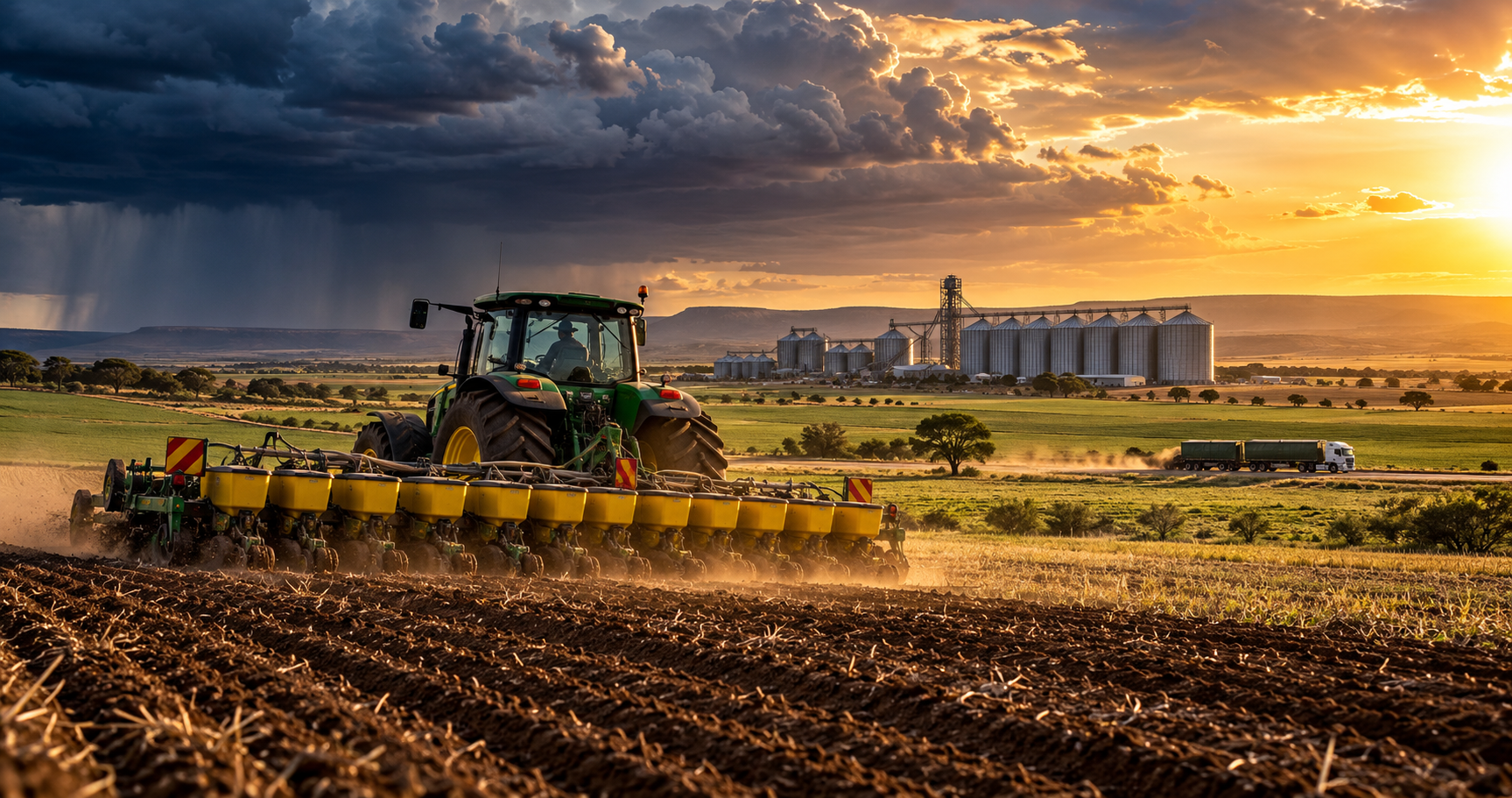
South Africa approaches the 2027 agricultural year with substantial grain reserves, but the next harvest is being planted under increasingly difficult economic conditions. Expensive diesel, fertiliser, international conflict, El Niño and uncertain grain markets are converging at a time when both farmers and consumers have little room for additional financial pressure. The country may have enough food, yet still find itself caught in a global crossfire that makes producing and buying that food considerably more expensive.
There is something reassuring about the sight of grain silos standing against the South African landscape, particularly when they contain the rewards of a successful harvest. They represent productive land, capable farmers and a degree of protection against the uncertainty that has always accompanied agriculture. After years in which drought, fluctuating commodity prices and rising production costs have repeatedly challenged the sector, South Africa enters the 2026/27 summer production season with an important advantage: substantial maize reserves. Yet there is a danger in allowing this comfort to become complacency. Grain harvested yesterday cannot pay for the diesel needed tomorrow, reduce the cost of fertiliser already ordered or guarantee that sufficient rain will fall during the critical months ahead. Nor can it completely protect domestic food prices from international markets.
South African agriculture is entering a global crossfire in which the consequences of decisions and events thousands of kilometres away can determine whether a farmer in the Free State, North West, Mpumalanga or Limpopo finishes the coming season with a profit.
The uncomfortable reality is that several economic and environmental pressures are converging at precisely the wrong moment. Energy markets remain exposed to geopolitical conflict, international fertiliser supply chains are vulnerable to higher manufacturing and shipping costs, and El Niño has introduced additional uncertainty into the Southern African rainfall outlook. Meanwhile, international grain markets continue to influence the value of locally produced commodities, regardless of how much grain may be standing in South African silos. The rand, interest rates and the financial position of consumers add further complications. This is not a conventional agricultural downturn driven by one identifiable problem. It is a crossfire of interconnected forces, each capable of magnifying the effect of another, and it arrives while farmers are committing substantial amounts of capital to a crop they will only harvest months from now.
What makes the situation particularly important is that agriculture cannot simply suspend production until international conditions improve. A manufacturer may sometimes delay expansion or reduce output when markets become unfavourable, but a farmer cannot indefinitely postpone planting while waiting for cheaper diesel, lower fertiliser prices or greater certainty about rainfall. The biological calendar continues regardless of economic circumstances. Seed must be planted when conditions allow, crops must be protected and livestock must be fed. Farmers therefore face the crossfire with an obligation to continue producing, even when the eventual relationship between production costs, yields and selling prices remains uncertain. The consequences will extend well beyond the agricultural sector because the consumer, ultimately, is the reason agricultural production exists.
Diesel: the first cost before the first seed germinates
The October 2026 diesel-price adjustment has brought the international energy crisis directly into South African agricultural budgets. The announced increases of approximately R3.24 per litre for 50ppm diesel and R2.84 per litre for 500ppm diesel, effective from 7 October, arrived as summer-grain producers entered land preparation and planting. For a large commercial operation consuming thousands of litres during this period, even a relatively modest price movement can represent a substantial additional expense. An increase exceeding R3 per litre is therefore not an inconvenience that can be absorbed without consideration. It changes production calculations, cash-flow requirements and the amount of money that must eventually be recovered from each tonne harvested. The farmer finds himself in an energy crossfire that begins long before the crop emerges and continues until the produce reaches its final destination.

Diesel is often discussed as though it were simply another input alongside seed and fertiliser, but its influence is far more extensive. It powers tractors preparing seedbeds, planters placing seed into the soil, machinery applying crop-protection products and harvesters collecting the crop. It supports irrigation systems, moves livestock and carries fertiliser, chemicals and other supplies to farms. Once production leaves the farm gate, diesel remains essential to transporting grain to silos, livestock to markets and fresh produce to distribution centres. Food processors, wholesalers and retailers are similarly exposed to transport and distribution expenses. Consequently, the diesel crossfire is not confined to the farmer who purchases fuel directly. Its effects can travel through the agricultural value chain, accumulating in ways that are not immediately visible to the consumer standing in a supermarket aisle.
The agricultural diesel refund system offers qualifying producers some protection, particularly following the changes introduced in April 2026 to the calculation of eligible diesel use for applicable on-land farming activities. The expansion from the previous 80% limitation to 100% of qualifying consumption is potentially valuable, although the actual benefit depends on the applicable refundable levies, qualifying activities, registration requirements and proper recordkeeping. It is important, however, not to confuse a tax refund with a reduction in the underlying fuel price. The refund does not remove the international cost of refining, transporting and distributing diesel. Farmers remain exposed to those costs, and the timing of any reimbursement can also matter when working capital is already under pressure. The practical effect is that government relief may soften part of the financial blow without removing the energy crossfire confronting producers.
The international fuel market has also become more complicated than a simple comparison with Brent crude prices might suggest. Crude oil must be refined into usable products, and the availability of finished diesel depends on refining capacity, inventories, transport infrastructure and demand. When refinery operations are disrupted or supplies of refined products become constrained, diesel prices may remain elevated even if crude prices begin to stabilise. This distinction is especially relevant to agriculture because farmers do not purchase barrels of crude oil; they purchase diesel. A decline in Brent therefore does not necessarily guarantee immediate or equivalent relief at the agricultural fuel tank. The refined-fuel crossfire can continue long after the initial movement in crude markets, complicating production budgets and delaying any improvement in operating costs.
The international conflicts that reach into South African fields
It may seem extraordinary that a conflict in the Middle East or an attack on energy infrastructure in Russia could influence the profitability of maize production near Bothaville, wheat farming in the Western Cape or vegetable production in Limpopo. Yet modern agriculture depends on an international network of energy suppliers, fertiliser manufacturers, shipping companies, commodity traders and financial institutions. The Strait of Hormuz is particularly important because of its position in international petroleum trade, while the Black Sea remains a significant corridor for grain and agricultural exports. Disruption in either region can affect markets far beyond the countries directly involved. South African farmers consequently operate within a geopolitical crossfire over which they exercise virtually no control, but whose consequences they must nevertheless accommodate in their financial planning.
The Russia-Ukraine conflict has demonstrated how vulnerable energy and agricultural supply chains can become when infrastructure, ports, shipping routes and insurance arrangements are exposed to military action. Interruptions to refinery operations can influence the availability of petroleum products, while uncertainty around Black Sea exports can alter international grain flows and freight costs. Middle Eastern instability introduces additional risks to oil production, refined-fuel distribution and maritime transport. These developments do not necessarily cause permanent shortages, and alternative supply routes can sometimes compensate for disruptions. Nevertheless, uncertainty itself carries a price. Shipping companies may face higher insurance premiums, buyers may seek alternative suppliers and traders may adjust prices to reflect the possibility of further disruption. The geopolitical crossfire therefore reaches South African agriculture through several channels simultaneously rather than through fuel prices alone.
This relationship is particularly important when agricultural inputs are imported. Fertiliser, crop-protection chemicals, machinery components and specialised equipment must often travel through international supply chains before reaching South African farms. Their final cost can reflect manufacturing expenses, energy prices, exchange rates, ocean freight, port charges and domestic transport. A farmer may be exposed to the same international energy shock when purchasing diesel, ordering fertiliser and arranging delivery of equipment. These are separate invoices, but they may originate from the same global crossfire. When several costs rise together, the effect on profitability becomes considerably more serious than an increase in one isolated expense.
Fertiliser and the cost of chasing a profitable yield
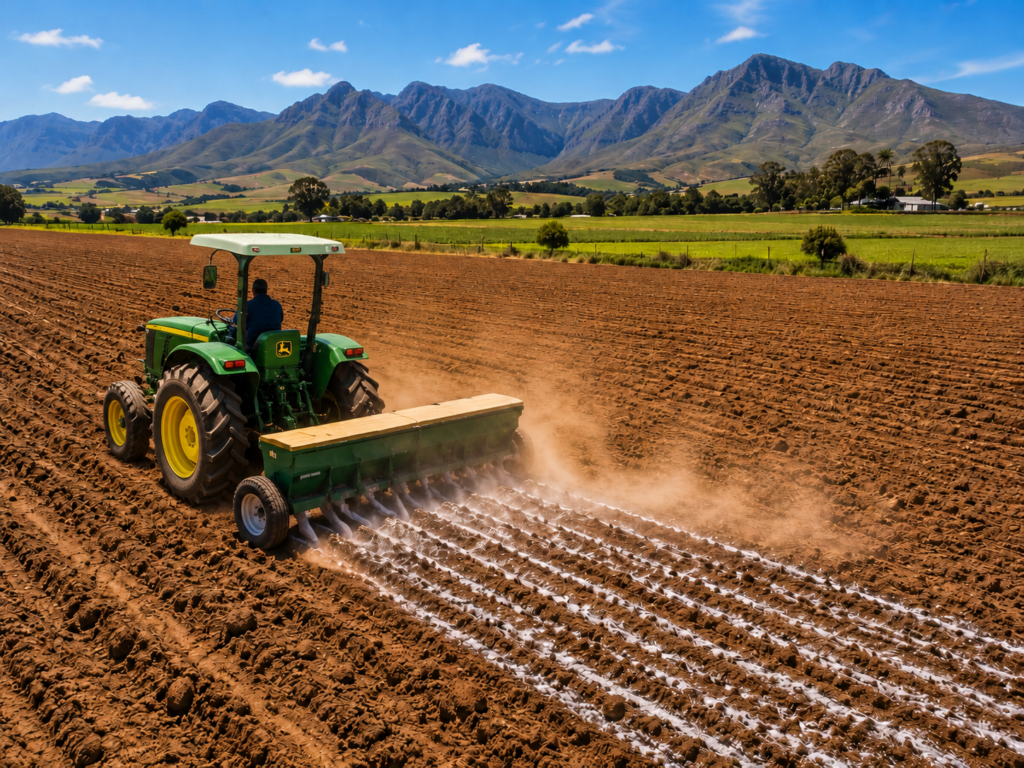
South Africa’s dependence on imported fertiliser raw materials and intermediate products creates another significant vulnerability. Industry estimates cited in the agricultural outlook indicate that more than 80% of these materials originate outside the country, exposing local prices to international manufacturing costs, energy markets, shipping conditions and movements in the rand. Reports of substantial fertiliser-price increases during 2026, including particularly sharp movements in urea, have therefore attracted understandable concern. Fertiliser is not a discretionary purchase that can simply be eliminated when prices become uncomfortable.
Appropriate plant nutrition is fundamental to crop performance, and reducing applications without considering soil conditions, nutrient requirements and realistic yield expectations can compromise the very production needed to recover expenditure. Farmers are consequently caught in a fertiliser crossfire between the need to control costs and the necessity of protecting the crop’s productive potential.
The importance of fertiliser becomes clearer when its contribution to total production expenditure is considered. Depending on the crop, region and farming system, fertiliser can represent a substantial proportion of grain-production costs, sometimes estimated at 35% to 50%. A sharp increase in that expense places immediate pressure on the producer’s budget, particularly when diesel, chemicals, seed and finance are also becoming more expensive.
The temptation may be to reduce applications simply to preserve cash flow, but the financial consequences of an inappropriate reduction could exceed the initial saving. Equally, maintaining an expensive nutrition programme without considering realistic production potential may expose the farmer to unnecessary financial risk. This fertiliser crossfire is therefore not merely a question of purchasing less or more. It requires careful decisions about nutrient-use efficiency, soil testing, fertiliser placement, yield potential and the return expected from each rand invested.
The problem becomes more serious when weather uncertainty enters the calculation. A farmer may invest heavily in fertiliser to support an anticipated six-tonne maize crop, only to experience prolonged dry conditions during a critical growth stage. The fertiliser cannot be recovered from the soil and returned to the supplier, while the finance used to purchase it remains payable. The cost must now be recovered from a smaller harvest. If production expenditure amounted to R24,000 per hectare, for example, a six-tonne yield would represent R4,000 per tonne before other relevant costs, whereas a four-tonne harvest would increase that same expenditure to R6,000 per tonne.
These figures are illustrative rather than a representative national budget, but they demonstrate the economic principle. The weather and fertiliser crossfire can transform a carefully planned production programme into a financially difficult season without any change in the farmer’s original expenditure.
El Niño: when weather becomes a financial calculation
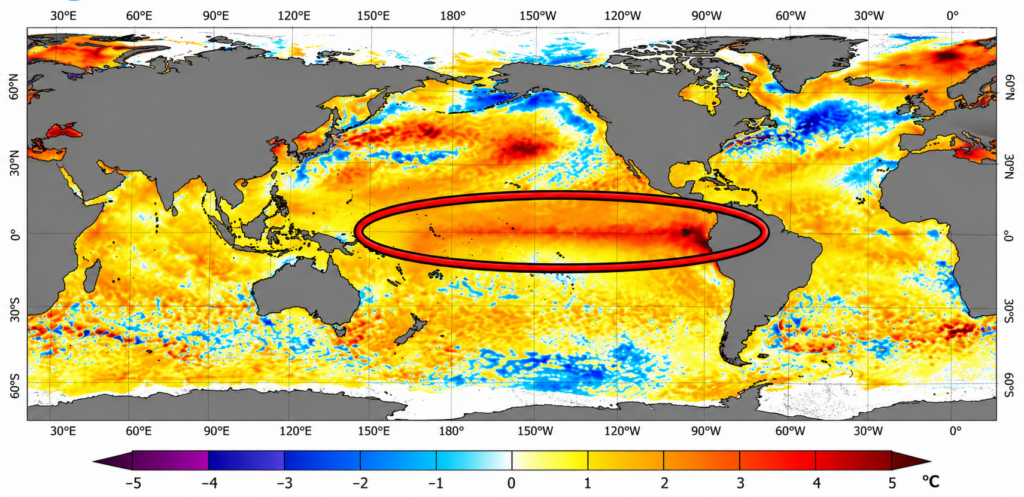
El Niño has become one of the most closely watched influences on the 2026/27 Southern African summer season, with international and regional climate assessments highlighting the possibility of below-normal rainfall, higher temperatures and prolonged dry spells across parts of the region. Strong El Niño conditions can increase drought risk in Southern Africa, but the relationship is not automatic. Indian Ocean temperatures, regional atmospheric circulation and other climate influences affect the eventual rainfall pattern. It would therefore be misleading to assume that an intense El Niño necessarily guarantees a disastrous South African harvest. Nevertheless, the possibility of unfavourable conditions deserves serious consideration when farmers have already committed expensive inputs. The climate crossfire becomes particularly dangerous when the financial margin for absorbing a disappointing yield has been reduced before planting begins.
Experienced producers know that a season’s total rainfall provides only part of the information needed to understand crop performance. Rainfall arriving at the wrong time may offer limited benefit, while a prolonged dry spell during flowering can cause substantial damage even when the seasonal total appears relatively respectable. Excessive temperatures increase evaporation and crop water demand, and heavy rainfall concentrated into short periods can cause runoff, erosion and waterlogging rather than providing sustained soil moisture. Agriculture depends on the timing, distribution and intensity of rainfall, not simply the number of millimetres recorded over several months. This is why the El Niño crossfire must be assessed through local and regional forecasts rather than dramatic global headlines alone. The ultimate agricultural consequences will depend on what happens in individual production regions during the crop’s most sensitive growth stages.
A difficult rainfall season could have consequences extending beyond the immediate harvest. Producers operating with production credit must still service their obligations, while preparing to finance the following season. A smaller crop can reduce cash reserves, increase reliance on borrowing and delay essential maintenance or investment. In some cases, farmers may have to reconsider machinery purchases, irrigation improvements or expansion plans. These decisions can influence productivity beyond a single year. The financial crossfire created by high input costs and reduced production therefore has the potential to affect future agricultural capacity, particularly where businesses already operate with limited reserves. The risk is not that every farm will suffer equally, but that producers with different debt levels, farming systems and financial flexibility will experience the same climatic event very differently.
South Africa does, however, enter the season with an important advantage in the form of substantial maize reserves. These stocks provide a buffer against temporary production difficulties and reduce the immediate risk of widespread shortages. They reflect the success of earlier harvests and the productive capacity of the agricultural sector. Yet their existence should not encourage the belief that the country is insulated from all consequences of an unfavourable season. Grain reserves can decline if production disappoints, while international prices may rise if adverse weather affects several major producing countries simultaneously. The climate crossfire therefore extends beyond South Africa’s borders, creating the possibility that local crop losses and stronger international demand occur at the same time.
Grain in the silo still carries an international value
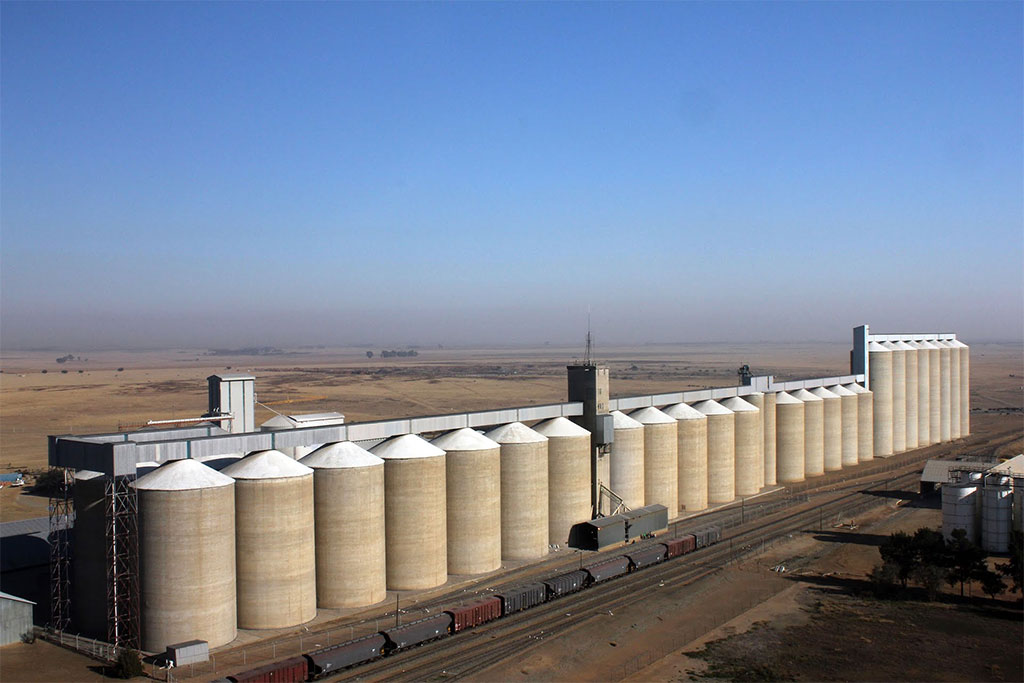
One of the most important distinctions in agricultural economics is the difference between having grain available and having grain available at an affordable price. South Africa may possess substantial maize stocks, but those stocks remain part of a wider commodity market influenced by international prices, exchange rates, export opportunities and regional demand. Grain produced in rands can acquire a higher international opportunity value when global supplies tighten, particularly if foreign buyers are prepared to pay more for available stocks. This places South African grain in a commodity-market crossfire that can influence domestic prices even when the physical quantity of grain in storage appears reassuring.
Consider a situation in which drought reduces production in several important grain-exporting countries. Importing nations must still secure food and feed supplies, and competition for available grain may strengthen international prices. South African producers and traders then assess domestic selling opportunities against the value potentially available in export markets, allowing for transport costs, port capacity, grain quality, contractual arrangements and other practical limitations. Domestic prices do not automatically become identical to international quotations, nor can every tonne necessarily be exported. Nevertheless, the opportunity to sell grain into a stronger international market can influence local pricing. This is the export-parity crossfire that connects a silo in the Free State to decisions made by grain buyers elsewhere in the world.
The rand introduces another layer of uncertainty. International grain prices are commonly expressed in US dollars, meaning that changes in the exchange rate can alter their value in South African currency. A weaker rand can increase the local-currency value of internationally traded grain, while a stronger rand may have the opposite effect. The Food and Agriculture Organization has previously identified periods in which South African maize prices increased despite abundant domestic supplies, with international quotations and export-parity influences contributing to the movement. Such developments demonstrate that strong production does not guarantee stable consumer prices. The currency crossfire can reinforce international commodity-price movements, particularly when global supply concerns coincide with exchange-rate weakness.
The effects within agriculture are not uniform. A grain producer with a substantial marketable surplus may benefit from stronger maize prices, especially after incurring unusually high production costs. A poultry farmer, pig producer or feedlot purchasing maize as an input may experience precisely the opposite effect. Feed represents a major production expense in several livestock industries, and higher grain prices can reduce profitability unless producers are able to recover those costs through the prices received for meat, eggs and other products. The grain-price crossfire therefore creates winners and losers within the agricultural sector itself.
What improves the financial position of one producer may increase the cost burden of another, while the eventual effect on consumers depends on competition, demand, contracts and the ability of businesses throughout the supply chain to absorb additional expenditure.
This relationship is especially relevant when considering the broader consequences of international crop failures. Stronger grain prices can provide valuable income to producers who achieve satisfactory yields, but farmers suffering drought damage may have fewer tonnes available to sell at those prices. A higher commodity price does not automatically compensate for a substantial reduction in production. Meanwhile, livestock producers may face more expensive feed regardless of whether their own operations have been affected by drought. The agricultural crossfire is therefore more complicated than a simple assumption that higher food prices necessarily benefit farmers. Profitability depends on the relationship between production volume, selling price, input expenditure and the financial structure of each business.
Wheat and the hidden cost of bringing food across the ocean
South Africa’s exposure to international grain markets becomes even more apparent when the discussion moves from maize to wheat. While domestic maize production provides a degree of national security, wheat remains an important import requirement. The 2026/27 outlook has included estimates of a domestic wheat crop of approximately 1.81 million tonnes, with imports potentially approaching two million tonnes, although these figures remain subject to revision as production and trade conditions develop. The immediate concern is not necessarily that the world will run out of wheat. Global supplies may remain adequate while the cost of importing grain into South Africa increases. Wheat importers therefore face a different international crossfire, involving commodity prices, currency movements, energy costs and maritime transport.
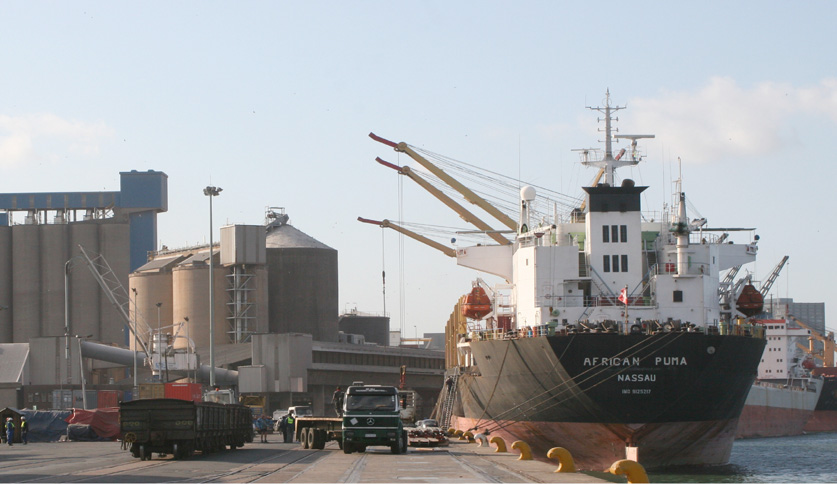
Each stage introduces costs that can change independently of the original grain price. This shipping crossfire means that wheat can become more expensive to land in South Africa even when the international commodity price itself remains relatively stable.
The Middle East and Black Sea conflicts are relevant to this calculation for different reasons. Disruption affecting the Strait of Hormuz can influence energy markets and the cost of operating vessels, while instability around Black Sea export routes can affect grain movements, insurance arrangements and the availability of alternative suppliers. Shipping companies and grain traders must assess these risks when making commercial decisions. A change in freight or insurance costs may appear relatively small compared with the total value of an individual shipment, but repeated increases across large volumes can become significant. The maritime crossfire therefore forms part of the economic explanation for why a loaf of bread sold in South Africa may be influenced by events occurring far beyond the country’s borders.
The same international supply chains carry fertiliser, chemicals and other agricultural inputs. This creates an uncomfortable double exposure for South Africa: higher costs can affect both the production of food domestically and the importation of food that local agriculture does not produce in sufficient quantities. A farmer may pay more for fertiliser because of international energy and shipping conditions, while a miller pays more to import wheat for similar reasons. The cost pressures originate in different transactions but may share the same underlying causes. This import crossfire is particularly important for an agricultural economy that must remain internationally competitive while ensuring that essential food products remain affordable to domestic consumers.
Interest rates, working capital and the price of uncertainty
Agricultural production is capital-intensive, and the financial burden begins long before the harvest generates revenue. Farmers must finance seed, fertiliser, chemicals, diesel, labour and other operating expenses, while machinery and infrastructure often require longer-term investment. When interest rates remain elevated, the cost of carrying these obligations increases, reducing the margin available to absorb unexpected difficulties. A producer may be able to calculate the cost of seed or fertiliser with reasonable accuracy, but the eventual profitability of that expenditure depends on yield, selling price and the amount of interest accumulated before payment is received. This places farmers in a financial crossfire between increasingly expensive production requirements and the cost of obtaining the capital needed to meet them.
South Africa’s monetary outlook is influenced by inflation, international energy prices, exchange-rate movements and broader economic conditions. The South African Reserve Bank must consider the persistence of inflation when deciding whether borrowing costs can be reduced. Farmers would naturally welcome cheaper credit, but renewed pressure from fuel and food prices can limit the scope for monetary easing. Higher interest rates also affect agricultural processors, transport businesses, retailers and households, creating financial pressure throughout the food economy. The interest-rate crossfire is therefore not confined to the farmer’s production loan. It influences the cost of investment, the financial flexibility of businesses and the disposable income available to consumers.
For farmers, the practical consequences can be substantial. Expensive working capital may discourage investment in improved equipment, irrigation efficiency or additional production capacity. A disappointing harvest can increase reliance on borrowing, while uncertainty about future interest rates complicates longer-term planning. Producers with stronger balance sheets may be better positioned to manage these conditions, whereas highly indebted operations could find their financial flexibility severely restricted. The capital crossfire may therefore widen the difference between businesses capable of investing through difficult periods and those forced to concentrate on immediate survival. Over time, that distinction can influence productivity, employment and the resilience of the agricultural sector.
The consumer is the final destination of the story
Agricultural discussions naturally concentrate on yields, commodity prices, production costs and export opportunities, but the final destination of agricultural production is the consumer. A farmer may successfully navigate expensive diesel, fertiliser and finance, only to discover that households are struggling to afford the products brought to market. South African consumers already allocate substantial portions of their income to housing, transport, electricity, education, debt repayments and other necessities. When several of these expenses rise together, the amount remaining for food becomes increasingly constrained. The consumer crossfire is therefore an essential part of the 2027 agricultural outlook, rather than a separate economic concern that can be considered after the harvest.
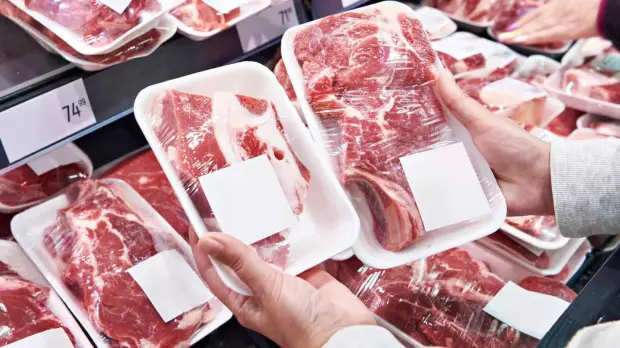
Higher diesel prices can influence the cost of commuting and distributing food, while more expensive wheat may place pressure on bread and flour prices. Rising maize prices can affect maize meal and animal feed, with potential consequences for poultry, pork, beef, eggs and other products. Not every increase is passed directly or immediately to consumers, since competition, supply contracts, retail margins and changing demand all influence final prices. Nevertheless, sustained cost pressure across several stages of the supply chain can eventually become difficult to absorb. The food-price crossfire is particularly challenging because households cannot simply eliminate essential food purchases when prices increase. Instead, they may reduce quantities, substitute cheaper products or cut expenditure elsewhere.
The approaching Black Friday and Christmas period adds another consideration to the financial outlook. Seasonal spending may provide welcome revenue for retailers, but households already under pressure could enter 2027 with additional debt obligations and less capacity to absorb higher prices for necessities. This does not mean every family will borrow excessively or that festive spending necessarily creates financial difficulty. It does mean that the timing of any sustained increase in food prices could be especially uncomfortable for consumers whose financial reserves are already limited. The household crossfire becomes more severe when expensive credit, transport and food compete for the same constrained income.
This matters to agriculture because consumer purchasing power ultimately influences demand for agricultural products. Households facing financial difficulty may purchase less meat, switch to cheaper protein sources or reduce spending on higher-value food products. Processors and retailers must adjust to these changes, while producers may find that higher operating costs cannot always be recovered through selling prices. A food system cannot remain economically healthy if farmers are consistently unable to recover production costs, but neither can it remain socially sustainable if consumers are increasingly unable to afford its products. The market crossfire therefore links agricultural profitability and household affordability more closely than discussions focused exclusively on production volumes might suggest.
A difficult year is not inevitable, but the risks are converging
There is no justification for assuming that 2027 must become a disastrous year for South African agriculture. The country enters the season with meaningful grain reserves, experienced producers and farming systems that have adapted to considerable climatic and economic variability. A favourable summer rainfall season could support reasonable yields and maintain comfortable domestic supplies. International energy markets could stabilise, fertiliser prices could ease and improved currency conditions could reduce the cost of imported inputs. Lower inflation might eventually create room for less restrictive financial conditions. These possibilities are important because the agricultural outlook remains uncertain rather than predetermined. The concern is not that every risk will necessarily materialise, but that the global crossfire leaves relatively little room for several adverse developments to occur simultaneously.
A dry growing season would be difficult under ordinary circumstances, but a dry season following unusually expensive planting costs would be more damaging. Stronger international grain prices might help producers who achieve good yields, but could create difficulties for livestock farmers and consumers. Expensive diesel could increase both production and distribution costs, while a weaker rand raises the price of imported fertiliser, wheat and other essential inputs. The cumulative crossfire becomes particularly dangerous when several pressures reinforce one another, leaving businesses with fewer opportunities to offset losses in one area through improvements elsewhere.
The next several months will therefore be critical. Rainfall distribution across the summer-grain regions, particularly during germination, flowering and grain filling, will provide increasingly important evidence about production prospects. International fuel markets must be watched for changes in crude oil prices, refining margins and finished-diesel availability. Fertiliser costs, the rand, grain-market developments and export demand will influence both farm budgets and commodity prices, while interest rates and inflation will help determine the financial position of producers and consumers. The agricultural crossfire cannot be understood by examining these indicators separately. Their combined effect will determine whether 2027 becomes a manageable period of adjustment or a more serious test of farm profitability and food affordability.
For producers, the response must be grounded in financial discipline and practical risk management. Careful production budgeting, appropriate nutrient programmes, efficient use of machinery, sound marketing decisions and realistic yield expectations can help protect profitability. Farmers cannot control international conflicts, exchange rates or rainfall, but they can assess the consequences of different production outcomes and make informed decisions about the capital they commit. The challenge is to protect productive capacity without exposing the business to financial obligations that become unsustainable if conditions deteriorate. In the present crossfire, protecting margin may be every bit as important as protecting yield.
The 2027 Agricultural Crossfire: What the Harvest Will Reveal
South Africa’s substantial grain reserves are an achievement worth recognising. They reflect the productive strength of the agricultural sector and provide an important measure of protection against uncertainty. Yet they cannot guarantee that the next crop will be profitable, nor can they completely shield domestic consumers from international price movements. The harvest currently being planted will be produced under conditions that may test farmers’ financial management as severely as their agricultural expertise. The coming year will reveal whether favourable production conditions can offset expensive inputs, whether international markets offer relief or further pressure, and whether consumers retain sufficient purchasing power to support demand.
The central danger is that South Africa could remain food secure while becoming considerably more expensive to feed. That possibility captures the essential contradiction of the 2027 agricultural crossfire. Grain may be physically available while its price reflects international demand, expensive energy, shipping costs, finance and currency movements. Farmers may achieve satisfactory yields while struggling to recover production expenses, and consumers may face higher food bills even when supermarket shelves remain adequately stocked. Food security and food affordability are closely related, but they are not identical.
Ultimately, agriculture cannot be separated from the people it feeds. The decisions being made on farms today will influence production volumes, market prices and food availability months from now. For farmers, 2027 may become a year in which protecting financial margin proves as important as achieving a successful harvest. For consumers, much will depend on whether the agricultural sector can continue producing efficiently while absorbing the pressures imposed by international markets and domestic economic conditions.
The grain already in the silos offers reassurance, but the grain now going into the ground will help determine how much that reassurance is worth a year from now. And when the global crossfire has passed through energy markets, fertiliser suppliers, grain traders, transport businesses and financial institutions, its final consequences may be felt by someone standing at a supermarket till, deciding what the family can afford to take home.
Frequently asked questions about South African agriculture in 2027
Will El Niño cause a drought in South Africa during 2027?
El Niño increases the risk of below-normal rainfall and higher temperatures across parts of Southern Africa, but it does not guarantee a nationwide drought. Regional climate influences, the timing of rainfall and local weather conditions will determine the eventual agricultural consequences. Farmers should follow updated forecasts from the South African Weather Service and other credible climate institutions rather than relying exclusively on global El Niño intensity forecasts.
Could South Africa experience food shortages despite substantial maize stocks?
Strong maize reserves reduce the immediate risk of widespread shortages, but a disappointing harvest could reduce future supplies, particularly if carryover stocks decline and regional demand remains strong. Food availability and food affordability must also be distinguished, since grain prices can increase even when sufficient physical stocks remain available.
Why could South African maize prices rise when the country has plenty of grain?
Domestic maize prices are influenced by international commodity markets, exchange rates, export opportunities and local demand. If global grain supplies tighten and international prices rise, the value of South African maize can increase even when domestic supplies remain relatively comfortable. Export costs and local market conditions influence the extent of that movement.
Why do conflicts in the Middle East and Russia-Ukraine affect South African food prices?
International conflicts can influence energy production, refining, maritime transport, insurance and grain-export routes. Higher diesel and shipping costs can increase the expense of producing, transporting and importing agricultural products, while disruptions to grain trade can influence international commodity prices.
What is the greatest financial risk facing South African farmers in 2027?
The most serious risk is the combination of expensive production inputs and disappointing yields. Once diesel, fertiliser, seed, chemicals and finance have been committed, a smaller harvest increases the cost per tonne produced. Farmers must therefore manage production risk and financial exposure together, rather than concentrating exclusively on maximum yield.