
Poultry farming in South Africa is entering a more demanding phase. The sector still carries enormous value for food security, rural income, commercial agriculture and affordable protein supply, but the road ahead is no longer simple. Producers are being asked to do more with tighter margins, higher input costs, greater disease pressure, changing weather patterns, unstable electricity supply and a consumer market that remains highly price sensitive.
For many years, poultry farming was often discussed mainly in terms of production volume. The question was how many birds could be placed, grown, processed or supplied. That question still matters, but it is no longer enough. The future of poultry farming in South Africa will depend on stronger systems, better planning, sharper management and more strategic decision-making at farm level.
This is the real way forward for poultry farmers. It is not one single solution. It is not only better feed, better genetics, better housing or better medicine. It is the ability to connect all these elements into a working production system that can handle pressure without collapsing.
A strategic poultry farmer understands that profit is built long before the bird reaches market weight or the egg reaches the tray. It starts with planning, housing, water, feed, bird health, biosecurity, ventilation, energy supply, staff discipline, data, market timing and financial control. Poultry farming has become a business of small details, and those details can decide whether a farm moves forward or falls behind.

In South Africa, this matters because poultry remains one of the most important protein sectors in the country. Chicken meat is widely consumed. Eggs are a practical and nutrient-dense household food. Poultry products move through supermarkets, informal traders, fast-food outlets, restaurants, bakeries, hotels, school feeding programmes and household kitchens every day.
For broader local poultry-sector context, producers and suppliers can also follow updates from the South African Poultry Association, which represents key interests across South Africa’s poultry industry.
That is why poultry farming in South Africa is not only a producer issue. It is a food-security issue. It is a consumer-affordability issue. It is an agricultural resilience issue. And increasingly, it is a strategic national production issue.
Poultry farming can no longer rely on habit alone
One of the clearest lessons for poultry producers is that habit is no longer enough. What worked ten years ago may not be enough for the next ten. Input costs have changed. Disease risks have changed. Climate conditions have changed. Energy reliability has changed. Consumer pressure has changed. Even the way farms communicate with suppliers, veterinarians and buyers has changed.
The poultry farmer of the future will need to think more strategically about every part of the production system. That includes the obvious issues, such as feed and housing, but also the less visible ones, such as water hygiene, staff movement, record keeping, ventilation maintenance and emergency planning.
A poultry farm is not simply a place where birds are housed. It is a living production system. When one part of the system weakens, the whole operation can suffer. Poor water quality can reduce feed intake. Poor ventilation can damage respiratory health. Weak biosecurity can expose the entire flock to disease. Unstable electricity can compromise heating, cooling, lighting and ventilation. Poor record keeping can hide losses until they become expensive.
That is why strategic management is now essential.
The best poultry operations are those that do not only react when things go wrong. They look for weak points before pressure exposes them. They measure. They adjust. They invest where it matters. They train staff. They work with technical advisors. They plan for interruption. They understand that poultry farming rewards consistency.
In a high-pressure environment, the most strategic farmers are not necessarily the biggest farmers. They are the ones who know their numbers, protect their birds and manage risk every day.
Biosecurity is the first line of business protection

Biosecurity has become one of the most important subjects in poultry farming in South Africa. Disease pressure is not new, but the cost of disease has become harder to absorb. A serious disease event can damage production, destroy cash flow, interrupt supply contracts, trigger culling, increase mortality and weaken market confidence.
For this reason, poultry biosecurity can no longer be treated as a once-off checklist. It must become part of daily farm culture. A strategic biosecurity system starts at the gate and continues through every point of movement on the farm.
Vehicles, visitors, staff, equipment, crates, feed deliveries, water systems, wild birds, rodents and neighbouring poultry activity all matter. Disease does not need an invitation. It needs an opening.
The strategic poultry farmer closes as many openings as possible.
This means controlled access points, proper sign-in procedures, clean protective clothing, dedicated footwear, footbaths that are maintained, vehicle disinfection, rodent-control programmes, wild-bird exclusion, controlled litter movement, clean water systems and clear staff routines. It also means understanding that biosecurity is only as strong as the weakest daily habit.
Producers should also stay close to official Department of Agriculture animal-health updates when reviewing poultry biosecurity, disease control and farm-level risk.
A written plan is useful, but only if it is followed. A disinfectant station is useful, but only if it is active and correctly used. A visitor policy is useful, but only if it is enforced. Staff training is useful, but only if it becomes routine.
This is where many poultry farms either gain or lose resilience. Biosecurity is not only about preventing disease. It is about protecting production continuity. It is about keeping birds alive, keeping feed conversion on track, protecting market commitments and avoiding the financial shock of preventable disruption.
In modern poultry farming, biosecurity is a strategic profit tool.
Feed efficiency remains the hidden profit lever
Feed remains one of the largest costs in poultry farming. Whether a producer is running broilers, layers, breeders or pullets, feed quality and feed conversion have a direct effect on profitability. But the conversation around feed must go deeper than price per tonne.
The cheapest feed is not always the most profitable feed. The most expensive feed is not automatically the best feed. What matters is performance, consistency, bird response and the total production result.
A strategic feed decision considers growth rate, laying performance, shell quality, body condition, mortality, uniformity, feed conversion, flock age, housing conditions, water quality and market goals. Feed must match the bird, the production phase and the environment.
In broiler farming, feed conversion is one of the major drivers of margin. Small changes in feed conversion can become significant across thousands of birds. In layer farming, feed affects egg numbers, egg size, shell quality, bird condition and flock longevity. In breeder operations, nutrition influences fertility, hatchability and chick quality.
This makes feed efficiency one of the most strategic areas of poultry production.
But feed does not work alone. A well-formulated ration can underperform in a poor environment. Birds under heat stress may eat less. Birds with poor water access may not convert feed properly. Birds breathing poor-quality air may struggle with performance. Birds in inconsistent lighting or temperature conditions may fail to express their genetic potential.

That means the strategic question is not only: what feed are we using?
It is also: are the birds in the right condition to use that feed properly?
Feed companies, nutritionists and technical advisors have a major role to play here. Producers increasingly need more than product supply. They need support that helps them understand feed performance in relation to housing, water, climate and health. The farms that make the best feed decisions will be those that connect nutrition with the full production environment.
For research-linked agricultural insight, farmers can also follow the Agricultural Research Council, which supports South African agriculture through scientific research, innovation and technical knowledge.
Water quality deserves far more attention
Water is one of the most underestimated inputs in poultry farming. Feed is visible. Housing is visible. Birds are visible. Water often receives less attention because it is assumed to be available, simple and neutral.
That assumption can be costly.
Water affects feed intake, digestion, medication delivery, vaccination, body temperature, gut health and general flock performance. Poor water quality can quietly undermine production before the problem becomes obvious. High mineral levels, bacterial contamination, dirty lines, poor pressure, irregular supply or warm water in hot conditions can all affect bird performance.
A strategic poultry operation treats water as a production input, not a background utility.
This means testing water regularly, cleaning lines, monitoring pressure, protecting tanks, checking drinker systems and ensuring that birds have reliable access at all times. During hot weather, water becomes even more important. Birds rely on water to regulate body temperature. If water delivery fails during heat stress, losses can escalate quickly.
Water also plays a central role in biosecurity and treatment. Vaccines, medications and supplements may be delivered through water systems. If water quality is poor, distribution may be affected. If lines are dirty, treatment may be inconsistent. If access is uneven, some birds may receive less than others.
This is why water-system suppliers, filtration providers, sanitation companies and monitoring technologies have a strategic place in the poultry sector. Better water management can help producers reduce hidden losses and protect performance.
A poultry farmer who does not know the quality of the water going into the flock is leaving too much to chance.
Housing is not just infrastructure

Poultry housing is often described as infrastructure, but that word can make it sound passive. A poultry house is not simply a shed. It is an active production environment. It shapes temperature, air quality, humidity, light, bird movement, litter condition, water access, feed access and disease pressure.
That makes housing one of the most strategic assets on a poultry farm
In broiler production, poor housing can reduce growth, worsen feed conversion, increase mortality and affect uniformity. In layer production, housing affects laying performance, shell quality, bird comfort and flock longevity. In breeder systems, housing conditions can influence fertility, egg quality and chick output.
Ventilation is especially important. Poor ventilation can allow ammonia to build up, increase respiratory stress, worsen litter condition and reduce performance. Over-ventilation or poor temperature control can also create stress, especially for young birds. The goal is balance: enough fresh air, stable temperature and controlled humidity.
Lighting is also important. Light programmes influence bird behaviour, growth, laying rhythm and productivity. Poor lighting management can affect performance and welfare. Inconsistent lighting can create stress and reduce predictability.
The strategic poultry farmer does not see housing as a fixed cost that ends once construction is complete. Housing must be managed every day. Fans must work. Curtains must be adjusted. Inlets must be checked. Litter must be watched. Lights must be monitored. Equipment must be maintained.
A poultry house is a production machine. If it is neglected, performance suffers.
Energy resilience is no longer optional
Electricity instability has changed the poultry farming conversation in South Africa. Poultry farms depend on energy for heating, cooling, lighting, ventilation, water pumping, feeding systems, egg handling, processing, refrigeration and general operations. When power supply becomes unreliable, poultry farmers face direct production risk.
This makes energy resilience a strategic necessity.

A farm that cannot protect heating during brooding is exposed. A farm that cannot maintain ventilation during heat is exposed. A farm that cannot keep water moving is exposed. A farm that cannot protect cold chain or egg handling systems is exposed.
Generators, solar systems, battery backup, energy-efficient equipment and load-management planning are no longer luxury discussions. They are part of business continuity.
But energy planning must be done carefully. A poor backup system can create false confidence. Farms need to know which systems are critical, how much power they require, how long backup can run and what happens during extended interruptions. The goal is not simply to have a generator. The goal is to protect the systems that keep birds alive and production stable.
Strategic energy planning also links to cost control. Electricity, diesel and maintenance costs can all affect profitability. Energy-efficient ventilation, lighting and pumping systems can reduce long-term pressure. Solar and hybrid systems may offer value where correctly designed and financially viable.
The poultry farm of the future will need to think about energy as part of production planning, not only as an expense.
Climate pressure is changing poultry management
Climate pressure is becoming harder to ignore. Heat waves, cold snaps, water stress and changing weather patterns all affect poultry farming. Birds are highly sensitive to environmental conditions, and small changes in temperature, humidity or water availability can affect performance.
Heat stress is one of the major concerns. Birds under heat stress may eat less, drink more, grow more slowly, lay fewer eggs, show weaker shell quality or become more vulnerable to health problems. Broilers can lose performance quickly in hot conditions. Layers may show reduced production and shell issues. Breeders may experience fertility and hatchability pressure.
Cold conditions can also create problems, especially during brooding. Young chicks require stable warmth. Poor brooding conditions can affect early development, uniformity and later performance. A weak start can follow a flock throughout its production cycle.
This means climate-smart poultry farming is not a slogan. It is a practical management requirement.
Strategic climate management includes ventilation planning, insulation, water access, shade, cooling systems, backup energy, stocking density decisions, litter control, house orientation and emergency response planning. Producers must know how their houses perform under stress, not only under normal conditions.
The strategic farmer prepares before the heat wave arrives. Waiting until birds are already under pressure is often too late.
Staff discipline shapes farm performance
Poultry farming depends heavily on people. Even where automation is used, staff discipline remains central. Workers observe birds, manage equipment, follow biosecurity procedures, monitor feed and water, remove mortalities, record information and respond to problems.
A strategic poultry farm invests in people because daily habits shape production.
Staff must understand the reason behind routines. They need to know why footbaths matter, why water lines must be checked, why mortalities must be recorded, why ventilation changes matter, why birds must be observed carefully and why small signs can point to larger issues.
Training should not be treated as a once-off event. It should be repeated, practical and linked to daily work. Good staff can identify problems early. Poorly trained staff may miss signs until losses have already started.
Farm managers also play a decisive role. A manager who walks houses properly, checks records, questions changes and supports staff can prevent problems from growing. A manager who only reacts to obvious issues may be too late.
The strongest poultry farms often have strong routines. Birds are checked. Water is checked. Feed is checked. Equipment is checked. Records are kept. Staff understand expectations. The farm has rhythm.
That rhythm is strategic.
Records turn experience into management
Many farmers have strong practical experience, but experience becomes more powerful when supported by records. Poultry farming produces data every day. Mortality, feed intake, water intake, weight gain, egg production, egg size, shell quality, temperature, humidity, medication, vaccination, placement dates and market dates all tell a story.
A strategic poultry farmer reads that story.

Records help producers identify patterns. A small increase in mortality may signal disease, heat stress, water problems or management mistakes. A change in feed intake may show environmental stress. Reduced egg output may point to nutrition, lighting, disease or age-related issues. Poor growth may point to feed, water, temperature or chick quality.
Without records, these problems can become guesswork. With records, producers can make better decisions.
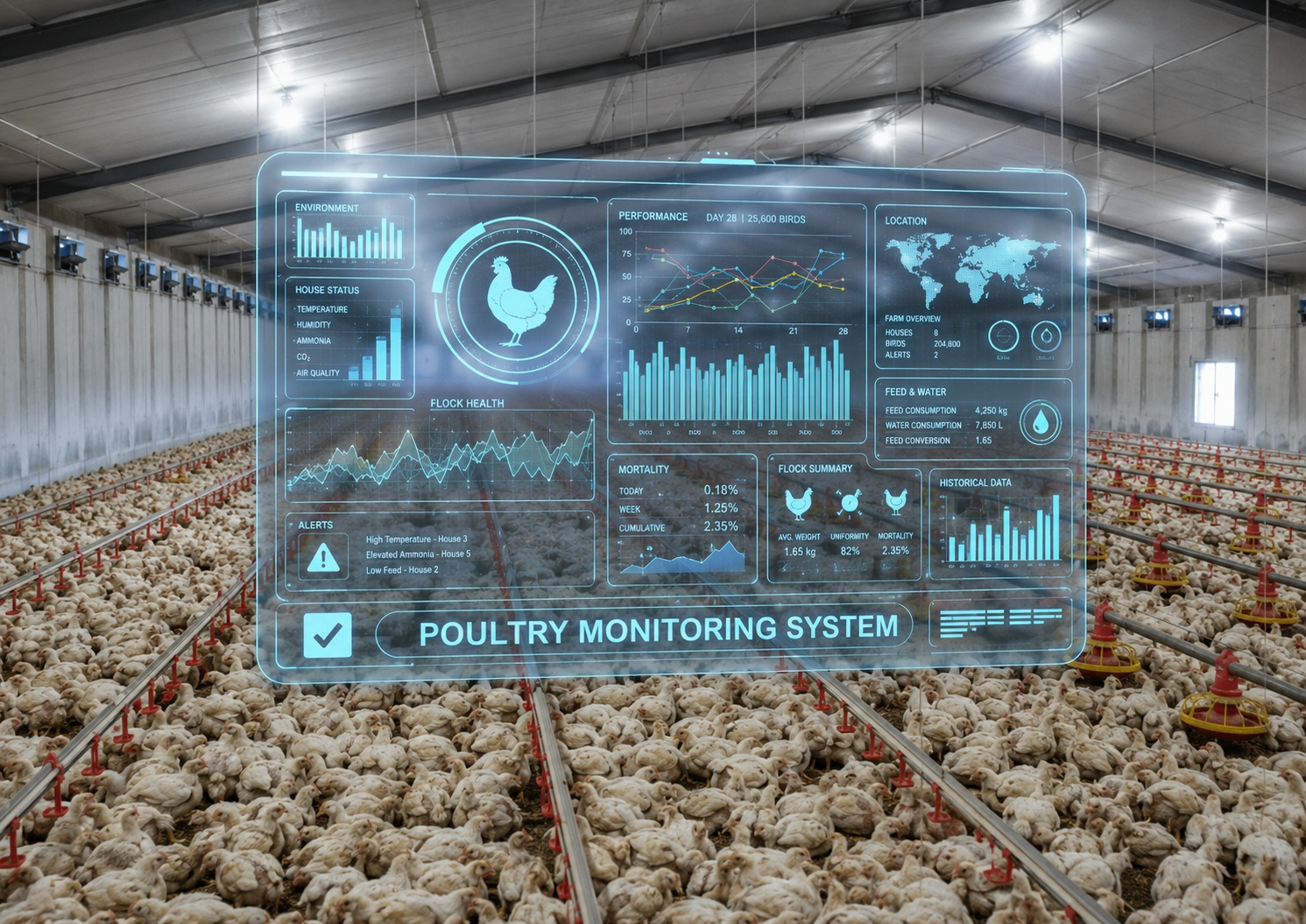
Digital tools can help, but even simple records are better than memory alone. The key is consistency. Records must be accurate, timely and reviewed. Collecting data without using it does little. The value comes from turning information into action.
This is where poultry management is becoming more strategic. The farmer who knows the numbers can respond faster, discuss problems better with advisors and make stronger investment decisions.
Market timing and financial discipline matter
Production success is only one part of poultry farming. Farmers also need market success. Birds or eggs must be sold into a market that can absorb them at a viable price. Feed, labour, energy, housing, medication, transport and finance costs must be managed. Cash flow matters.
A strategic poultry business understands both production and finance.
In broiler farming, placement timing, market demand, processing access and input costs all influence profitability. In layer farming, egg price, feed cost, flock age, production rate, packaging and distribution all affect margin. In breeder and pullet systems, timing is even more technical because delays can affect downstream supply.
Farmers must know their cost of production. They must understand break-even points. They must monitor feed cost, mortality, performance and selling price. They must be careful when expanding, because more birds do not automatically mean more profit.
Growth without control can increase risk. Strategic growth is different. It is based on numbers, infrastructure, market access, technical capacity and risk management.
The future of poultry farming in South Africa will favour producers who can combine production skill with business discipline.
Suppliers must become partners, not only sellers
The way forward for poultry farmers also depends on supplier relationships. Feed companies, animal health providers, equipment suppliers, water-system specialists, housing companies, ventilation experts, energy providers, packaging suppliers and technical consultants all influence farm performance.
But the most valuable suppliers will be those who understand the farmer’s whole production challenge.
A strategic supplier does not only sell a product. A strategic supplier helps solve a problem.
A feed company should understand performance goals, flock phase, housing conditions and heat stress. An animal health company should understand disease pressure, biosecurity and vaccination realities. A housing supplier should understand airflow, temperature control and practical farm management. An energy supplier should understand which systems are critical during outages. A water-system provider should understand hygiene, pressure and delivery.
Farmers need trusted technical partners because poultry production has become more complex. The strongest supplier relationships will be built on advice, reliability and measurable value.
This also creates a clear opportunity for agricultural marketing. Companies that support poultry producers need to communicate their value clearly. Farmers want practical solutions. They want proof. They want technical relevance. They want partners who understand South African conditions.
Communication will shape industry confidence
Poultry farming in South Africa needs stronger communication across the value chain. Producers need technical information. Consumers need better understanding. Retailers need supply clarity. Suppliers need a credible way to explain their solutions. Policymakers need to understand farm-level realities.
When communication is weak, confusion grows. During disease outbreaks or supply disruptions, consumers often see only price increases or product shortages. They may not understand the biological, logistical and financial pressures behind them.
The poultry industry should communicate more clearly about what it takes to produce chicken and eggs consistently. It should explain the role of biosecurity, feed costs, disease control, energy, water and housing. It should also speak more confidently about poultry’s role in food security and nutrition.
Agricultural media can play a strategic role here. A credible publication can connect farmers, suppliers, researchers and industry voices. It can explain technical issues in practical language. It can give advertisers a platform that is not only promotional but educational.
In a complex industry, communication is not decoration. It is part of resilience.
The real way forward is system thinking
The future of poultry farming in South Africa will not be secured by one improvement alone. It will require system thinking.
A farmer can buy good feed, but if water is poor, performance may suffer. A farmer can build a good house, but if ventilation is poorly managed, birds may struggle. A farmer can invest in genetics, but if biosecurity fails, the flock may be lost. A farmer can install backup power, but if the system is not sized correctly, critical equipment may still fail.
This is why strategic poultry farming is about connection.
Feed connects to water. Water connects to health. Health connects to biosecurity. Biosecurity connects to staff discipline. Staff discipline connects to records. Records connect to decisions. Decisions connect to profitability.
The best poultry farmers will be those who manage these connections deliberately.
Strategic poultry farming is the future
Poultry farming in South Africa still has a strong future. Demand for affordable protein remains real. Chicken and eggs remain deeply important to the national food system. Producers have experience, suppliers have technology, and the industry has the potential to become more resilient.
But the next phase will not reward careless production. It will reward disciplined production.
The strategic poultry farmer of the future will protect biosecurity, measure feed performance, manage water quality, maintain housing, plan for energy disruption, prepare for climate pressure, train staff, keep records, understand costs and communicate better with the market.
That is the real way forward for poultry farmers.
It is not about farming harder without direction. It is about farming smarter, with clearer systems and better control.
South African poultry farmers are already operating in a tough environment. Rising input costs, disease pressure, electricity instability, water concerns and climate stress are not small issues. But they are not reasons to step back. They are reasons to become more strategic.

The future will belong to producers who understand that resilience is built before a crisis. It is built in the daily routines, the clean water lines, the controlled farm gates, the maintained fans, the accurate records, the trained workers and the financial discipline behind every flock.
Poultry farming in South Africa can remain strong, but strength will depend on strategy.
The way forward is clear: better systems, better discipline, better partnerships and more strategic farming.
5 Q&A
1. Why is poultry farming in South Africa becoming more strategic?
Poultry farming in South Africa is becoming more strategic because producers face rising feed costs, disease pressure, energy instability, climate stress and tighter margins. Farmers can no longer rely only on production volume. They need stronger systems, better planning and disciplined management to protect profitability and food supply.
2. Why is biosecurity so important in poultry farming?
Biosecurity is important because disease can quickly damage flock health, production output, cash flow and market confidence. Strong biosecurity includes controlled access, clean clothing, vehicle disinfection, rodent control, wild-bird exclusion, water hygiene, sanitation and staff training.
3. How does feed efficiency affect poultry profitability?
Feed is one of the largest costs in poultry farming. Better feed efficiency helps producers get more growth, egg output or flock performance from every kilogram of feed. However, feed efficiency also depends on water quality, housing, ventilation, health and environmental control.
4. Why does energy resilience matter on poultry farms?
Energy resilience matters because poultry farms rely on electricity for heating, cooling, ventilation, lighting, water pumping, feeding systems, refrigeration and egg handling. Power interruptions can create serious production and welfare risks if farms do not have reliable backup systems.
5. What is the real way forward for poultry farmers?
The real way forward is system-based farming. Poultry farmers need to connect biosecurity, feed, water, housing, energy, climate planning, staff training, records and financial discipline into one stronger production system. The future will favour farmers who are more strategic, prepared and consistent.
(M.O)
