South African vegetable growers are under pressure from every side. Input costs are rising, weather patterns are less predictable, labour costs are climbing, buyers are demanding better quality, and crops must still reach the market in good condition. In open-field vegetable production, success is no longer only about fertiliser, irrigation and crop protection. The living system around the plant has become critical.
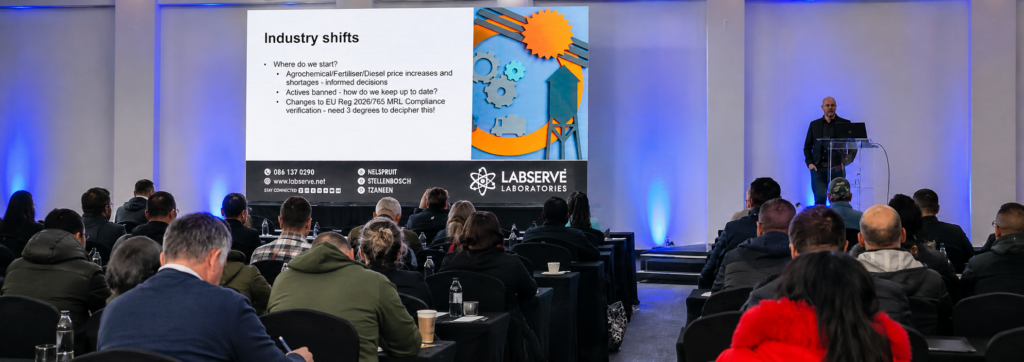
This was one of the strongest messages from the recent Woolworths Vision Zero Grower Day in South Africa, where technical discussions focused on integrated pest management, resistance monitoring, biological crop establishment and microbiome-based postharvest disease management.
Among the presenters, Soiltech and its laboratory division, Vermitech, brought attention back to a practical question: how much crop success is decided by the biological balance around the plant?
The answer is becoming clearer. From transplant to harvest, and even into the postharvest phase, the crop should be seen as a living biological unit. Roots, soil organisms, plant surfaces, fruit surfaces, pathogens and beneficial microbes all interact. When that system is balanced, crops have a better chance of establishing strongly, recovering from stress, maintaining quality and reaching the market with fewer losses.
For open-field vegetable growers, this is a critical shift in thinking.
Why Open-Field Vegetable Production Needs Biological Thinking
Open-field vegetable production has always been judged in the field first. A crop must establish evenly, withstand stress, carry fruit properly and reach buyers in a condition that satisfies the market.
For open-field growers, the challenge is often sharper than in protected systems. Seedlings leave the relative protection of the nursery and move into soil that may be hot, cold, compacted, biologically depleted, water-stressed or under disease pressure. Wind, irrigation variation, heat and uneven field conditions can all affect early plant development.
That is why biological soil management is becoming critical. Biological systems are not being discussed only as alternatives to chemical products. They are being positioned as practical tools to help crops establish stronger, recover faster and carry quality further into the supply chain.
Soiltech’s broader philosophy supports this approach. The company does not view soil merely as an inert growth medium. Instead, its farming programme recognises soil as a living, diverse biological ecosystem that assists plants in accessing mineral nutrients and creating a more disease-suppressive environment.
This matters because a productive root zone is not biologically empty. It is active, balanced and alive.
The Critical Transplant Window
The transplant stage is one of the most critical phases in vegetable production.
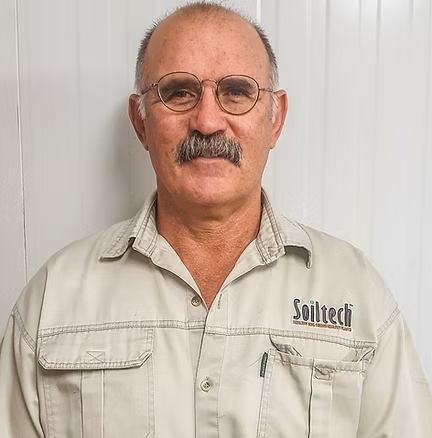
Nico van Vuuren of Soiltech focused on biological transplant establishment, using work with a pepper grower as an example. His central point was clear: the early establishment phase can influence the rest of the crop.
When seedlings are transplanted, roots are disturbed. Some root tissue may be damaged during handling and planting. Water and nutrient uptake can slow down, and the plant may temporarily pause growth. This is commonly described as transplant shock.
In open-field production, transplant shock can be costly. A plant that struggles early may not root deeply enough. It may remain uneven in the stand. It may become more vulnerable to disease pressure. The impact is not always dramatic in the first few days, but it may appear later as weaker growth, uneven flowering, inconsistent fruit set or poor recovery after stress.
This is why Van Vuuren’s message is so important: “The seedling does not need a sterile root zone. It needs a living, balanced, protective root zone.”
That sentence captures the critical difference between simply suppressing life in the root zone and building a living system that supports the crop.
A Living Root Zone, Not an Empty One
Conventional crop protection strategies often focus on suppressing pathogens. That has its place in a responsible crop protection programme. However, Soiltech’s biological establishment approach adds another layer.
The young plant does not benefit from a root zone stripped of biological activity. It needs support during its most vulnerable phase.
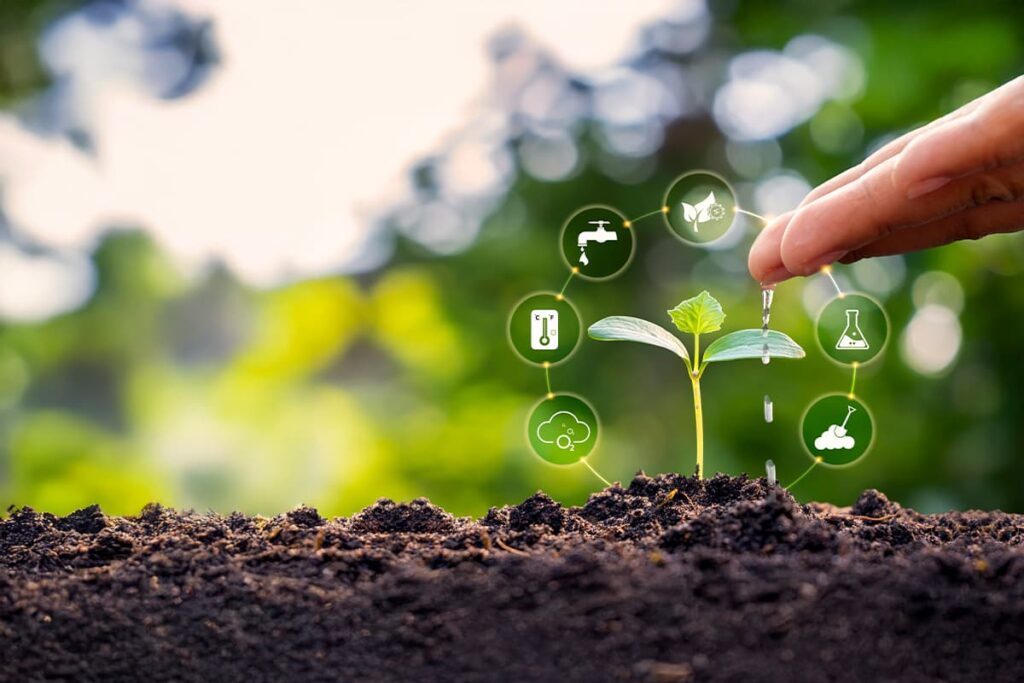
Soiltech’s approach is based on beneficial organisms colonising the root surface and wounded root areas. These organisms compete for space and resources, while producing enzymes and metabolites that may support recovery and reduce pathogen establishment.
In practical farming language, the idea is not to leave the young plant alone when it is at its weakest. The aim is to surround the root with organisms that support balance rather than breakdown.
Van Vuuren also referred to microbial metabolites and plant-associated mechanisms such as ACC deaminase activity, which can reduce stress responses and support faster recovery after transplanting.
For growers dealing with heat, wind, irrigation variation and soil-borne disease pressure, this is critical. A stronger start does not remove every risk, but it gives the crop a better platform.
Soiltech’s Soil-First Farming Philosophy
Soiltech’s website explains that its programmes are built around the idea that “Healthy Soil Grows Healthy Plants”. This is not simply a slogan. It reflects a farming philosophy that places soil fertility, soil life and plant health at the centre of production.
The company was founded in 2004, with the aim of supporting more nature-friendly production methods and healthier, more nutrient-dense food. Its programmes favour healthy, fertile, living soils and are designed for farmers who want to farm with nature rather than against it.
Soiltech considers itself a pioneer in biologically, chemically and organically integrated farming practices. This is an important point. The approach is not about abandoning all tools. It is about integrating biological systems, chemistry, organic thinking, soil analysis and practical farm management into a balanced programme.
That makes the programme especially relevant to commercial growers. Farmers need systems that work in real fields, under real pressure, with real market deadlines. Biological farming must be practical, measurable and economically sensible.
Soil Analysis as a Critical Foundation
A successful biological programme cannot be built on guesswork.
Soiltech’s farming programme begins with accurate and representative soil sampling. Soil samples are analysed according to the Albrecht model, with recommendations aimed at correcting soil balance according to the Kinsey-Albrecht method.
The principle is simple but critical: feed the soil to feed the plant.
This approach looks beyond the idea that fertiliser is only about pushing nutrients into the crop. It asks whether the soil has the mineral balance, structure and biological environment needed to support plant health over time.
If the soil environment is not right, biological inputs may struggle. Microbes need a suitable home. Roots need air, water, nutrients and living partners. Fertiliser decisions should therefore support, not damage, the biological system.
For vegetable growers, this is especially important because short crop cycles leave little room for mistakes. A weak root system early in the season can influence yield, uniformity, fruit quality and harvest timing later.
The Soil Food Web and Disease-Suppressive Soils
Soiltech’s approach also gives attention to the soil food web.
Although the relationship between soil health and biodiversity is complex, a medium to high level of biodiversity is generally associated with healthier soil. Soiltech therefore encourages growers to think beyond the traditional view that roots and soil merely anchor the plant and absorb nutrients and water.
An active soil food web can help build resilience. Beneficial organisms interact with roots, organic matter, minerals and each other. This biological activity can support nutrient cycling, root health, soil structure and disease suppression.
In simple terms, healthy soil is not silent. It is working.
This is critical in open-field vegetable production, where growers often face soil-borne disease pressure, water variation and environmental stress. A living soil system cannot guarantee a perfect crop, but it can help improve the crop’s ability to cope with pressure.
Plant Growth Promoting Micro-Organisms
A central part of Soiltech’s biological approach is the use of Plant Growth Promoting Micro-Organisms, often referred to as PGPMs.
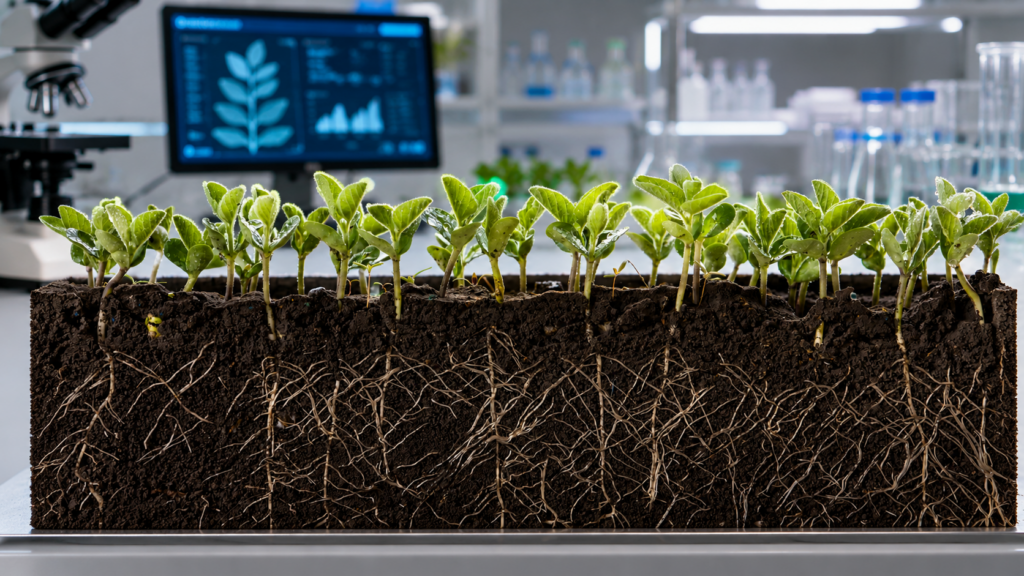
PGPMs include beneficial bacteria and fungi that live around plant roots and can support plant health and growth. These organisms may assist through several mechanisms, including nitrogen fixation, hormone production, phosphate solubilisation, metabolite production and improved nutrient availability.
Soiltech’s website explains that PGPMs are crucial in successful biological farming. The company has invested significant effort in identifying and procuring a range of beneficial organisms that form part of its programmes.
This is where Vermitech becomes important.
Vermitech’s Critical Laboratory Role
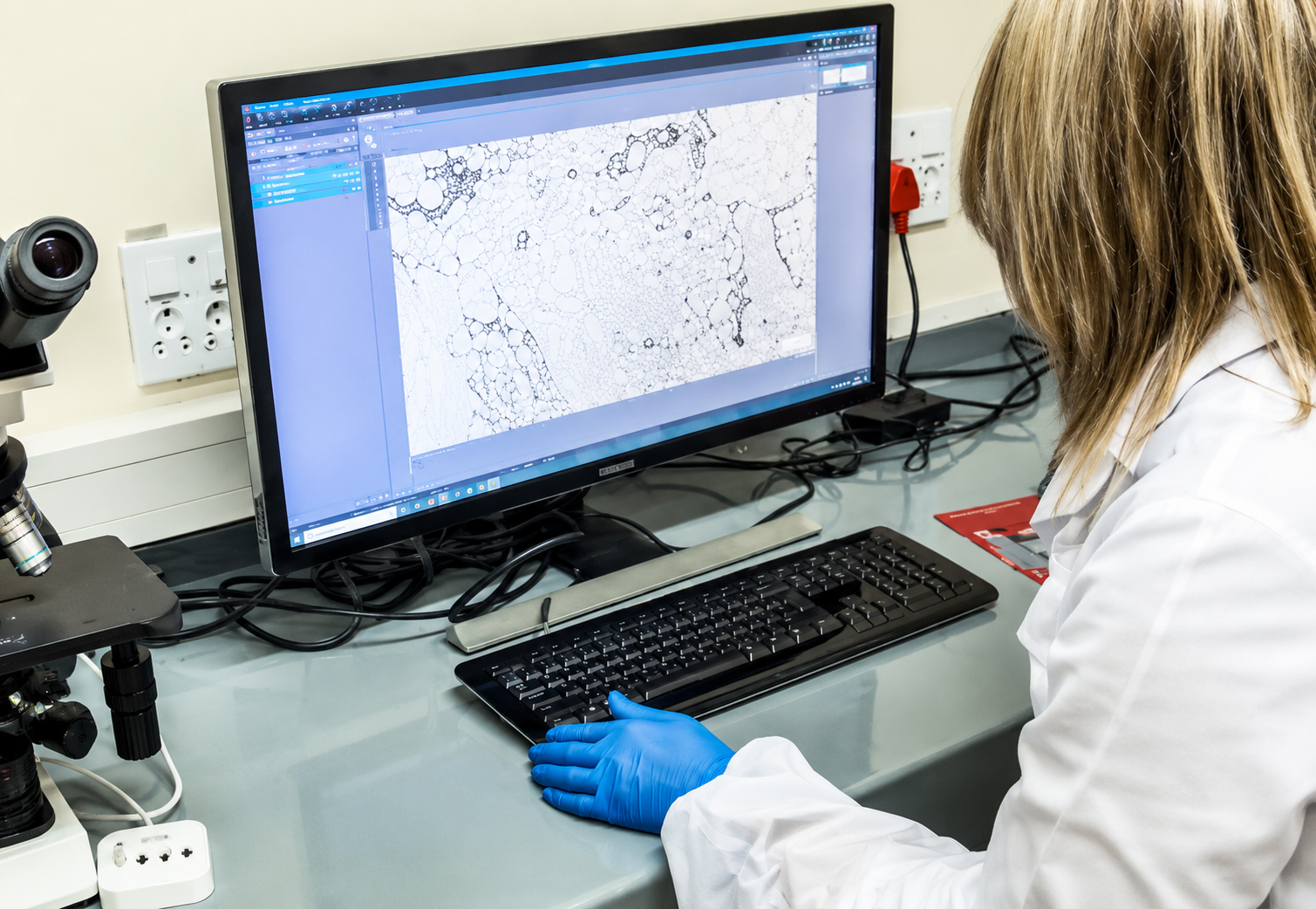
Vermitech, Soiltech’s laboratory division, focuses on screening for and identifying microbes with positive plant-growth-promoting characteristics. The laboratory uses developed fermentation processes and formulations to grow these microorganisms into farmer-friendly products.
The laboratory side is critical because biological farming depends on living organisms. Quality, strain selection, purity, testing and formulation matter. Vermitech notes that products must show yield increases in the field over several seasons and conditions before they are included in Soiltech packages.
The lab also places importance on purity and quality control, including frequent 16S rRNA analysis of cultures. In biological agriculture, this kind of discipline matters because living products are not all the same. Strain identity, compatibility and practical field performance are central to success.
For farmers, this reinforces a key point: biology should not be treated as magic. It should be treated as technical agriculture.
Pepper Establishment Shows the Direction
The Soiltech article refers to field observations presented during the Soiltech talk, where pepper crops treated with biological transplant systems showed consistent establishment performance. This included high survival rates under adverse field conditions and continued vegetative and reproductive development.
The point is not that one product or one programme solves every production challenge. Rather, the work highlights the value of looking at establishment as a biological process.
Open-field vegetable production depends heavily on uniformity. A block that establishes unevenly is difficult to manage. Irrigation, fertiliser applications, pest control and harvest timing all become more complicated.
Where biological establishment can help protect early root activity and plant recovery, it may have value beyond the transplant stage itself. It may influence the whole management profile of the crop.
That is why early establishment is critical. The crop that starts evenly is easier to manage, easier to scout and often easier to harvest consistently.
Postharvest Disease Starts Before the Box
One of the most valuable parts of the Soiltech-sponsored article is the connection between field biology and postharvest quality.

Franziske Ehlers of Vermitech extended the discussion beyond planting and into postharvest disease dynamics in tomatoes and peppers. Fruit decay can reduce shelf life, lead to quality-control rejections and cause economic losses for growers.
In peppers, Fusarium species were identified as dominant pathogens. Other decay organisms, including Rhizopus and Penicillium, were also linked to postharvest breakdown. In tomatoes, Geotrichum and Cladosporium were identified as primary pathogens associated with sour rot and black mould symptoms.
These findings matter because postharvest quality is not created only in the packhouse. Fruit carries the history of the field with it. Stress, wounds, handling, disease pressure and microbial balance all influence how produce behaves after harvest.
This is a critical message for vegetable growers. If fruit arrives at the packhouse already biologically compromised, hygiene and cold-chain discipline can help, but they may not be enough to reverse the underlying issue.
The Crop as a Biological Unit
A key concept in the Vermitech presentation was the holobiont. This describes the plant and its associated microorganisms as one integrated biological unit.
On the fruit surface, pathogens, spoilage organisms, environmental microbes and beneficial organisms interact continuously. When the balance is disturbed, opportunistic organisms can dominate. That can accelerate fruit breakdown.
This does not replace basic postharvest discipline. Careful harvesting, clean containers, sound hygiene and proper handling remain essential. However, it adds another layer to disease management.
If fruit quality is influenced by microbial balance, then disease management should not begin only after symptoms appear. It must begin in the field, in the root zone, during establishment, through plant health, during harvest and throughout handling.
The Soiltech article puts it well: postharvest decay is not only a packhouse problem. It is linked to the biological condition of the crop.
Biology Suppresses, Colonises, Stimulates and Stabilises
Another important message from the article is that biology does not work in only one way. Biological tools may suppress pathogens, colonise plant surfaces, stimulate plant responses and stabilise microbial systems.
Laboratory antagonism assays presented by Vermitech evaluated volatile and non-volatile metabolite activity, direct inhibition and spore suppression effects of selected biological organisms against postharvest pathogens. Results varied by organism strain and pathogen combination, which is expected in living systems.
That strain-specific result is critical. It reinforces the need for proper testing, local diagnostics and realistic expectations.
Growers should avoid the mistake of assuming that every biological product works in the same way, on every crop, against every pathogen, under every condition. Living systems are more complex than that.
The practical solution is not to reject biology because it is complex. The solution is to work with technical partners who test, diagnose and build programmes around real farm conditions.
Where Soiltech Fits in Commercial Vegetable Production
Soiltech’s programmes are relevant across a wide range of crops. Its website lists examples including potatoes, butternuts, sweet peppers, chillies, onions, tomatoes, beetroot, lettuce, cabbage, corn, wheat, sugarcane, bananas, litchis, citrus, macadamia, silage and dairy grazing.
For Nufarmer Africa readers, the vegetable focus is especially important. South African vegetable growers need practical tools that improve establishment, root activity, stress recovery, uniformity, quality and shelf life.
Soiltech’s approach brings together several pillars:
Soil analysis and fertility correction
The programme starts with understanding the soil’s mineral balance and correcting the foundation where needed.
Soil food web support
The aim is to build and stimulate active soil life instead of treating the soil as an empty medium.
PGPM-based biological support
Beneficial microorganisms are used to support plant growth, root-zone balance and biological resilience.
Microbe feeding programmes
Soiltech recognises that introduced or stimulated microbes need food sources and a suitable environment.
Diagnostics and laboratory support
Vermitech’s role supports more accurate biological understanding, pathogen awareness and programme development.
Together, these pillars create a system-based approach rather than a once-off input decision.
Practical Points for Open-Field Vegetable Growers
The Soiltech article ends with several practical points that are highly relevant for commercial farmers.
Start at transplanting
Protect the young plant during the first establishment phase, when root damage and stress can affect the rest of the crop.
Avoid thinking sterile
A productive root zone should be biologically balanced, not biologically empty.
Use diagnostics where possible
Postharvest disease organisms differ by crop and situation. Laboratory work can help identify the real problem.
Look beyond yield
Measure survival, uniformity, root development, fruit quality, shelf life and rejection rates.
Treat biology as a programme
Biological tools work best when combined with sound irrigation, nutrition, hygiene, scouting and handling practices.
Keep expectations realistic
Living systems are strain specific. Results depend on the crop, pathogen, environment and application strategy.
These points are critical because they shift biological farming from theory into farm management.
What Growers Should Measure
To understand whether a biological programme is working, growers should look beyond yield alone.
Important measurements include:
- Transplant survival
- Root development
- Stand uniformity
- Vegetative growth
- Flowering consistency
- Fruit set
- Fruit size and quality
- Shelf life
- Packhouse rejection rates
- Disease incidence
- Recovery after stress
- Soil biological indicators where available
This type of measurement helps growers make better decisions. It also helps separate emotional claims from practical performance.
Why This Matters for the Future of Vegetable Production
The future of vegetable production will not be built on one input, one product or one farming philosophy. It will be built on better integration.
Growers still need irrigation discipline, nutrition, scouting, pest control, hygiene, labour management and market planning. But soil biology and crop microbiomes are becoming critical parts of that system.
The strongest growers will likely be those who understand that crop quality begins before the visible fruit. It begins in the soil. It begins at transplanting. It begins in the root zone. It continues through plant stress, flowering, fruit development, harvest and postharvest handling.
Soiltech’s message is therefore practical: healthy soil grows healthy plants. In a market where quality, shelf life, sustainability and resilience matter more every season, that message is becoming harder to ignore.
Conclusion: Biology Is Now Part of Commercial Crop Strategy
Biological crop establishment and microbiome-based postharvest management are not quick fixes. They require timing, compatibility, diagnostics, technical support and realistic expectations. They must also be fitted into existing crop protection, nutrition and irrigation programmes.
However, for South African vegetable growers, the direction is clear. The living system around the plant is becoming more important in commercial decision-making.
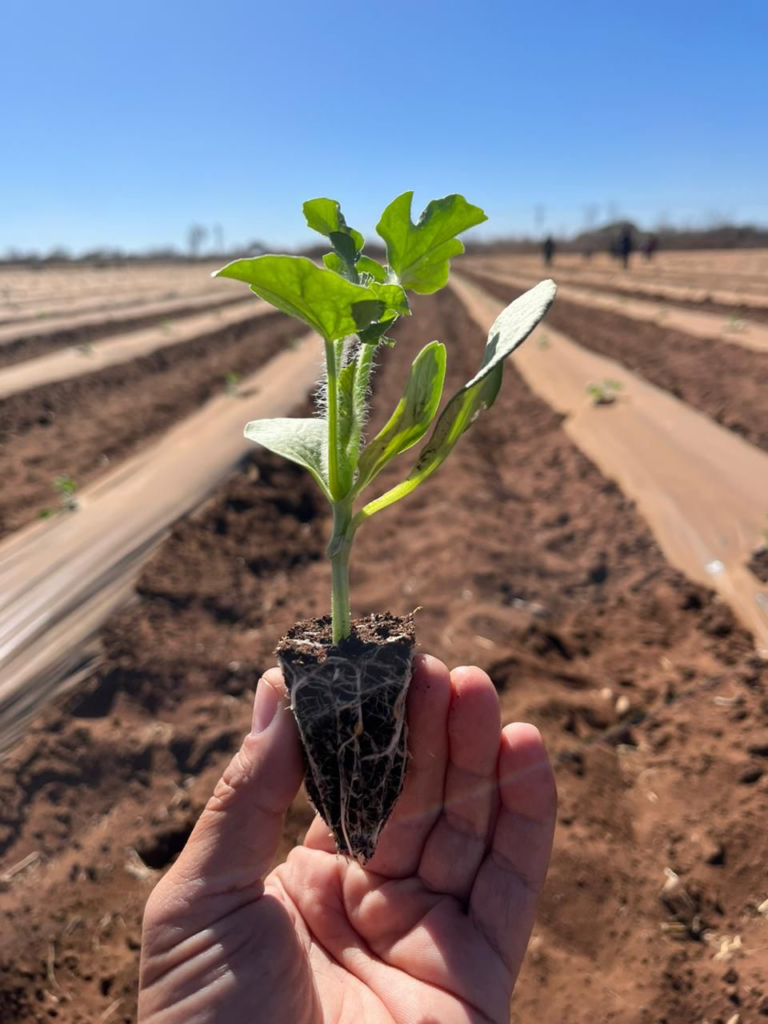
From the root zone at transplanting to the microbial community on harvested fruit, biology is now part of the production conversation. For growers who want stronger establishment, better uniformity, improved resilience and longer-lasting quality, that conversation is critical.
Soiltech’s work shows that the next step in open-field vegetable production is not simply to grow more. It is to grow better, with living soil, stronger plants and more resilient production systems.
Frequently Asked Questions
1. Why is soil biology critical in vegetable production?
Soil biology is critical because roots do not grow in isolation. They interact with bacteria, fungi, minerals, organic matter and soil structure. A healthy biological environment can support nutrient availability, root development, stress recovery and disease suppression.
2. What is transplant shock?
Transplant shock occurs when seedlings are moved from the nursery into the field and experience root disturbance, water stress or growth interruption. It is critical because early stress can influence crop uniformity, flowering, fruit set and later yield potential.
3. What does Soiltech mean by a living root zone?
A living root zone is biologically active and balanced. It contains beneficial organisms that can colonise roots, compete with pathogens, support nutrient cycling and help plants recover from stress. It is not a sterile or biologically empty environment.
4. What are Plant Growth Promoting Micro-Organisms?
Plant Growth Promoting Micro-Organisms, or PGPMs, are beneficial bacteria and fungi that can support plant growth. They may assist with nutrient availability, plant hormone activity, phosphate solubilisation, stress response and root-zone balance.
5. How does Vermitech support Soiltech’s programmes?
Vermitech supports Soiltech through laboratory screening, identification, fermentation and formulation of beneficial microorganisms. This laboratory role is critical because biological inputs depend on purity, strain performance and practical field results.
6. Can biological products replace all chemical crop protection?
Not necessarily. Biological products are best viewed as part of an integrated programme. They can support crop health, root-zone balance and disease management, but they should be combined with good irrigation, nutrition, scouting, hygiene and responsible crop protection.
7. Why does postharvest disease begin in the field?
Postharvest disease is influenced by field stress, wounds, pathogens, handling and microbial balance. Fruit carries its field history into the packhouse, so biological condition before harvest can become critical for shelf life and rejection rates.
8. Which crops can benefit from Soiltech’s approach?
Soiltech’s approach has been applied to many crops, including peppers, tomatoes, onions, cabbage, lettuce, butternuts, potatoes, chillies, citrus, macadamias, sugarcane and other crops. The principles of living soil and biological balance can be adapted across different systems.
9. What should farmers measure besides yield?
Farmers should measure survival, stand uniformity, root development, stress recovery, fruit quality, shelf life, disease levels and packhouse rejection rates. These indicators are critical for understanding whether a biological programme is improving real crop performance.
10. Is biological farming a quick fix?
No. Biological farming is not a quick fix. It is a programme-based approach that depends on timing, soil condition, crop needs, microbial compatibility, diagnostics and technical support. When properly managed, it can become a critical part of long-term sustainable productivity.
(M.O)