
Introduction: Why Breed Purity Matters in a Livestock Breeding Program

Livestock breeding has always been at the heart of agricultural progress. For centuries, farmers have selected animals that display desirable traits, gradually shaping the breeds that support modern agricultural production today. Whether the goal is improved meat quality, milk production, adaptability to local climates, or disease resistance, the success of these efforts depends on a carefully managed Livestock Breeding Program.
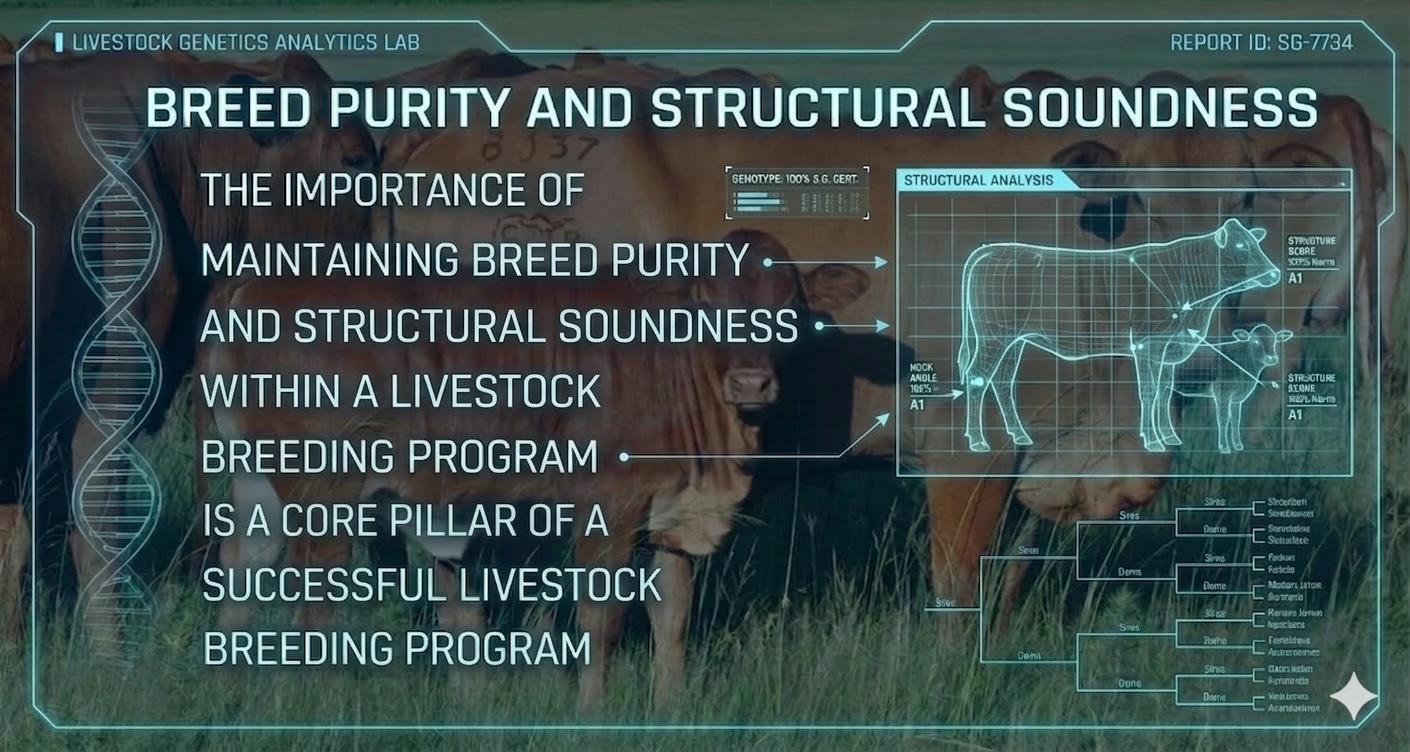
Breed purity and structural soundness are two critical components that underpin the long-term success of any Livestock Breeding Program. These principles help ensure that animals consistently express the traits associated with a particular breed while maintaining the genetic strength required for sustainable production.
As livestock production systems become increasingly sophisticated, understanding the science behind breed purity and population structure has become more important than ever. Farmers today must balance the preservation of breed identity with the maintenance of genetic diversity. Achieving this balance allows a Livestock Breeding Program to deliver predictable performance, improved productivity, and long-term resilience.
Advances in genetics have also transformed the way farmers and researchers approach animal breeding. Modern technologies now allow breeders to confirm pedigree information, detect hidden genetic diversity, and evaluate genetic traits with remarkable accuracy. These tools provide valuable support to farmers seeking to strengthen their Livestock Breeding Program and improve herd performance.
The Relevance of Breed Purity in a Livestock Breeding Program
For generations, livestock producers have worked diligently to maintain the defining characteristics of their breeds. Through selective breeding and careful record-keeping, farmers have preserved genetic lines that produce animals with reliable and desirable traits.
Breed purity is fundamental to maintaining these characteristics. In the context of a Livestock Breeding Program, breed purity refers to how closely an animal’s genetic background aligns with the established standards of a specific breed. Animals considered purebred typically descend from multiple generations of registered breeding animals that meet the breed’s defined characteristics.
Maintaining breed purity ensures that animals consistently express the traits that make a breed valuable. These traits may include:
Growth rate
Fertility and reproductive efficiency
Milk production
Carcass quality
Adaptability to environmental conditions
Disease resistance
Within a Livestock Breeding Program, this consistency allows farmers to predict the performance of offspring more accurately. When breeders select animals with known genetic backgrounds, the resulting progeny are more likely to display the desired traits.
Predictability is particularly important in commercial livestock production. Producers must meet strict market requirements, and uniformity in animal performance helps ensure that production systems remain efficient and profitable. Maintaining breed purity therefore strengthens the reliability of a Livestock Breeding Program and helps farmers meet industry demands.
Purebred animals also often carry higher economic value. Stud animals, breeding stock, and show animals frequently command premium prices due to their verified genetic background. Farmers who maintain high breed standards within their Livestock Breeding Program can therefore benefit from improved marketing opportunities and stronger demand for their animals.
Balancing Breed Purity and Genetic Diversity
While breed purity is essential, it must be managed carefully within a Livestock Breeding Program. Excessive emphasis on purity without sufficient attention to genetic diversity can lead to unintended consequences.
One of the most significant risks associated with poorly managed breeding systems is inbreeding. Inbreeding occurs when closely related animals are repeatedly mated within the same breeding population. Although this may initially reinforce certain desirable traits, it can eventually lead to reduced genetic variation.
When genetic diversity declines, the overall health and productivity of a herd may be affected. In extreme cases, excessive inbreeding may lead to:
Reduced fertility
Lower growth performance
Increased susceptibility to disease
Reduced adaptability to environmental changes
Higher incidence of genetic disorders
For this reason, maintaining genetic diversity is just as important as preserving breed purity within a Livestock Breeding Program. Responsible breeders carefully plan mating strategies to avoid excessive relatedness between breeding animals.
Balancing breed integrity with genetic diversity ensures that livestock populations remain resilient. A well-managed Livestock Breeding Program therefore focuses not only on preserving breed characteristics but also on protecting the genetic strength of the population.
The Role of Breed Societies in Maintaining Breed Standards
Breed societies and registration authorities play a central role in safeguarding breed purity. These organizations establish the standards that define each livestock breed and oversee the processes used to verify breed authenticity.
Within a structured Livestock Breeding Program, breed societies typically rely on three primary verification methods.
Pedigree documentation provides a detailed record of an animal’s ancestry. These records trace the lineage of breeding animals across multiple generations and confirm that both parents belong to the same breed.
Physical assessments are also commonly used to evaluate breed characteristics. Animals may be inspected to ensure that their physical structure, coloration, and conformation align with breed standards.
In recent years, genetic testing has become an increasingly valuable tool in breed verification. DNA analysis allows breeders to confirm parentage and evaluate genetic composition with remarkable accuracy.
Animals that meet these standards are typically registered as purebred or stud animals. Once registered, they can be used within formal breeding systems and contribute to the advancement of a Livestock Breeding Program.
Understanding Population Structure Within Livestock Breeds
Another important concept in livestock genetics is population structure. Population structure refers to the genetic organization of animals within a breed or across multiple breeds.
Within a Livestock Breeding Program, population structure can be influenced by several factors, including geographic distribution, historical breeding practices, and environmental adaptation.
Over time, groups of animals belonging to the same breed may become genetically distinct if they are bred in isolation. These isolated subpopulations can gradually develop unique genetic characteristics that differ from those found in the main population.
For example, animals raised in a specific region may adapt to local environmental conditions such as climate, feed availability, or disease pressure. While these adaptations can be beneficial, they may also create genetic divergence within the breed.
Understanding this structure is important for breeders. If subpopulations become too genetically isolated, important production traits may begin to decline. In some cases, the separation of breeding groups can result in animals that no longer perform according to the breed’s original expectations.
By studying population structure, farmers can make more informed decisions when selecting breeding animals. This knowledge helps maintain genetic balance within a Livestock Breeding Program and ensures that the breed continues to perform at its highest potential.
Scientific Tools Used to Evaluate Breed Purity
Historically, pedigree records were the primary tool used to confirm breed purity. While these records remain extremely valuable, they are not always complete or accurate.
Missing pedigree information can create challenges for breeders who wish to include animals in a Livestock Breeding Program. Without verified ancestry, it may be difficult to confirm whether an animal truly belongs to a specific breed.
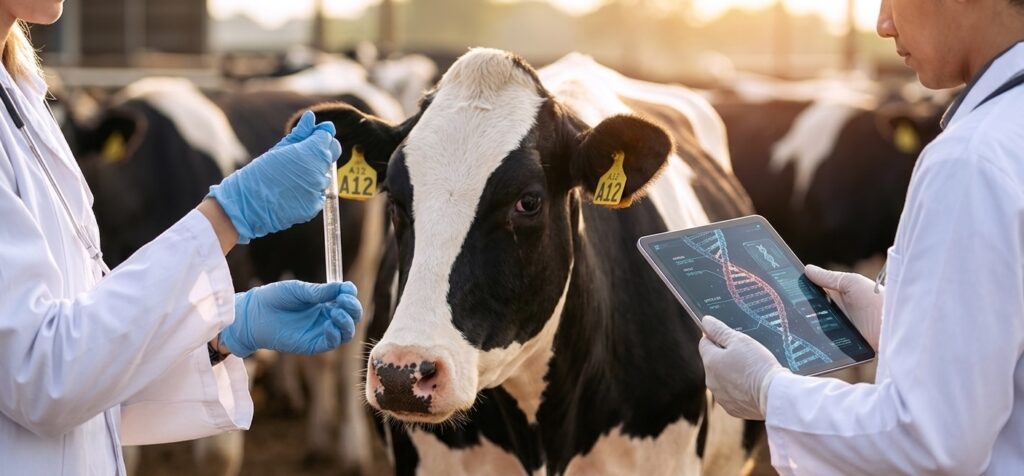
Fortunately, modern genetic technologies now offer powerful solutions.
Molecular markers have become essential tools in livestock genetics. These markers analyze DNA to detect genetic variation between animals.
Two of the most widely used molecular marker systems are:
Single Nucleotide Polymorphisms (SNPs)
Microsatellites
These genetic markers provide highly detailed information about an animal’s genetic composition. Within a Livestock Breeding Program, they can be used to confirm breed purity, evaluate genetic diversity, and detect hidden variation within populations.
Genetic testing can also identify small differences between animals that may not be visible through physical evaluation. This information helps breeders understand the genetic structure of their herds and make better breeding decisions.
Another important application of genetic technology is parentage testing. DNA testing can confirm whether an animal’s recorded sire and dam are correct. Accurate parentage information strengthens the reliability of pedigree records and improves the effectiveness of a Livestock Breeding Program.
How Genetic Technology Is Transforming Livestock Breeding
Advances in genetic science have revolutionised livestock breeding over the past few decades. Modern breeding programs now have access to tools that allow breeders to evaluate animals with unprecedented precision.
Genomic technologies enable farmers to identify animals with superior genetic potential at an early age. Instead of waiting for animals to mature and demonstrate their performance, breeders can analyze genetic markers to predict how an animal will perform.
This allows breeders to make faster and more informed decisions within a Livestock Breeding Program.
Genetic technologies can also help identify harmful genetic traits before they spread through the population. By avoiding unfavorable genetic combinations, breeders can protect herd health and improve long-term productivity.
As these technologies continue to advance, they will play an increasingly important role in improving the efficiency and sustainability of livestock production systems.
Practical Benefits for Farmers
Understanding breed purity and population structure provides several practical advantages for farmers managing a Livestock Breeding Program.
Improved productivity is one of the most important benefits. Animals with strong genetic backgrounds tend to perform better in terms of growth, fertility, and production efficiency.
Maintaining breed purity also supports better market opportunities. Purebred animals are often in high demand among breeders who wish to improve their own herds.
Another important benefit is reduced risk. By monitoring genetic diversity and avoiding excessive inbreeding, farmers can protect the long-term health of their livestock populations.
These advantages demonstrate why careful genetic management remains a cornerstone of a successful Livestock Breeding Program.
The Future of Livestock Breeding Programs
The agricultural sector continues to evolve rapidly as new technologies and production systems emerge. Livestock producers must adapt to challenges such as climate change, shifting consumer expectations, and increasing demands for sustainable production.
In this changing environment, the principles of breed purity and population structure will remain essential. A well-designed Livestock Breeding Program provides the foundation for improving productivity while maintaining genetic resilience.
Modern genetic tools will continue to enhance the ability of farmers to evaluate and improve their herds. DNA testing, genomic selection, and advanced breeding technologies will enable producers to make more precise and efficient breeding decisions.
These innovations will help ensure that livestock populations remain productive, adaptable, and capable of meeting the global demand for food.
Key Takeaways
Farmers seeking to strengthen their breeding strategies should recognize that breed purity and genetic structure are fundamental components of a successful Livestock Breeding Program.
Breed purity helps maintain the defining characteristics of livestock breeds and ensures consistent production performance.
Understanding population structure allows breeders to manage genetic diversity and prevent excessive inbreeding.
Modern genetic technologies provide powerful tools for confirming pedigree records, evaluating breed purity, and identifying valuable genetic traits.
By integrating these principles into their breeding strategies, farmers can develop a Livestock Breeding Program that supports long-term productivity and sustainability.
Conclusion
Livestock breeding has always been guided by the careful selection of animals with desirable traits. Today, this tradition continues with the support of modern genetic science.
Breed purity remains a cornerstone of any effective Livestock Breeding Program, providing the consistency and predictability necessary for successful livestock production. At the same time, maintaining genetic diversity ensures that livestock populations remain healthy and adaptable.
Through the combined efforts of farmers, breed societies, and researchers, livestock breeding continues to evolve. By applying both traditional breeding knowledge and modern genetic technologies, producers can strengthen their Livestock Breeding Program and ensure that future generations of livestock remain productive, resilient, and genetically sound.

By Dr Ben Greyling
Research Team Manager – Animal Production
Agricultural Research Council
ben@arc.agric.za
Featured Snippet Tables
Table 1: Benefits of Breed Purity in a Livestock Breeding Program
| Benefit | Explanation |
|---|---|
| Predictable Performance | Purebred animals produce more consistent offspring traits |
| Market Value | Purebred animals often command higher prices |
| Genetic Improvement | Easier to identify superior animals for breeding |
| Breed Preservation | Maintains unique genetic characteristics |
| Industry Standards | Ensures livestock meet market requirements |
Table 2: Genetic Tools Used in Livestock Breeding
| Technology | Purpose |
|---|---|
| SNP Markers | Identify genetic variation between animals |
| Microsatellites | Analyze genetic diversity within populations |
| DNA Parentage Testing | Confirm pedigree accuracy |
| Genomic Selection | Identify superior breeding animals |
| Genetic Diversity Analysis | Prevent inbreeding in breeding programs |
Table 3: Risks of Poorly Managed Breeding Programs
| Risk | Impact |
|---|---|
| Inbreeding | Reduced fertility and productivity |
| Loss of Genetic Diversity | Lower adaptability to environmental change |
| Pedigree Errors | Poor breeding decisions |
| Genetic Disorders | Increased health problems |
| Reduced Production | Lower growth or milk yield |
10 FAQ Sections
What is breed purity in livestock breeding?
Breed purity refers to how closely an animal matches the genetic and physical characteristics of a defined livestock breed. In a livestock breeding program, purebred animals come from generations of registered animals within the same breed.
Why is breed purity important in a livestock breeding program?
Breed purity ensures that animals consistently display desirable traits such as fertility, growth rate, and adaptability. Maintaining breed purity helps breeders predict performance and improve herd productivity.
What happens if breed purity is not maintained?
Without breed purity, livestock populations may lose important production traits and genetic consistency. This can result in lower productivity, reduced adaptability, and unpredictable offspring performance.
What is population structure in livestock breeding?
Population structure refers to how animals within a breed are genetically grouped into subpopulations. Understanding this structure helps breeders manage genetic diversity and avoid excessive inbreeding.
What is inbreeding in livestock breeding?
Inbreeding occurs when closely related animals are bred together. While it can sometimes fix desirable traits, excessive inbreeding can lead to reduced fertility, lower productivity, and increased genetic disorders.
How do breed societies verify breed purity?
Breed societies typically verify breed purity using pedigree records, physical evaluations, and genetic testing. These systems ensure that animals meet the official breed standards.
What genetic tools are used to check breed purity?
Modern genetic tools use molecular markers such as SNPs and microsatellites to analyze DNA and estimate breed composition. These tools can confirm breed purity even when pedigree records are incomplete.
Can genetic testing replace pedigree records?
Genetic testing cannot fully replace pedigree records but serves as a powerful verification tool. In a livestock breeding program, DNA testing helps confirm parentage and identify breed composition.
Why is genetic diversity important in livestock breeds?
Genetic diversity ensures that livestock populations remain adaptable to changing environments and disease pressures. Maintaining diversity strengthens the long-term sustainability of a livestock breeding program.
How can farmers improve their livestock breeding program?
Farmers can improve a livestock breeding program by maintaining breed purity, monitoring genetic diversity, keeping accurate pedigree records, and using modern genetic testing tools.
(M.O)