
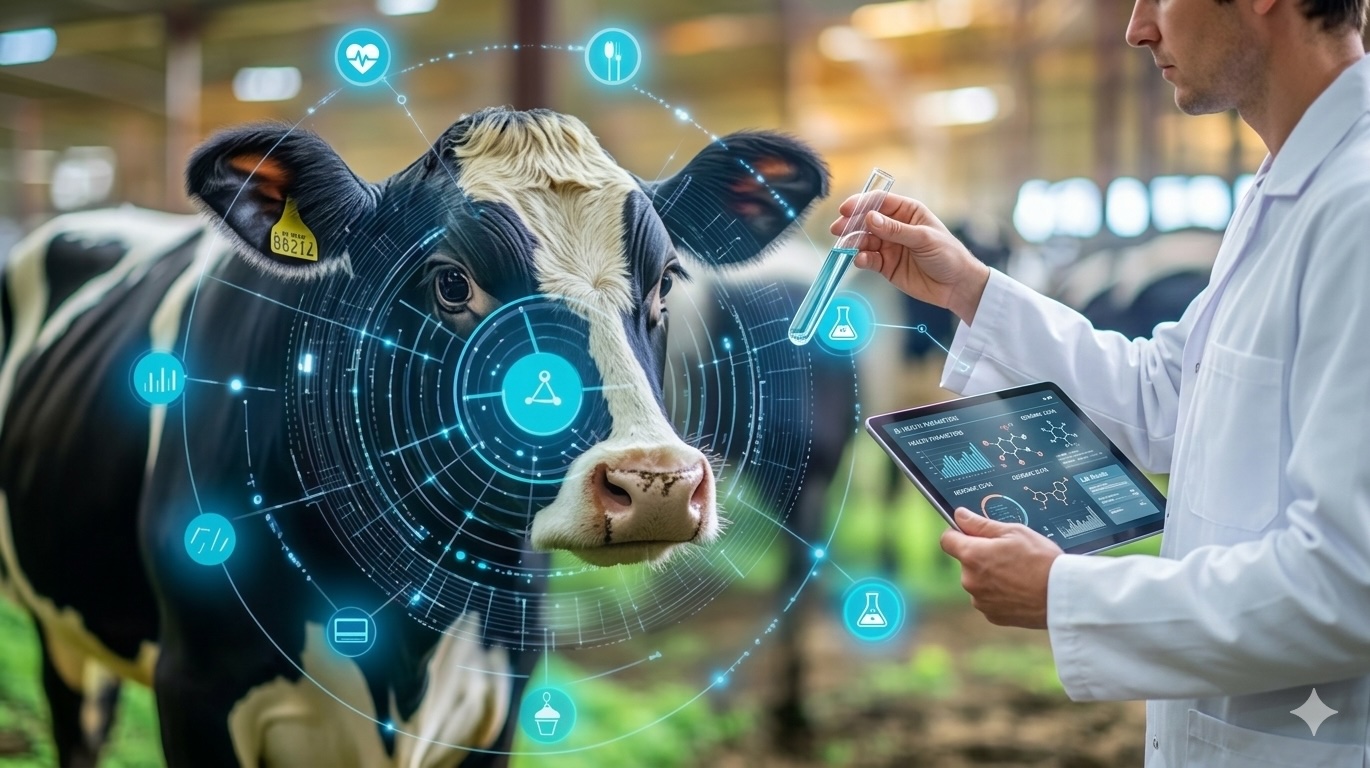
A closer look at the microscopic world of DNA and its powerful impact on modern animal production
The Hidden Forces Behind Livestock Performance
For thousands of years, farmers have relied on observation, experience, and careful selection to improve their livestock. Long before the discovery of DNA or modern breeding technologies, producers intuitively understood that selecting the best animals for breeding would gradually improve herd quality. This ancient practice laid the foundation for the sophisticated breeding programmes used today.
However, livestock performance is shaped by two powerful forces that constantly interact: Nature and Nurture.
Nurture refers to the environmental factors that influence an animal throughout its life. These include:
- Nutrition and feed quality
- Climate and temperature fluctuations
- Disease pressure
- Housing and management practices
- Stress levels and animal welfare
These factors directly influence how well an animal grows, reproduces, and performs.
Nature, on the other hand, refers to the genetic blueprint that each animal is born with. Livestock Genetics determines the biological potential of an animal — its capacity for growth, fertility, feed efficiency, milk production, resilience, and adaptability.
Even though genetics plays a critical role in animal production, it is often the least understood component among producers. Yet modern advances in genetics and DNA technology have opened a remarkable window into the biological mechanisms that drive livestock performance.
Understanding this genetic micro-picture provides farmers with powerful tools to improve herd productivity, sustainability, and profitability.
The Fascinating World Inside Every Animal Cell
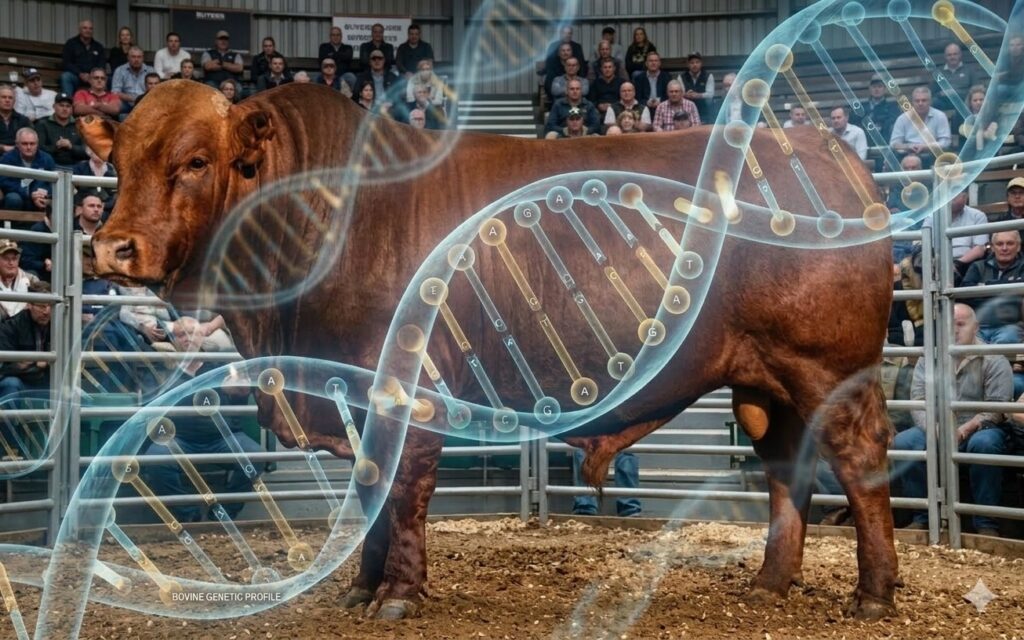
At the heart of every living organism lies an incredibly complex biological system: DNA.
Genes, which carry the instructions for life, are organised into structures known as chromosomes. These chromosomes contain DNA sequences that code for proteins responsible for essential biological functions such as growth, development, immunity, and reproduction.
Genes also determine the phenotype of an animal — the visible characteristics or traits such as coat colour, body size, horn status, and muscle development.
One of the most astonishing facts about DNA is its sheer scale.
Inside a single cell of a human or a cow lies approximately two metres of DNA tightly packed into chromosomes. If the DNA from every cell in a single body were stretched out and placed end-to-end, it would be long enough to reach the sun and back around 80 times.
Considering that the sun is roughly 150 million kilometres from Earth, this illustrates the incredible amount of genetic information contained within living organisms.
Despite this immense complexity, this genetic information functions with remarkable precision to guide the development and performance of animals throughout their lives.
Why Genetic Variation Matters in Animal Breeding
One of the most powerful characteristics of genetics is variation.
Genetic variation refers to the differences in genes between individuals within a population. Without this variation, selective breeding would be impossible. It is variation that allows farmers and breeders to identify animals with superior traits and use them to improve future generations.
The organisation and inheritance of chromosomes play a critical role in creating this variation.
Humans, for example, have 46 chromosomes in each cell. Cattle have 60 chromosomes, which provides an enormous potential for genetic diversity.
During reproduction, each parent contributes half of their chromosomes to the offspring. This means every calf receives a unique genetic combination from its sire and dam.
To understand the magnitude of this variation, consider the following example.
A human couple can produce a child with more than 70 trillion possible chromosome combinations.
But the story does not end there.
During the formation of reproductive cells (sperm and eggs), chromosomes can undergo a process known as recombination, where sections of genetic material are exchanged between chromosomes. This reshuffling further increases the number of possible genetic combinations.
When these processes are combined, the number of potential genetic variations becomes astronomically large — far exceeding the total number of stars in the universe.
This immense diversity is the raw material that allows breeders to select animals with desirable traits and gradually improve herd performance.
The Extraordinary Genetic Potential of Cattle
When we focus specifically on cattle, the scale of genetic variation becomes even more impressive.
Cattle possess 60 chromosomes and more than 22,000 genes that influence traits ranging from growth rate and fertility to disease resistance and feed efficiency.
When a bull and a cow produce a calf, that calf can inherit more than one million trillion (10¹⁸) possible combinations of chromosomes.
This staggering number highlights the extraordinary ability of nature to generate genetic diversity.
For livestock producers, this diversity represents a tremendous opportunity.
By identifying and selecting animals with superior genetic potential, breeders can:
- Improve productivity
- Enhance feed efficiency
- Increase reproductive success
- Strengthen disease resistance
- Improve climate resilience
In an era where livestock production faces growing challenges — including climate change, rising feed costs, and global food demand — harnessing this genetic potential has become more important than ever.
How DNA Technology is Transforming Livestock Farming
Over the past two decades, DNA technology and genomic tools have revolutionised livestock breeding.
Today, farmers and breeders can use genetic information to make more accurate and informed decisions than ever before.
Modern DNA testing allows producers to identify animals that carry beneficial genes as well as those that may carry undesirable genetic mutations.
Some examples include identifying genetic conditions such as:
- Curly calf syndrome
- Chromosomal translocations that cause reproductive problems
By identifying these conditions early, breeders can prevent them from spreading through the herd.
Genetic Markers: The Roadmap to Profitability
One of the most exciting developments in livestock genetics is the identification of genetic markers linked to economically important traits.
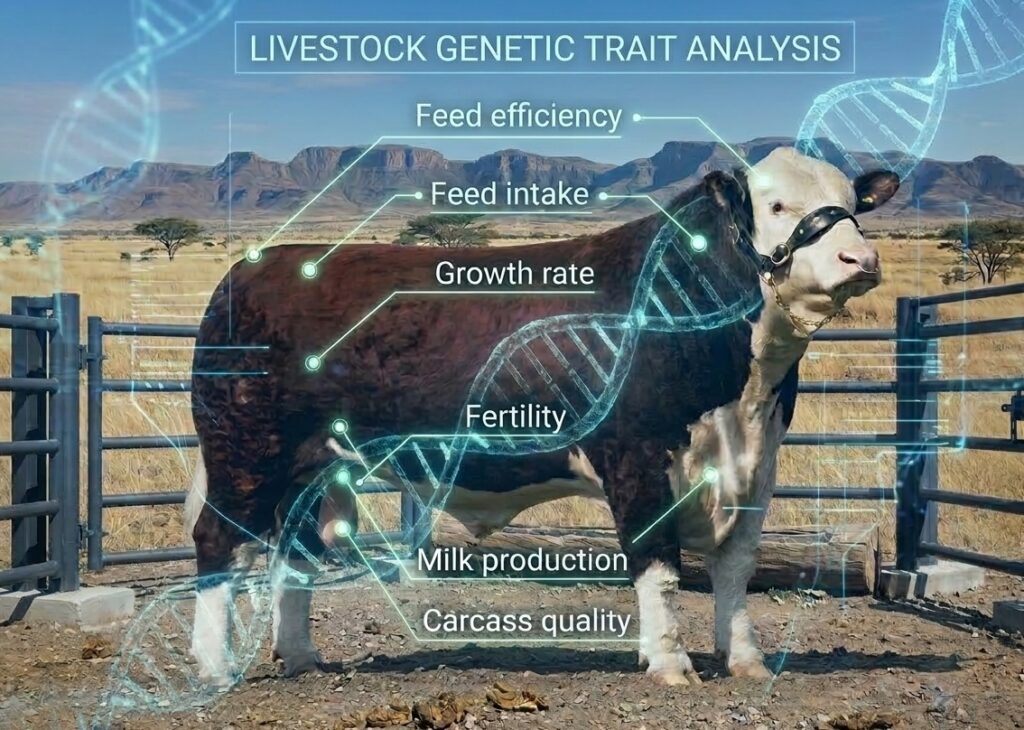
Genetic markers are specific DNA sequences associated with desirable characteristics.
These markers allow breeders to identify animals with strong genetic potential long before those traits become visible.
Traits commonly analysed through genetic markers include:
- Feed efficiency
- Feed intake
- Growth rate
- Fertility
- Milk production
- Carcass quality
By selecting animals with favourable genetic markers, farmers can accelerate genetic progress within their herds.
In addition, genetic tests are now available for identifying specific traits such as:
- Polledness (naturally hornless animals)
- Double muscling
These traits can have significant implications for management, animal welfare, and meat production.
DNA Parentage Testing: Ensuring Accurate Pedigrees
Another widely used application of DNA technology in livestock production is parentage verification.
DNA testing allows breeders to confirm the sire and dam of calves with near-perfect accuracy.
This technology plays a critical role in:
- Stud breeding programmes
- Pedigree registration
- Performance recording systems
- Breeding value estimation
Accurate pedigree information ensures that breeding decisions are based on reliable data, improving the accuracy of selection.
Genomic Breeding Values: Predicting Future Performance
One of the most powerful tools in modern livestock breeding is the use of Genomic Breeding Values (GBVs).
Genomic breeding values combine DNA information with performance data to estimate the genetic potential of animals.
These estimates allow breeders to predict how well an animal is likely to perform or how its offspring will perform.
This technology significantly improves the accuracy of breeding decisions and allows producers to identify elite animals at a much earlier age.
As a result, genetic progress within a herd can be accelerated dramatically.
Monitoring Genetic Diversity and Preventing Inbreeding
Beyond individual animal selection, DNA technology also plays an important role in managing genetic diversity within breeds and populations.
Genetic analyses can determine:
- The degree of genetic diversity within a population
- Levels of inbreeding
- Breed purity
- Gene flow between populations
Maintaining genetic diversity is essential for the long-term health and adaptability of livestock populations.
Populations with low genetic diversity are more vulnerable to disease outbreaks, environmental stress, and reduced fertility.
By monitoring these genetic indicators, breeders can implement strategies that promote sustainable breeding and maintain healthy, resilient herds.
Breed Purity and Conservation
DNA technology also allows breeders to compare animals with reference populations of specific breeds.
This enables accurate assessment of breed purity and helps maintain the integrity of established breeds.
Such information is also critical for conservation programmes aimed at protecting indigenous livestock genetics and maintaining valuable genetic resources.
In Africa, where livestock must often adapt to harsh climates, disease challenges, and limited resources, preserving locally adapted genetics is particularly important.
The Powerful Balance Between Nature and Nurture
While genetics provides the biological potential of an animal, environmental management determines how much of that potential is realised.
A genetically superior animal will not reach its full potential if nutrition is inadequate, disease pressure is high, or management practices are poor.
Similarly, excellent management cannot compensate for weak genetics indefinitely.
Successful livestock production therefore requires a balanced approach that integrates both elements.
Farmers who combine strong genetics with optimal management practices will produce animals that are:
- Healthier
- More productive
- More resilient
- More profitable
The Future of Livestock Production Lies in Genetics
The livestock industry is entering an era where genetic knowledge and biotechnology will play an increasingly central role in production systems.
Advances in genomic selection, precision breeding, and big data analysis are enabling producers to make smarter, faster, and more informed decisions.
These tools are helping farmers breed animals that are better suited to modern challenges such as:
- Climate variability
- Sustainable resource use
- Increasing global food demand
For African livestock producers in particular, embracing genetic technologies offers enormous potential to improve productivity while maintaining resilience in diverse production environments.
Take-Home Message: Harnessing Nature and Nurture
For thousands of years, farmers have shaped cattle into the breeds we know today through careful observation and selection.
Today, modern science has unlocked the microscopic world of DNA, giving producers unprecedented insight into the genetic potential of their animals.
This knowledge allows breeders to fine-tune genetics, improve herd performance, and build livestock populations capable of thriving in demanding conditions.
Ultimately, the key to successful animal production lies in understanding and managing the powerful partnership between Nature and Nurture.
By combining strong genetics with excellent management, farmers can develop stronger, healthier, and more productive herds for the future.

By Dr Ben Greyling
Research Team Manager: Beef Scheme
ARC-Animal Production, Irene
ben@arc.agric.za
FAQ Section (10 Questions)
1. What is the difference between nature and nurture in livestock production?
Nature refers to the genetic makeup of an animal, while nurture includes environmental factors such as nutrition, climate, disease exposure, and farm management. Both work together to determine livestock performance and productivity.
2. Why are genetics important in cattle breeding?
Genetics determines an animal’s growth potential, fertility, feed efficiency, milk production, and disease resistance. Selecting animals with superior genetics helps farmers improve herd performance over time.
3. How many chromosomes do cattle have?
Cattle have 60 chromosomes in each cell, which contain more than 22,000 genes responsible for physical traits and biological functions.
4. What is genetic variation and why is it important?
Genetic variation refers to the differences in genes between animals. It allows breeders to select superior animals and improve traits such as productivity, adaptability, and disease resistance.
5. How does DNA technology help livestock farmers?
DNA testing helps farmers identify animals with desirable traits, genetic defects, or disease risks, allowing them to make better breeding decisions and improve herd quality.
6. What are genetic markers in cattle?
Genetic markers are specific DNA sequences linked to important traits such as growth rate, feed efficiency, milk production, or carcass quality.
7. What are genomic breeding values (GBVs)?
Genomic breeding values combine DNA data and performance records to estimate an animal’s genetic potential and predict the performance of its offspring.
8. How does DNA testing verify parentage in cattle?
DNA tests compare genetic markers between calves and potential parents to confirm biological relationships with near-perfect accuracy, ensuring accurate pedigrees.
9. Why is genetic diversity important in livestock populations?
Genetic diversity improves adaptability, disease resistance, fertility, and long-term herd sustainability, reducing the risk of inbreeding problems.
10. Can genetics improve livestock profitability?
Yes. Selecting animals with superior genetics for traits like feed efficiency, growth rate, and reproduction can significantly increase farm productivity and profitability.