
Editor’s Introduction
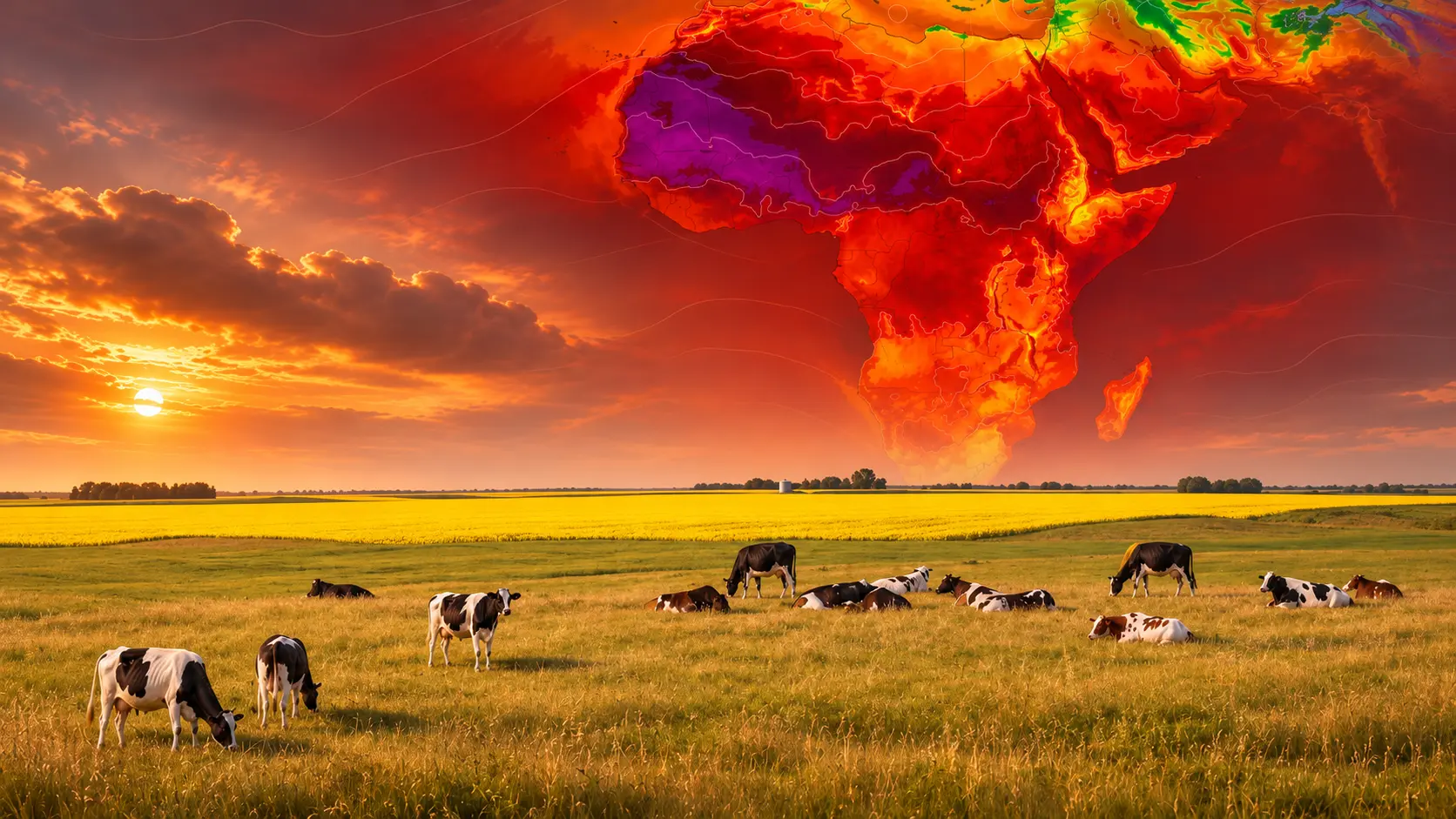
El Niño South Africa 2026/27 presents potential challenges for livestock farmers, particularly concerning natural grazing, fodder availability and heat stress. In this article, Agricultural Research Council researcher Patrick N. Rakau examines these risks and outlines practical measures farmers can take to prepare for challenging production conditions.
Understanding El Niño and why farmers should be concerned
South African farmers are heading into the 2026/27 summer production season under the influence of a strong and intensifying El Niño event. With forecasts pointing towards hotter-than-normal temperatures and below-normal rainfall across much of the country, farmers need to prepare for potentially challenging production conditions ahead.
But what exactly is El Niño, and what could it mean for your farming operation?
El Niño is a naturally occurring climate phenomenon associated with changes in ocean temperatures and atmospheric circulation across the tropical Pacific Ocean. Under normal conditions, strong trade winds push warm surface water towards Southeast Asia and Australia, allowing cooler, nutrient-rich water to rise along the coast of South America. During El Niño, these trade winds weaken, allowing warmer water to move eastwards across the Pacific Ocean. This changes atmospheric circulation and influences weather patterns across the world, including rainfall and temperature patterns in southern Africa.
In South Africa, El Niño events are generally associated with below-normal summer rainfall and above-normal temperatures, although the intensity and distribution of these impacts vary between regions and seasons. The current 2026/27 El Niño event is particularly concerning because international climate forecasts indicate that it could become a very strong event. South African Weather Service (SAWS) seasonal forecasts indicate an increased likelihood of below-normal rainfall and above-normal temperatures over much of the country. This, however, does not mean that every farming area will experience drought, but it does mean that farmers should take the forecasts seriously and start managing their production risks.
What could El Niño mean for South African agriculture?
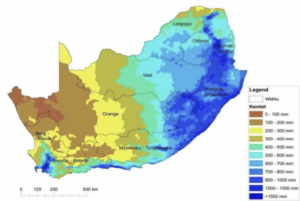
South Africa is already a relatively water-scarce country (see figure opposite), with many farming areas dependent on seasonal rainfall. Most summer-rainfall agricultural areas receive most of their annual rainfall between October and March. The timing, amount and distribution of this rainfall are critical for crop establishment, pasture growth and livestock production. When rainfall is delayed, reduced or poorly distributed, the consequences can be severe.
1. Livestock production and natural grazing
Livestock farmers could experience some of the most serious consequences of prolonged dry conditions. Natural rangelands are the foundation of livestock production in many parts of South Africa. Reduced rainfall limits grass growth which in turn reduces grazing availability and can affect the nutritional quality of available forage. This is particularly concerning in areas where livestock production depends almost entirely on natural veld. Poor grazing conditions can result in livestock losing body condition, reduced reproductive performance, lower conception rates, poor lambing and calving outcomes, and increased animal mortality. Sheep and cattle farmers may also experience reduced wool production, lower weaning weights and declining beef production. Another important concern is the delayed recovery of natural grazing following drought. Even when rainfall eventually returns, veld recovery may take time, and season change particularly where grazing pressure has been high.
2. Forage and fodder production
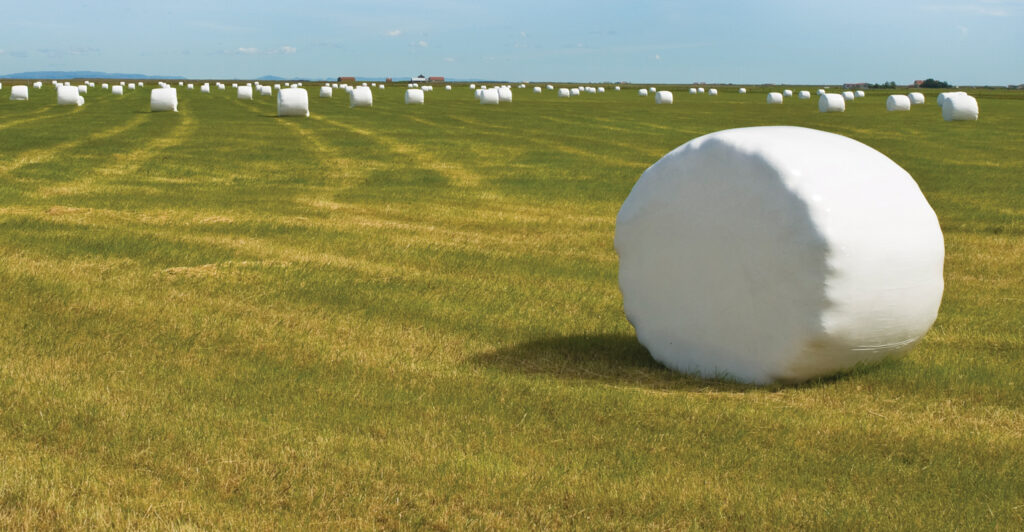
The production of hay, silage and other livestock feeds is also vulnerable to reduced rainfall. Farmers who depend on planted pastures and annual forage crops may experience reduced biomass production and lower-quality feed. This could increase competition for available livestock feed and result in higher feed prices.
Forage shortages may become particularly severe towards the end of the dry season when natural grazing reserves are depleted. Farmers should therefore consider securing additional feed resources before shortages become widespread. Planted pasture under irrigation can serve as vital alternative source of supplementary feed during this difficult EI Nino conditions.
Is South Africa entering the El Niño season without any protection?
There is some positive news. Above-normal rainfall during the 2025/26 summer season, resulted in improved soil moisture and dam levels in many summer-rainfall areas. This provides a useful buffer as South Africa enters the 2026/27 production season. However, this should not create a false sense of security. Soil moisture reserves can decline rapidly under prolonged hot and dry conditions, while increased evaporation and crop water requirements can place additional pressure on available water resources. Farmers should also recognise that El Niño does not affect all parts of South Africa equally. Local weather systems, regional rainfall patterns and other ocean-atmosphere interactions can influence the final outcomes. The important message is that farmers should prepare for the increased risk of drought or flooding rather than assume that the entire country will experience the same conditions.
What can livestock farmers do to reduce the impact?
Although farmers cannot control the weather, they can make management decisions that reduce the impact of drought and heat stress on their farming operations. The following measures are recommended:
- Assess the condition of natural grazing and determine the carrying capacity of the farm before the veld deteriorates and reduce livestock numbers.
- Implement rotational grazing and provide adequate recovery periods for grazing camps.
- Identify alternative feed resources, including hay, silage, crop residues and suitable cultivated forage crops to build fodder bank.
- Prioritise the nutritional requirements of breeding animals, pregnant females and young livestock.
- Ensure that animals have access to sufficient clean drinking water and shade to reduce heat stress.
The role of indigenous forage resources and alternative livestock feeds
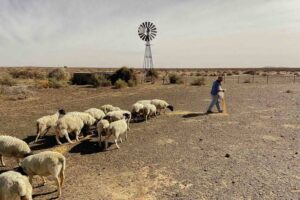
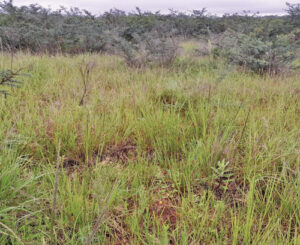
An important lesson from previous droughts is that livestock farmers need to diversify their feed resources rather than rely exclusively on natural grazing. South Africa has a wide diversity of indigenous grasses and legumes that have evolved under challenging environmental conditions. These species represent valuable genetic resources for identifying and developing forage options suited to water-limited production environments.
Research into indigenous forage species, drought-tolerant cultivated pastures and the utilisation of encroaching woody species as livestock feed could provide additional opportunities for improving feed security.
The utilisation of suitable crop residues and other locally available feed resources can also help farmers bridge seasonal feed shortages. However, alternative feed resources must be evaluated for their nutritional value, digestibility, potential toxicity and suitability for different livestock species before being incorporated into feeding programmes. Investing in improved forage production, feed conservation and alternative feed resources is therefore an important part of building more resilient livestock production systems.
What should government and agricultural institutions be doing?
The responsibility for managing the impacts of El Niño does not rest with farmers alone. Government departments, agricultural research institutions, extension services and the private sector all have an important role to play. Government should strengthen early-warning systems and ensure that climate information reaches farmers in a form that is practical and easy to understand. Extension officers should assist farmers in interpreting seasonal forecasts and translating this information into appropriate farm management decisions.
Other important interventions include:
- Providing targeted drought-relief support to vulnerable smallholder and commercial farmers.
- Developing mechanisms to assist farmers who experience significant crop establishment failures and livestock feed shortages.
- Strengthening water infrastructure, including water storage, rainwater harvesting and efficient irrigation systems.
- Supporting research into drought-tolerant crops, improved forage varieties, indigenous forage resources and sustainable rangeland management.
- Strengthening collaboration between government, agricultural research institutions, universities, farmer organisations and the private sector.
The Agricultural Research Council (ARC), through its research programmes in crop improvement, animal production, range and forage sciences, has an important role in developing technologies and management strategies that can help farmers adapt to increasingly variable climatic conditions. Research should also continue to focus on improved rangeland management, sustainable livestock feeding strategies and the identification of alternative forage resources for drought-prone areas.
The message to South African farmers: Prepare now, not when the drought arrives. We cannot control El Niño, but we can control how prepared we are for it.
The 2026/27 El Niño event presents a significant risk to South African agriculture. While the full extent of its impact remains uncertain, the current climate outlook provides sufficient reason for farmers to take precautionary action. Farmers should make informed decisions, conserve available resources, protect their natural grazing, plan their livestock feed requirements and remain alert to changing weather conditions. The most important lesson is that drought preparedness must become part of normal farm management rather than an emergency response once conditions have already deteriorated. South African agriculture has faced severe droughts before, and experience has shown that farms with good planning, sound natural resource management, diversified feed resources and effective risk-management strategies are better positioned to withstand difficult seasons.
Frequently asked questions for South African livestock farmers
How should livestock farmers prepare for El Niño 2026/27?
Early preparation is important because the article describes a serious risk of above-normal temperatures and below-normal rainfall across much of South Africa. The full impact remains uncertain. A practical, proactive response is to assess the risks, protect available resources, prepare livestock feed requirements and remain alert to changing weather conditions.
Will every South African farming area face drought during El Niño?
No. The article makes the critical distinction that El Niño does not affect every area equally. Local weather systems and regional rainfall patterns can influence outcomes. To prepare for that uncertainty, farmers should remain alert to the increased risk of drought or flooding, rather than assume the same conditions will occur everywhere.
Why is summer rainfall so important for livestock and natural grazing?
Much of South Africa’s summer-rainfall agricultural area receives most of its annual rain from October to March. That rainfall is critical for pasture growth, crop establishment and livestock production. Delayed, reduced or poorly distributed rain can create severe grazing pressure and increase the risk of nutritional shortages. To prepare, farmers can assess natural grazing and plan their feed requirements before conditions deteriorate.
What serious livestock impacts can poor grazing conditions cause?
Poor grazing can weaken body condition and reduce reproductive performance, conception rates, lambing and calving outcomes. The article also identifies increased mortality, lower weaning weights, reduced wool production and declining beef production as potential consequences. To prepare for such risks, farmers can protect natural grazing and plan feed resources early.
How can farmers prepare their grazing strategy before veld conditions worsen?
First, assess grazing condition and the farm’s carrying capacity before the veld deteriorates, and reduce livestock numbers as recommended in the article. Implement rotational grazing and allow adequate recovery time for grazing camps. These practical steps help protect grazing resources and support more resilient livestock management.
How can farmers secure vital feed resources before shortages become severe?
To prepare for possible feed shortages, identify and secure suitable alternative feed resources, including hay, silage, crop residues and cultivated forage crops, to build a fodder bank. Feed shortages can increase competition and prices. Early planning, effective feed conservation and diversified feed resources can improve feed security and reduce exposure to seasonal shortages.
Can irrigated planted pasture provide valuable supplementary feed?
Yes. The article identifies planted pasture under irrigation as a vital alternative source of supplementary feed during difficult El Niño conditions. Its role is especially important when reduced rainfall limits biomass production in planted pastures and annual forage crops. Suitable supplementary feed options help farmers prepare for periods when natural grazing is limited.
Which animals need priority protection during heat and feed stress?
The article recommends prioritising the nutritional requirements of breeding animals, pregnant females and young livestock. To prepare for hotter conditions, ensure animals have sufficient clean drinking water and shade to reduce heat stress. These are important, practical safeguards when hotter conditions and reduced grazing threaten livestock production and reproductive performance.
Are indigenous forage and other alternative feeds a safe, effective option?
Indigenous grasses, legumes, drought-tolerant cultivated pastures, encroaching woody species and suitable crop residues may provide valuable feed opportunities. However, safe use requires careful evaluation of nutritional value, digestibility, potential toxicity and suitability for each livestock species. To prepare responsibly, farmers need resilient, sustainable feed security rather than an untested substitution.
How can agricultural institutions help farmers prepare for El Niño?
The article calls for stronger early-warning systems, practical climate guidance, targeted drought-relief support, improved water infrastructure and research into drought-tolerant crops, forage and sustainable rangeland management. Collaboration between government, researchers, extension services, farmer organisations and the private sector is important to support informed, effective farm decisions.

Patrick N. Rakau
Agricultural Research Council (ARC)
Animal Production, Range and Forage Sciences
Email: RakauP@arc.agric.za