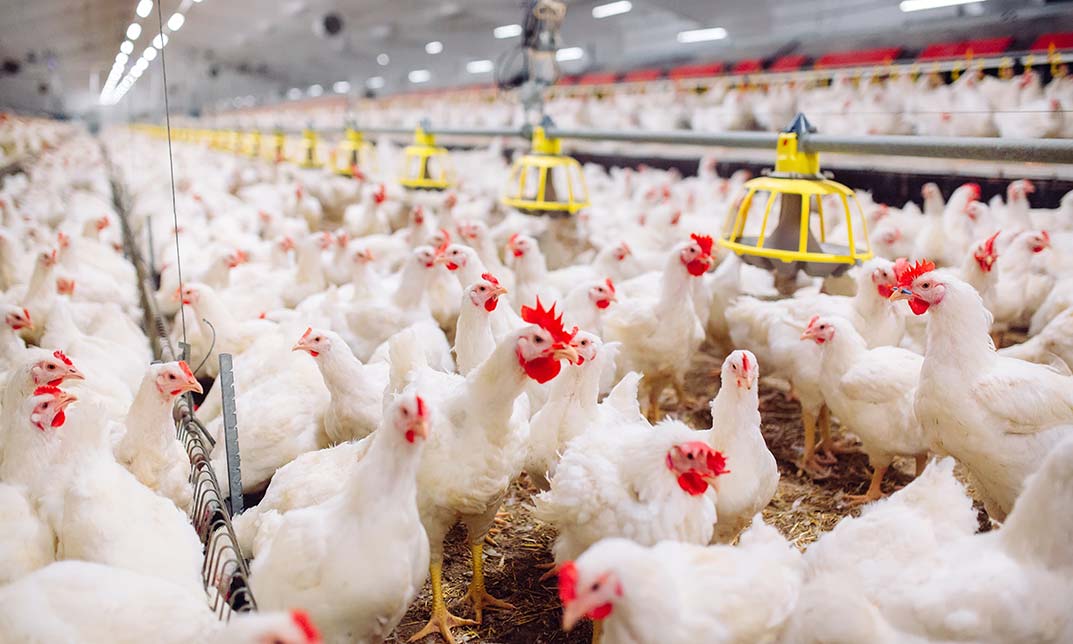
South Africa’s resilient broiler industry sits at the heart of the country’s protein economy. It is not a minor livestock segment and it is not a speciality niche serving a narrow class of buyers. It is one of the most important food-producing industries in the country, precisely because chicken remains the practical protein of the South African household. It is familiar, relatively affordable, widely distributed, easy to prepare and deeply embedded in both formal retail and informal food markets. That means broiler production cannot be seen only through the lens of what happens in a poultry house. It must also be understood through the wider realities of food security, consumer affordability, agricultural employment, grain demand, feed manufacturing, processing and retail stability.In that sense, a resilient broiler sector is essential to South Africa’s wider food system.
That wider role is what makes the sector so commercially important and so exposed at the same time. Demand is not the real question. South Africans already consume chicken in large quantities and the market has shown repeatedly that chicken remains the meat most households can still realistically reach for, even when budgets are tight. The harder question is whether the country’s broiler producers can continue to meet that demand profitably in an environment shaped by rising feed costs, electricity instability, disease pressure, infrastructure demands, climate stress and politically sensitive import competition. A Resilient production base is what will determine whether that demand can still be served sustainably.
That is where the modern broiler conversation has become more serious than it was a decade ago. It is no longer enough to talk vaguely about growing more birds. It is no longer enough to frame the issue as only a matter of protecting the local industry from imports. And it is certainly no longer enough to think of feed as a factory issue and biosecurity as a veterinary issue. Broiler production in South Africa has become a tightly linked system in which feed, genetics, climate, housing, water, ventilation, biosecurity, processing, trade and consumer affordability all influence one another. The more Resilient that system becomes, the stronger the industry’s future will be.
The industry’s strength lies in its sophistication. South Africa has large integrated producers, contract growers, feed mills, hatcheries, abattoirs, cold-chain systems and retail relationships that together form a highly capable poultry ecosystem. But that sophistication also means the cost of weakness has increased. A failure in one part of the chain now moves faster through the rest of the system than many people outside poultry realise. A feed shock affects more than ration price. A disease event affects more than bird health. A power outage affects more than shed comfort. This is why resilient broiler production has become one of the most important agricultural themes in the country’s protein economy.
Chicken remains South Africa’s everyday protein
Chicken’s role in South Africa goes well beyond the farm gate. It is part of the daily structure of consumption. It appears in homes, school lunches, fast-food meals, informal takeaways, restaurant menus, supermarket specials, freezer aisles and township trade. It is protein that works in both low-income and middle-income households, in bulk cooking and convenience food, in festive meals and everyday suppers. This is exactly why the broiler sector must be taken seriously as a foundation industry rather than simply another livestock category. A Resilient chicken sector supports far more than farm profitability alone.
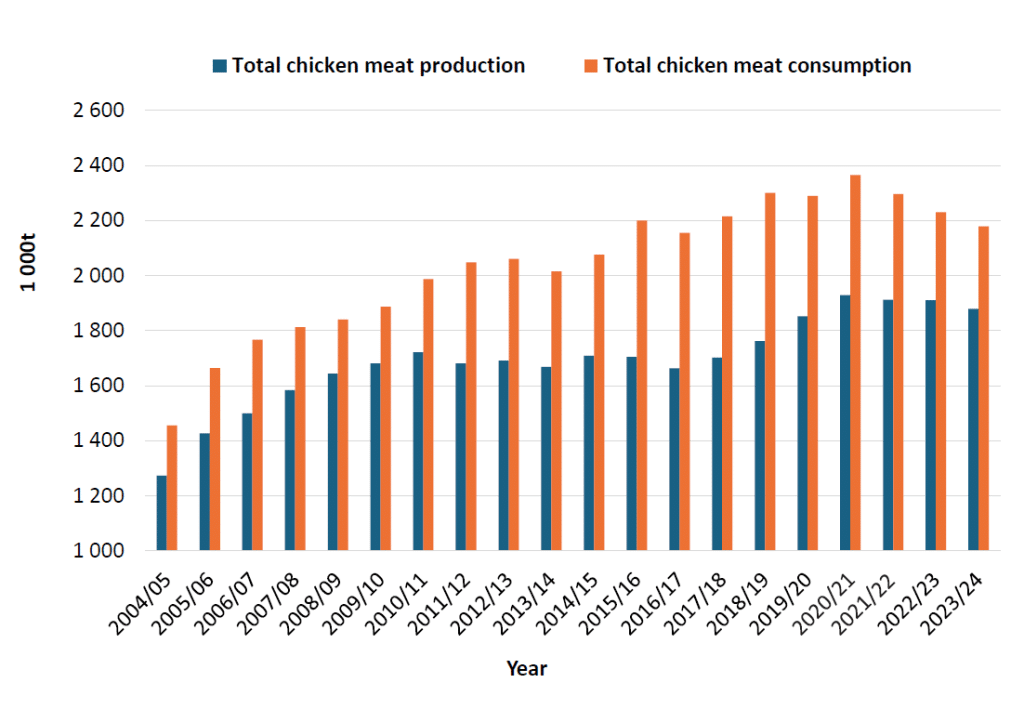
A product becomes strategically important when its absence creates immediate strain. Chicken has that status. If supply tightens or prices move sharply, households feel it quickly. That creates a difficult balance for producers. On the one hand, the country needs a strong domestic broiler sector capable of carrying the main production burden. On the other hand, consumers remain price-sensitive, which means the industry is constantly pulled between its own cost realities and the limits of what the market can absorb.
This makes broiler farming commercially attractive and commercially unforgiving at the same time. The market is there, but the margin is never guaranteed. The birds must perform. The shed must work. The feed must convert. The processing chain must remain stable. The transport and cold chain must function. The farm cannot afford waste disguised as routine. A Resilient broiler business is one that understands exactly where waste begins and how quickly it destroys margin.
Local production does the heavy lifting, but imports still matter
South Africa’s local broiler sector remains the main engine of supply, but imports continue to play a role in the wider poultry system. This has long been one of the most contested issues in the industry. Producers often see imports as a threat to local investment and domestic job retention. Processors and retailers may see imports as part of the mechanism that helps cover certain shortfalls or maintain affordability in specific product segments.The real question is whether South Africa can build a more resilient domestic production base while still keeping chicken affordable for consumers. Consumers, in most cases, are less concerned with the ideological debate than with whether chicken remains available and within reach.
This tension makes the import story more complex than either side sometimes admits. Imports are not simply good or bad. They can relieve pressure in a price-sensitive market, but they can also weaken local confidence if they begin to undercut long-term domestic sustainability. The real question is not whether imports exist. The question is whether local production can become competitive and consistent enough that the country is less exposed to overdependence, while still keeping food affordable. A more Resilient local broiler sector would help South Africa reduce exactly that kind of exposure.
A practical reading of the market suggests that South Africa cannot build a secure poultry future on a passive approach. Local production must remain the backbone. Imports may remain part of the supply picture, but no country strengthens food security by allowing the production base of its most accessible protein to drift into strategic weakness. That is why the local broiler industry’s health matters so much. Its success does not only benefit growers and processors. It protects a protein chain on which the country depends. A Resilient domestic industry is not optional in a protein economy like South Africa’s.
Feed remains the great margin battlefield
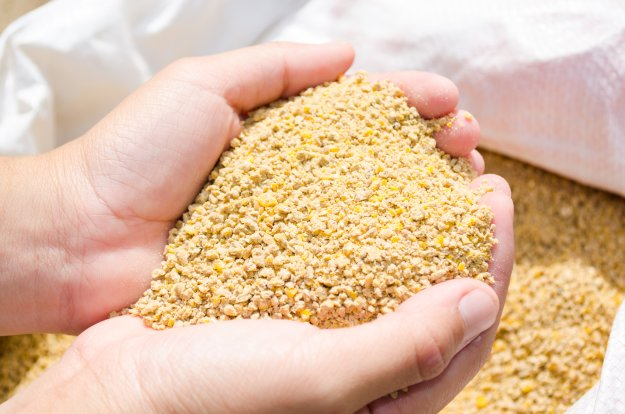
If one had to point to the most decisive pressure point in broiler farming, it would still be feed. Feed remains the major cost driver in broiler production and the most direct route by which external grain-market pressure is translated into farm-level margin stress. Broiler farmers know this without needing a technical lecture. Every movement in maize and soya matters. Every point of feed conversion matters. Every lost gram of performance is paid for in real money.
This is why feed should never be discussed lazily. It is not enough to say feed is expensive. The more useful question is how producers can protect the value of the feed they are already buying. That is where the conversation has grown more interesting and more demanding. Feed performance is no longer only about formulation. It is about whether birds are kept in an environment where the ration can do its job. A Resilient margin starts with protecting the feed bill.
This changes how profitability must be managed. A well-formulated ration cannot express its full value in a house that is too hot, too damp, poorly ventilated, poorly lit or inconsistent in water supply. A bird under heat stress does not eat and convert like a bird in a stable environment. A flock exposed to bad air quality or erratic drinker flow cannot use feed as efficiently as the spreadsheet assumed it would. This is why serious broiler operators increasingly speak about ventilation, water delivery and shed climate in the same breath as feed cost. A Resilient flock environment is now part of the feed conversation.
The old way of separating these issues into departments is becoming expensive. Nutrition, climate, water and flock comfort are one commercial story now. The farmer who understands that is already thinking like the next generation of poultry manager.
The broiler house is part of the ration
A growing number of producers now understand a hard but useful truth: the broiler house is part of the ration. It may not appear on a feed invoice, but it influences whether the feed bill turns into profitable growth or disappointing performance. Roof design, insulation, side-curtain management, fan performance, cooling systems, litter condition, drinker line calibration and overall environmental stability all influence whether nutrients are turned into uniform, saleable birds. A Resilient poultry house protects performance long before birds ever reach the processor.
This is especially important in South Africa’s varied and often harsh climate conditions. Heat stress is not a minor technical challenge. It is one of the most expensive hidden pressures in broiler production. When birds become thermally stressed, they reduce feed intake, shift energy away from growth and become less predictable across the flock. What begins as environmental discomfort turns into weaker growth, poorer conversion and higher production cost per unit of output.
This is why the farms that still treat housing and environmental control as background issues are likely to struggle harder in the years ahead. Infrastructure is no longer just a capital line item. It is a performance tool. Better airflow, better shading, more stable temperatures, better water availability and cleaner litter conditions all help feed do the work it was bought to do. A Resilient shed system helps turn expensive feed into actual commercial output.
There is also a mindset shift involved here. The strongest farms do not look at infrastructure upgrades and ask only whether they are expensive. They ask what it costs not to make them. Poor conversion, uneven birds, high stress, slower growth and weaker flock consistency are all costs. They just arrive in smaller daily doses that are easy to ignore until the margin is gone. A Resilient operator learns to see those small losses before they become a commercial pattern.
Water is the quiet performance driver

In discussions about broiler performance, water often receives less attention than feed, yet the two are inseparable. A bird cannot use feed efficiently without consistent access to clean water. If water delivery becomes erratic, if drinker systems are dirty, if pressure is wrong or if temperature becomes a problem, the feed programme immediately loses value. Water intake influences feed intake, bird comfort, gut function and general performance. In high-pressure poultry systems, poor water management is one of the most common ways producers quietly sabotage otherwise good feed strategy. A Resilient production system treats water as a profit driver, not a background utility.
This is also where infrastructure and hygiene overlap. Clean water is not only an environmental comfort issue. It is also part of biosecurity and disease prevention. Dirty lines, poor sanitation or inadequate monitoring create vulnerability. Water therefore sits at the intersection of performance and protection. It feeds productivity and helps guard against disruption.
That makes water-system providers, sanitation businesses and equipment specialists increasingly relevant to the broiler sector’s future. They are not peripheral suppliers. They are contributors to profitability. A more Resilient broiler industry will rely heavily on better water discipline.
Biosecurity is no longer a veterinary afterthought
No serious discussion of broiler production in South Africa can avoid biosecurity. Disease pressure remains one of the sector’s biggest threats, not only because birds can be lost, but because the business consequences of disease travel far wider than mortality alone. A disease event can disrupt placement schedules, shake processor confidence, unsettle labour planning, delay restocking, strain contracts and damage the rhythm of the entire value chain. A Resilient broiler business must therefore treat disease prevention as business protection.
This is why biosecurity must be treated as an economic discipline rather than a specialist side issue. In practical terms, it means movement control matters. Visitor management matters. Rodent control matters. Water hygiene matters. Equipment sanitation matters. The separation between clean and dirty zones matters. Wild-bird exclusion matters. Staff discipline matters.
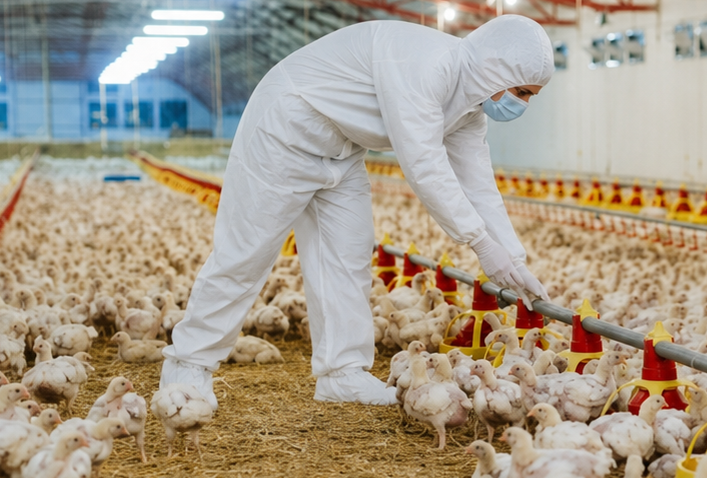
The most successful broiler businesses in the next phase of the industry will be those that stop treating biosecurity as a file on a shelf and start treating it as a production system embedded in the daily movement of the farm. A protocol is not enough. The real question is whether the farm is designed in a way that makes the right behaviour easy and the wrong behaviour difficult. A Resilient biosecurity culture is built through routine, not paperwork.
This is where supplier opportunity becomes highly relevant. The broiler industry increasingly needs practical systems that reduce biological risk without slowing the operation to a halt. Access control, sanitation chemistry, protective wear, wash-down systems, water treatment, pest control, housing materials and biosecure workflow design all sit inside the same commercial logic.
Electricity, energy and the real cost of interruption
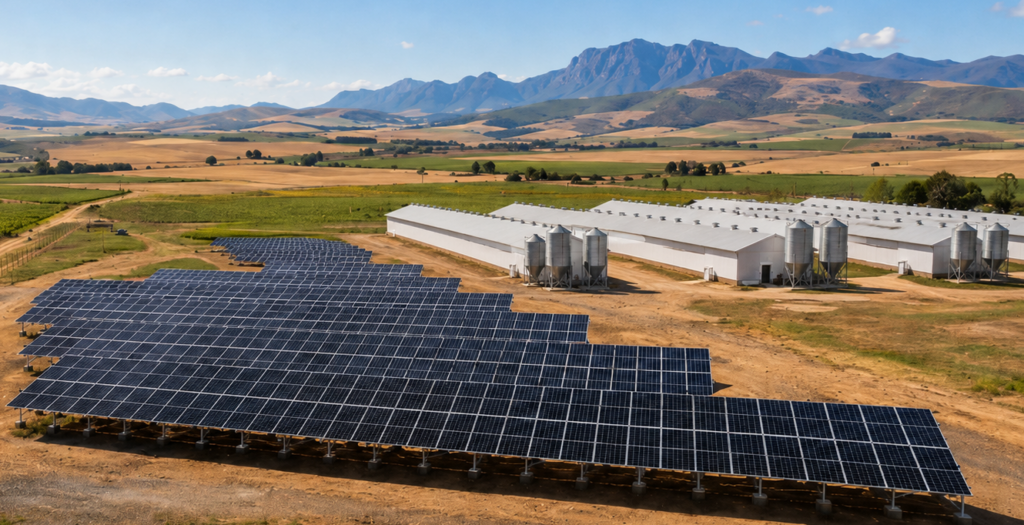
South African agriculture does not need to be reminded that power instability is more than an inconvenience. In poultry, the consequences can be immediate. Ventilation failure, pump failure, cooling-system disruption and lighting interruptions can quickly turn into a flock emergency. This is why energy resilience has become central to poultry planning. A Resilient poultry business plans for interruption before it happens.
The cost of energy backup is real, but the cost of no backup can be catastrophic. The more advanced and high-density the poultry system becomes, the less tolerance it has for operational interruption. That is why serious poultry production increasingly requires realistic energy planning: generators, backup systems, fuel strategy, monitoring and routine testing.
This is also why the industry’s future will favour producers who are willing to plan around known risks rather than complain about them after the fact. Energy instability is now part of the operating environment. The profitable farm must prepare accordingly.
Competitiveness is about consistency, not optimism
South Africa’s broiler industry often speaks about growth, local production strength and even export potential. Those ambitions may be justified, but they must be built on consistency, not optimism alone. Export markets, just like local retail chains, reward reliable quality. They reward disciplined systems, stable processing, disease control, predictable performance and the ability to meet standards repeatedly.
Consistency begins on the farm. It begins in the hatchery, in feed manufacture, in the house environment, in flock health and in the timing discipline that holds the value chain together. There is no shortcut past those fundamentals. Volume does not replace discipline. Good rhetoric does not replace performance.
The road ahead for broiler production in South Africa will therefore be shaped by businesses that can do the basics better for longer under more pressure. That is the real meaning of resilience in poultry. It is not simply survival through a shock. It is the ability to keep delivering under strain.
The future belongs to disciplined systems
Demand for chicken is unlikely to disappear. South Africans still need affordable protein. That means the broiler industry still has one of the clearest long-term demand stories in agriculture. But demand alone will not guarantee success. The businesses that thrive will be those that manage feed, water, biosecurity, energy, climate and infrastructure as connected parts of one commercial system.
The road ahead is not easy, but it is clear. Broiler production in South Africa will need to become more disciplined, more technically practical and more honest about where performance is won and lost. Farms that treat feed as the first cost lever, the shed as part of the ration, water as a production asset, and biosecurity as daily business discipline will be better placed than those still relying on habit and hope.
Resilient broiler production is not an abstract concept. It is the practical art of protecting performance in a high-pressure environment. And in South Africa, that art is becoming one of agriculture’s most important commercial skills.
Q&A
1. Why is broiler production so important in South Africa?
Because chicken is one of the country’s most accessible and widely consumed animal proteins, making broiler production central to food security, affordability and agricultural stability.
2. Do chicken imports still play a role in South Africa?
Yes. Imports remain part of the market, but local production still carries the main burden and remains strategically important.
3. Why is feed considered the biggest profitability pressure?
Because feed is one of the largest cost components in broiler farming, and small losses in feed conversion can heavily affect margins.
4. What does it mean to say the shed is part of the ration?
It means housing conditions such as ventilation, temperature, water supply and litter quality directly affect whether feed performs properly.
5. Why is biosecurity now seen as a business issue?
Because disease events disrupt production flow, contracts, labour planning, customer confidence and the wider commercial chain, not just bird health.
(M.O)