
Ankole Cattle in South Africa: Why This Rare Breed Matters
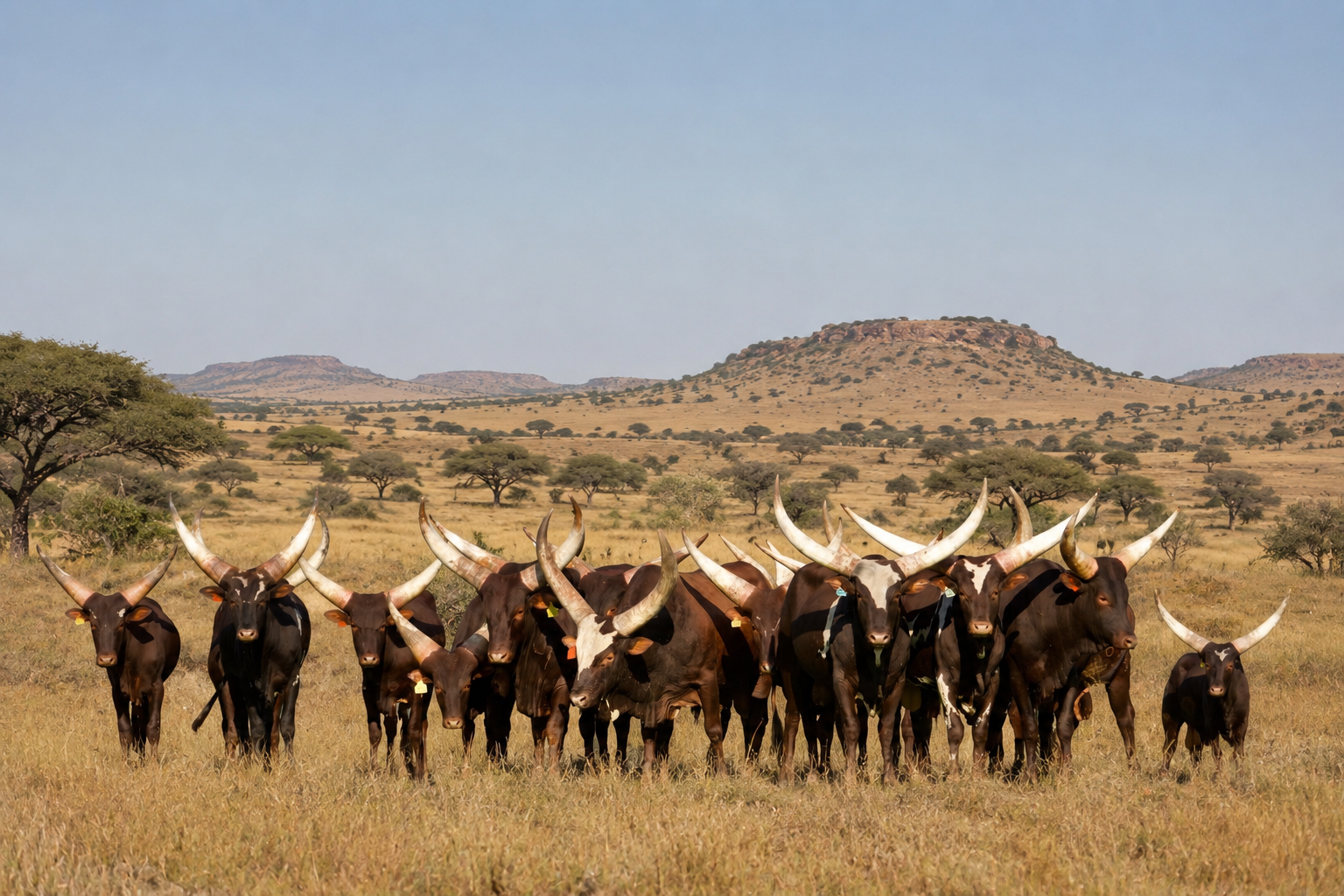
Ankole cattle in South Africa have moved from curiosity to serious stud-breeding conversation. With their enormous sweeping horns, striking colours and ancient African heritage, they are impossible to ignore. Yet the real story is not only in the horns. The Ankole has become a futureproof symbol of how rare livestock genetics, disciplined recording, animal improvement and climate-aware farming can come together in a changing agricultural world.
South African agriculture is under pressure from rising input costs, disease risks, climate variability, grazing limitations and the need for more efficient cattle systems. In this environment, hardy African cattle breeds deserve renewed attention. The Ankole is not yet a mainstream beef-production breed in South Africa, and it should not be presented as if it is already feeding the national beef market at scale. Its present role is more specialised: stud breeding, genetic preservation, elite auctions, semen, embryos, tourism value and long-term genetic diversity.
That is exactly why the breed is important. In a futureproof cattle industry, not every breed has to serve the same purpose. Some breeds dominate commercial beef production. Others carry unique adaptation traits, fertility, longevity, heat tolerance and cultural value. The Ankole fits into this second category. It offers South African farmers and breeders a rare opportunity to preserve, improve and carefully commercialise an African cattle genetic resource.
Origin: The Cattle of Kings
The Ankole breed traces its roots to East Africa, especially Uganda, where the cattle have deep cultural, social and economic meaning. They are often referred to as “the cattle of kings”, a phrase that captures their status among communities that historically valued cattle not only as meat or milk animals, but as wealth, identity and heritage.
Ankole form part of Africa’s long-horned cattle tradition. Their ancestors are linked to ancient cattle movements across the continent, including the Nile region and the migration of long-horned cattle into East Africa. Over time, the breed became strongly associated with Uganda and surrounding areas, where it was selected for survival, fertility, distinctive horns and the ability to perform under difficult conditions.
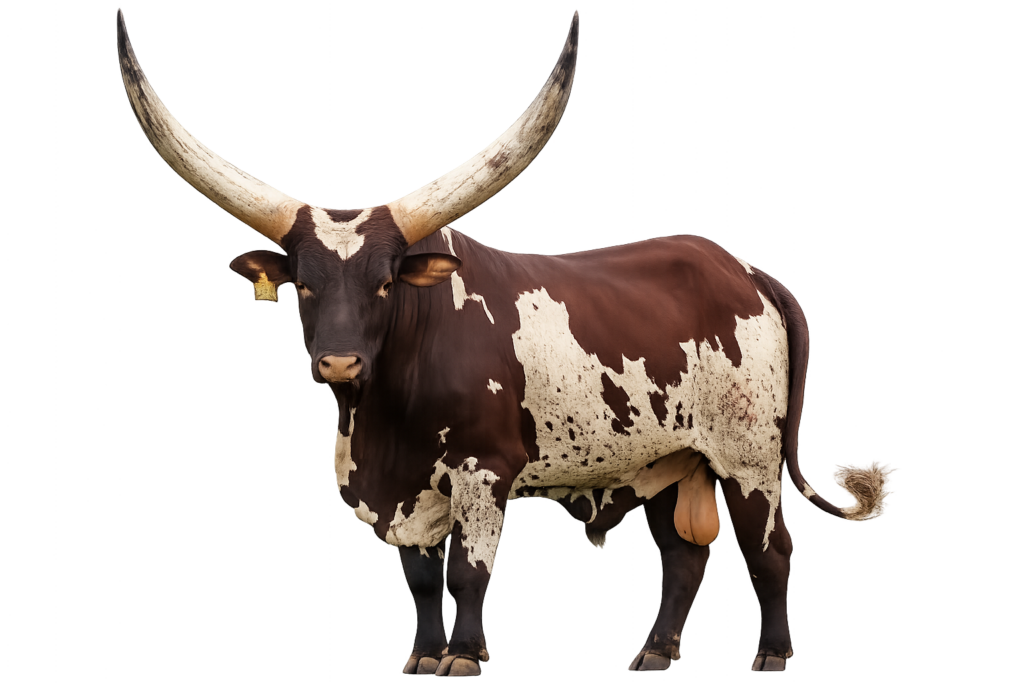
The horns are the breed’s most visible feature. They are large, hollow and honeycombed internally, helping with heat regulation. For many observers, this makes the Ankole one of the most dramatic cattle breeds in the world. For breeders, however, the horns are only part of the story. A futureproof Ankole breeding programme must still consider structure, fertility, mothering ability, temperament, genetic background and overall functionality.
How Ankole Cattle Came to South Africa
The South African Ankole story is relatively recent. Because of animal-health restrictions and livestock movement controls, the breed did not simply arrive through normal live-animal importation. The foundation of the South African Ankole population came through imported genetic material, mainly embryo transfer.
This is important because it shaped the entire future of the breed locally. South Africa started with a small genetic base. That created rarity and high value, but it also created responsibility. A small population can grow quickly in value, but it can also become vulnerable if breeders do not manage bloodlines carefully.
The breed was formally recognised in South Africa in 2019. Since then, the Ankole Cattle Breeders’ Society of South Africa has played a central role in registration, breed standards, inspections, breeder responsibilities and the protection of genetic integrity.
This formal recognition shifted Ankole cattle from being exotic-looking animals to being part of the structured livestock improvement environment. That is a vital futureproof step. Without formal systems, high-value rare breeds can easily become vulnerable to confusion, overclaiming and unverified animals entering the market.
SA Stud Book, INTERGIS and Why Records Matter
Ankole appears on the SA Stud Book platform, and registered animals are recorded through the Ankole Society’s herd book and INTERGIS, the Integrated Registration and Genetic Information System. INTERGIS is hosted by the Agricultural Research Council and forms part of South Africa’s national animal-recording environment.
For ordinary readers, this may sound administrative. For breeders, it is essential. In a high-value cattle breed, paperwork is not a side issue. It is the foundation of trust.
A properly registered Ankole should be supported by traceable ancestry, correct identification, DNA information where required, breeder records, transfers, inspections and herd-book status. These records help protect buyers, breeders and the breed itself.
The Ankole market is influenced by visual appeal, but serious buyers should never buy horns alone. Horn size, shape and symmetry may influence value, but a futureproof purchase must be based on verified genetics, sound conformation, fertility and proper registration.
In South Africa, where the registered Ankole population remains small, accurate records become even more important. Breeders need to know which animals are related, which lines are becoming too concentrated, and where new genetics can safely improve diversity. Without this, short-term excitement can create long-term genetic problems.
ARC’s Role in Ankole and Beef Cattle Improvement
The Agricultural Research Council has an important role in South African livestock improvement through animal recording, performance data, genetic resources, research support and national systems such as INTERGIS. ARC’s work in beef cattle improvement focuses on practical issues such as reproduction, performance recording, adaptation, genetic evaluation and the broader sustainability of the national herd.
In the Ankole context, ARC’s most important contribution is not that it has turned the breed into a mainstream production breed overnight. Rather, ARC provides the scientific and recording environment that helps small breed populations make better decisions.
ARC has specifically highlighted the importance of understanding inbreeding and linebreeding in breeds with limited numbers, and Ankole cattle in South Africa are a clear example. Because the population is still small, some level of relationship between animals is unavoidable. That does not mean the breed has no future. It means the breed needs disciplined management.
This is where futureproof breeding becomes practical. Breeders must record pedigrees accurately, understand relationship coefficients, use DNA tools where applicable, avoid careless matings and introduce approved new genetics responsibly.
The arrival of new Ankole genetics through embryos and semen is therefore more than a luxury breeding exercise. It is a practical genetic-management tool. When new genetics are unrelated to existing South African lines and are legally imported, inspected and approved, they can help broaden the gene pool and reduce long-term risk.
Current Numbers in South Africa
The Ankole population in South Africa remains small compared with mainstream beef breeds. Current industry information generally places registered Ankole numbers at fewer than 2,000 animals, with several dozen registered breeders. This makes the breed rare, specialised and highly sensitive to supply-and-demand forces.
Small numbers have advantages and disadvantages. On the positive side, rarity creates value. Elite animals, proven females, semen, embryos and young animals from desirable bloodlines can attract serious buyer interest. For breeders with a long-term plan, this can create a strong business opportunity.
On the negative side, small numbers create risk. There are fewer unrelated animals available, fewer proven production records, fewer commercial comparisons and more pressure on breeders to avoid exaggerating the breed’s role.
A futureproof approach is to be honest about where the breed is now. Ankole cattle in South Africa are still mainly a stud, genetics and niche-value breed. They are not yet a broad commercial beef solution. Their long-term contribution will depend on how carefully breeders build numbers, protect records, select for useful traits and manage genetic diversity.
The Northern Ankole Belt: Where the Breed Is Concentrated
Ankole studs are found across South Africa, including the Western Cape, Free State, Karoo, Limpopo, Gauteng, North West and Mpumalanga. However, the strongest concentration of breeding, auction, game-ranch and genetics activity sits in what can be described as the Northern Ankole Belt.
This belt stretches through North West, Gauteng, Limpopo and Mpumalanga. It includes important stud operations, auction venues, game-ranch enterprises and reproductive biotechnology services. North West has become particularly important as an auction hub, while Limpopo, Mpumalanga and Gauteng are closely linked to stud breeding, wildlife-style farming and genetics enterprises.
This regional pattern makes sense. The northern cattle and game-ranch belt is well suited to hardy African livestock, stud breeding, auction culture and diversified farming enterprises. It is also an area where climate, veld conditions and extensive systems make adaptation traits highly relevant.
For Nufarmer Africa readers, this is useful because it shows that the Ankole is not only a lifestyle breed on isolated farms. It is forming part of a structured geographic cluster of breeders, buyers, genetics providers and auction platforms. That cluster can help create a futureproof industry, provided it remains disciplined and transparent.
Special Traits of Ankole Cattle
Ankole cattle are best known for their horns, but their value goes beyond appearance. The breed is associated with heat tolerance, hardiness, fertility, longevity, strong mothering ability and the capacity to perform in extensive African conditions.
The horns help with heat regulation. Their internal honeycomb structure increases surface area and assists the animal in coping with heat. This is one of the reasons the breed is often discussed in climate-adaptation conversations.
Ankole cattle are also generally regarded as good grazers and browsers. In extensive systems, this ability can be useful where animals need to make use of natural veld and browse material. They are not high-input, high-maintenance animals by nature, which makes them interesting in a farming environment where input costs continue to climb.
Cows are valued for maternal ability. Good mothers, easy calving, fertility and longevity are important in any cattle system. A cow that produces regularly and remains functional for many years adds value to a herd. In stud breeding, this value is even higher because every calf represents genetics, recordkeeping and future sales potential.
A futureproof Ankole breeding programme should therefore focus on balanced selection. Horns matter in this breed, but fertility matters more. Coat colour may attract attention, but structural soundness carries the animal through its productive life. Elite genetics may fetch high prices, but poor records can undermine confidence.
Parenting and Maternal Ability
One of the breed’s most valuable traits is the reputation of Ankole cows as strong mothers. In cattle farming, parenting ability is not a sentimental issue. It affects survival, growth, labour requirements and long-term profitability.
Good maternal ability includes fertility, ease of calving, calf protection, milk supply, calf vigour and regular reproduction. A cow that calves easily, raises a strong calf and returns to breeding condition is valuable in both commercial and stud systems.
Ankole cows are often praised for their calm but protective nature around calves. In extensive systems, this matters. Farmers need cows that can raise calves under real veld conditions, not only under intensive management.
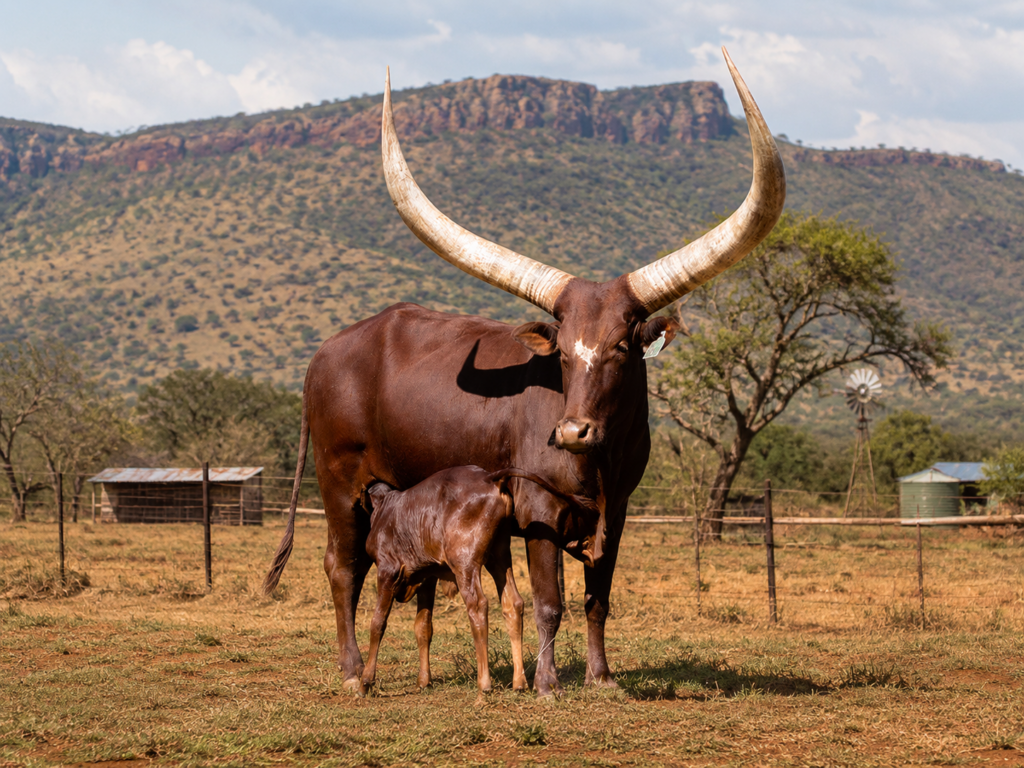
For a futureproof stud, maternal records should be as important as horn measurements. Age at first calving, inter-calving period, calf survival, weaning performance and cow longevity all help determine whether a beautiful animal is also a productive animal.
This is where ARC-style performance thinking becomes valuable. Rare-breed value should not be based only on visual traits. The long-term success of Ankole cattle in South Africa will depend on whether breeders record and select for the traits that make cattle productive, adaptable and sustainable.
Contribution to South African Food Security
It would be misleading to suggest that Ankole cattle are currently a major contributor to South Africa’s beef supply. The numbers are too low and the animals are too valuable as breeding stock for the breed to operate like a conventional commercial beef breed.
However, food security is not only about current slaughter numbers. It is also about genetic resources, climate adaptation, fertility, low-input systems and the ability of future herds to produce under pressure.
In that sense, Ankole cattle may make a futureproof contribution to South African food security by preserving hardy African genetics. As heat stress, disease pressure, drought cycles and grazing limitations become more serious, genetic diversity becomes more important.
A cattle industry built on too narrow a genetic base is vulnerable. A cattle industry that preserves and studies multiple adapted breeds has more options. The Ankole may never become the dominant beef breed in South Africa, but it can still contribute valuable traits to the broader conversation about climate-smart livestock production.
The breed also creates rural economic activity through auctions, breeding enterprises, semen sales, embryo transfer, veterinary work, transport, feed, tourism, photography and farm branding. These may not directly put beef on supermarket shelves today, but they do support agricultural enterprise development.
Ankole Prices: What the Market Shows
Ankole cattle have attracted exceptional prices in South Africa over the past five years. Elite animals have sold for millions of rand, with top females, cow-and-calf units, bull calves, semen and embryos all drawing attention from serious buyers.
Some of the highest-known prices include elite heifers above R2 million, cow-and-calf combinations around R2 million, pregnant cow-and-calf combinations at approximately R1.8 million, individual cows above R1 million and semen straws fetching premium values. More recently, young bull calves from new genetics have attracted strong auction prices, showing continued buyer interest in genetic diversity and elite bloodlines.
These figures should be interpreted carefully. They represent the top end of the market, not average cattle prices. A commercial farmer should not look at these numbers and assume every Ankole will sell at extraordinary values. The premium market is driven by scarcity, pedigree, horn shape, coat colour, fertility, new genetics, breeder reputation and auction excitement.
The more mature the market becomes, the more buyers will distinguish between exceptional animals and ordinary animals. This is healthy. A futureproof industry cannot rely on hype alone. It needs quality grading, honest marketing and reliable records.
Pros of Farming with Ankole Cattle
The first advantage is rarity. Rare breeds with strong visual identity can create powerful brand value. Ankole cattle are memorable, photogenic and culturally rich. They stand out on farms, in auctions and in marketing material.
The second advantage is adaptability. Their African origin and association with heat tolerance, hardiness and low-input performance make them relevant in a country where climate pressure is a growing concern.
The third advantage is genetic value. Because the population is small, verified bloodlines, new genetics, embryos and semen can carry high value. Breeders who build strong female lines and maintain accurate records can position themselves well in the market.
The fourth advantage is diversification. Ankole cattle can fit into stud breeding, game-ranch-style enterprises, eco-tourism, elite livestock auctions, semen and embryo businesses, and branded agricultural experiences.
The fifth advantage is long-term relevance. The breed’s story aligns strongly with futureproof agriculture: adapted genetics, local conditions, lower-input thinking and preservation of African livestock heritage.
Cons and Risks of Farming with Ankole Cattle
The biggest disadvantage is cost of entry. Quality Ankole genetics can be expensive. This makes the breed unsuitable for farmers who need fast, low-risk cash flow from conventional beef production.
The second risk is market size. The Ankole market is still specialised. It depends on breeder demand, elite genetics, auction confidence and continued interest from high-value buyers. If too many low-quality animals enter the market, prices could soften.
The third risk is genetic concentration. With small numbers, breeders must manage inbreeding carefully. This requires records, planning and sometimes the introduction of new approved genetics.
The fourth challenge is infrastructure. The horns are beautiful, but they require practical handling systems. Gates, races, crushes, transport arrangements and holding pens must accommodate large-horned animals safely.
The fifth risk is overemphasis on looks. A futureproof Ankole industry must avoid becoming a horn-only market. Horns attract buyers, but fertility, sound structure, mothering ability and verified genetics protect long-term value.
What Farmers Should Look for When Buying Ankole
Farmers considering Ankole cattle should begin with purpose. Are they buying for stud breeding, semen production, embryo work, tourism, auction resale, herd building or personal interest? The answer affects what they should buy.
A buyer should request registration details, pedigree information, DNA status where applicable, inspection status, transfer documents and herd-book classification. They should also ask about the animal’s fertility record, calving history, dam line, sire line and relationship to other animals in the herd.
Visual traits still matter. Horn shape, horn size, horn symmetry, coat colour and breed character all influence value. However, these should be assessed alongside functionality. Feet, legs, body capacity, temperament, reproductive soundness and overall health remain essential.
A futureproof purchase is not necessarily the most dramatic animal in the sale ring. It is the animal that fits the buyer’s breeding plan, improves the herd and comes with verified information.
The Role of New Genetics
New genetics are central to the future of Ankole cattle in South Africa. Because the original local population came from a narrow base, unrelated genetics can help strengthen the breed.
Embryo transfer and semen importation allow breeders to bring in approved bloodlines without moving live animals across borders. This is valuable from both animal-health and genetic-diversity perspectives.
However, new genetics must be introduced responsibly. The breed society, animal improvement authorities and relevant health regulations all have roles to play. Breeders should avoid shortcuts. The credibility of the breed depends on proper approvals, inspections and documentation.
A futureproof genetic strategy balances three goals: preserve the breed’s identity, broaden the gene pool and improve economically useful traits. If South African breeders achieve this balance, the Ankole can become more than a high-value niche. It can become a serious rare-breed success story.
Where the Breed Is Now
Ankole cattle in South Africa are in a transition phase. The first phase was introduction and fascination. The second phase was formal recognition and rapid market interest. The current phase is more serious: quality control, genetic management, breeder education, market maturity and long-term planning.
The breed now has a recognised society, breed standards, inspections, recording systems and a growing breeder base. National auctions and specialist sales have created public visibility. Breeders are also becoming more aware of the importance of new genetics and scientific herd management.
This is the point where discipline matters most. A young market can grow quickly, but it can also overheat. The breeders who will succeed long term are those who treat Ankole farming as a proper agricultural enterprise, not only as a status purchase.
The Road Ahead for Ankole Cattle in South Africa
The road ahead is promising, but it is not automatic. The Ankole industry must protect its integrity. That means accurate records, responsible advertising, honest pricing, genetic diversity, proper inspections and selection for functional traits.
The breed also needs broader education. Many people still see only the horns and the auction headlines. They do not understand the registration rules, genetic challenges, maternal traits, ARC-supported recording environment or the difference between fullblood, purebred and visually similar animals.
For South Africa, the bigger opportunity is to position Ankole cattle as part of a futureproof livestock strategy. The breed should be promoted as an African genetic resource with cultural value, climate relevance and specialised commercial potential.
This does not mean every farmer should buy Ankole. It means every serious livestock reader should understand why rare adapted genetics matter.
Ankole Cattle : More Than Horns
Ankole cattle in South Africa are beautiful, rare and valuable. But their real importance lies in what they represent: African heritage, genetic diversity, structured recording, climate adaptation and long-term breeding discipline.
The breed will not become a national beef-volume solution overnight. It may never be the right fit for every farmer. But in the hands of responsible breeders, Ankole cattle can become a futureproof livestock asset for South Africa.
The challenge is to protect the breed from shallow hype. The opportunity is to build a serious, recorded, genetically diverse and functional Ankole population that serves farmers, breeders and future generations.
The horns may attract the first look. The records, fertility and genetics will decide the future.
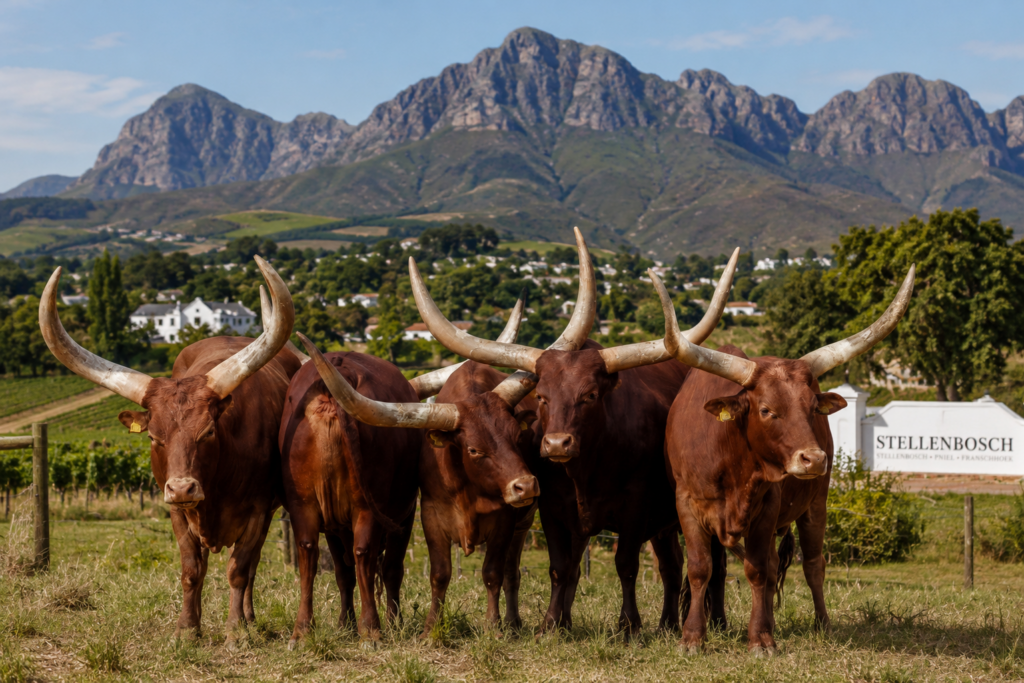
Q&A on Ankole Cattle in South Africa
1. What makes Ankole cattle a futureproof breed for South Africa?
Ankole cattle are considered futureproof because they carry hardy African genetics, heat tolerance, strong visual identity and fertility traits that may become more valuable as farming conditions become tougher. Their value lies in genetic diversity, not only in meat production.
2. Are Ankole cattle futureproof for commercial beef farming?
Not at scale yet. Ankole cattle are currently more important as a stud and genetics breed than as a mainstream commercial beef breed. Their futureproof value is in adaptation, rare genetics, semen, embryos and possible long-term breeding strategies.
3. Why are Ankole horns important in a futureproof breeding programme?
The horns are important for breed character and heat regulation, but they should not be the only selection trait. A futureproof breeding programme must also select for fertility, structure, mothering ability, sound legs, temperament and verified genetics.
4. How does SA Stud Book support a futureproof Ankole industry?
Ankole appears on the SA Stud Book platform, while registered animals are recorded through the breed society’s herd book and INTERGIS. This helps create futureproof confidence through traceable records, ownership history, identification and registration control.
5. What role does ARC play in futureproof Ankole breeding?
ARC supports South African livestock improvement through systems such as INTERGIS, animal recording, performance thinking and genetic-resource work. In Ankole cattle, ARC’s warning around small population size and inbreeding risk is especially important for futureproof breeding decisions.
6. Are Ankole cattle expensive because they are futureproof?
They are expensive mainly because they are rare, visually impressive and linked to elite genetics. Their futureproof value adds to the appeal, but prices are driven by supply, demand, bloodline quality, horn traits, fertility, registration and breeder reputation.
7. Can small farmers invest in futureproof Ankole genetics?
Small farmers can participate, but they must be careful. Entry costs can be high, and the market is specialised. A futureproof approach would be to start with verified animals, study the breed society rules and avoid buying purely on appearance.
8. Why is genetic diversity futureproof for Ankole cattle?
Because the South African Ankole population is small, genetic diversity is critical. Without careful management, inbreeding can reduce fertility and performance. New approved genetics, accurate records and planned matings help make the breed more futureproof.
9. Do Ankole cattle contribute to futureproof food security?
Indirectly, yes. They are not yet a major beef-volume breed in South Africa, but their hardy African genetics may support futureproof livestock strategies focused on heat tolerance, fertility, adaptation and lower-input production.
10. What is the futureproof advice for buying Ankole cattle?
Do not buy horns alone. Buy registered, inspected and traceable genetics from reputable breeders. Look for fertility, structure, cow family, DNA support, herd-book status and long-term breeding value. That is the futureproof way to enter the Ankole market.
Written By (M.O)