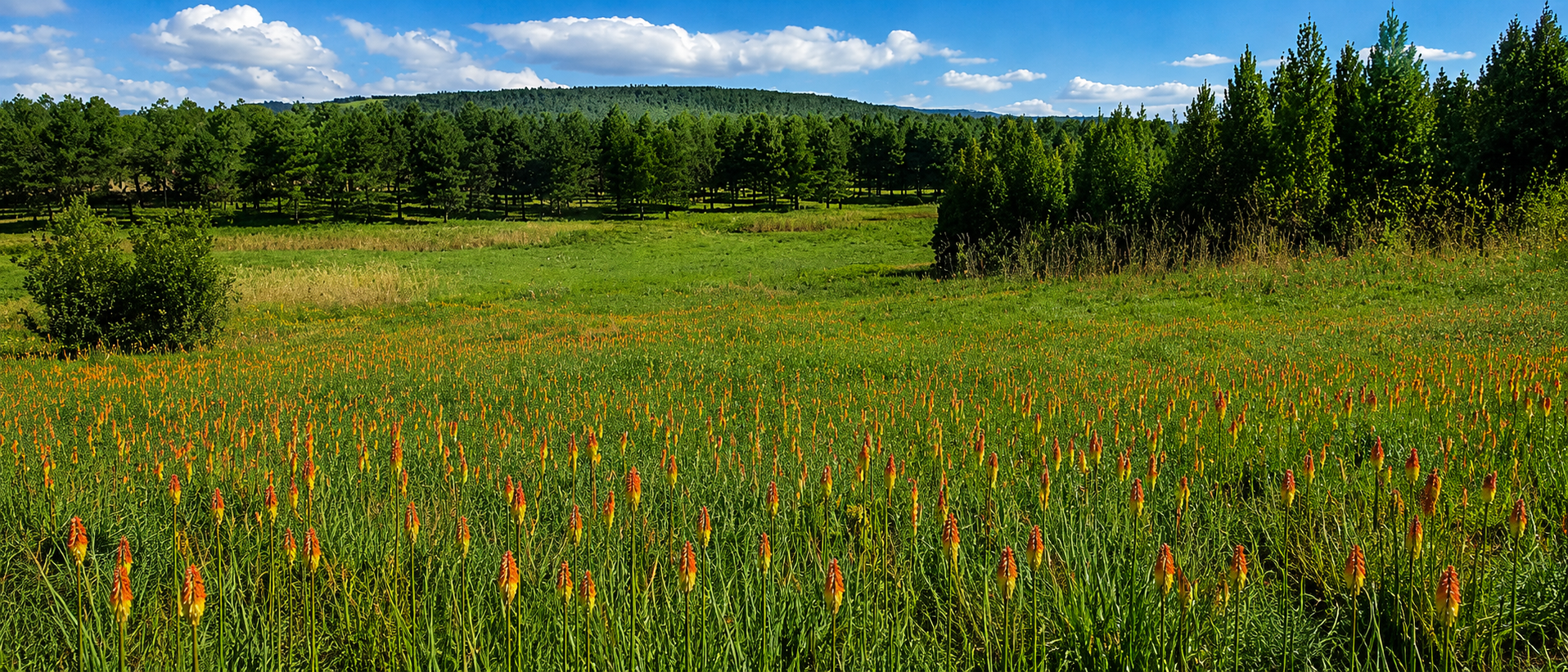
As the world marks International Day for Biological Diversity on 22 May, Forestry South Africa is placing a powerful local story in the spotlight: more than 300,000 hectares of natural ecosystems are being preserved within forestry landholdings. Across grasslands, wetlands, indigenous forests, fynbos and riverine systems, South Africa’s forestry sector is showing how productive land can also carry a serious conservation responsibility.
A Good News Story for International Day for Biological Diversity
Tomorrow, 22 May, the world marks the International Day for Biological Diversity. The 2026 theme, “Acting locally for global impact,” is a direct call for communities, industries, landowners and organisations to protect biodiversity through practical action on the ground. The Convention on Biological Diversity describes the day as a global moment to halt and reverse biodiversity loss through local actions that create wider impact.
For South Africa, that message is especially relevant.
This is a country of extraordinary ecological variety. Grasslands, wetlands, fynbos, river systems, indigenous forests and agricultural landscapes all form part of the natural fabric that supports food production, water security, rural livelihoods and climate resilience. Yet these ecosystems are under pressure from land conversion, invasive alien plants, habitat fragmentation, water stress, poor land management and the growing effects of climate change.
Against that backdrop, Forestry South Africa has released a strong good-news story.
According to the press release (full press release at the end of the article), FSA members collectively preserve more than 300,000 hectares of natural ecosystems within forestry landholdings. These areas include more than 170,000 hectares of grasslands and associated wetlands, around 61,000 hectares of indigenous forests, approximately 10,000 hectares of fynbos, as well as riverine systems that weave through forestry landscapes.
That is not a small conservation footnote. It is a landscape-scale stewardship story.
These natural areas are not separate from forestry. They are part of the forestry landscape itself. They sit between, alongside and within commercial timber compartments, creating ecological networks that help support species movement, water systems, soil protection and ecosystem functioning. In other words, they show that working land and living ecosystems do not have to be enemies.
They can be managed together.
Why Forestry’s Biodiversity Story Matters
Forestry is often viewed only through the lens of timber, pulp, paper, poles, packaging and rural employment. Those are important parts of the sector’s economic role. But they are not the full story.
The forestry landscape is more complex than many people realise. FSA’s environmental stewardship page notes that only about 70% of forestry land is managed for production, while more than 20% is left as natural areas, forming ecological networks across the forestry landscape. It also notes that forestry is subject to strict water licensing and is the only sector that pays for the use of rainwater.
This matters because South Africa cannot protect biodiversity only through national parks and formal reserves. Protected areas remain vital, but they are not enough on their own. Species need corridors. Rivers need healthy catchments. Wetlands need buffer zones. Grasslands need responsible fire and grazing management. Indigenous forests need protection from invasive alien plants, pests, disease and uncontrolled disturbance.
This is where forestry landholdings become important.
They occupy large rural landscapes. Many of these landscapes include high-value natural ecosystems. When those ecosystems are actively managed, monitored and maintained, forestry companies become more than producers of timber. They become long-term land stewards.
That is the key message in the FSA press release: biodiversity stewardship must extend beyond protected areas. Conservation has to happen across entire landscapes where productive land uses and natural ecosystems coexist.
This idea fits closely with the 2026 global biodiversity theme. Local stewardship, if multiplied across landholdings and sectors, can support global impact.
From Planted Compartments to Living Corridors
From the air, a forestry landscape can look like a patchwork. There are planted compartments, roads, firebreaks, wetlands, streams, grasslands, indigenous forest patches and unplanted buffer areas. To the casual observer, these natural areas may look like leftover land.
They are not.
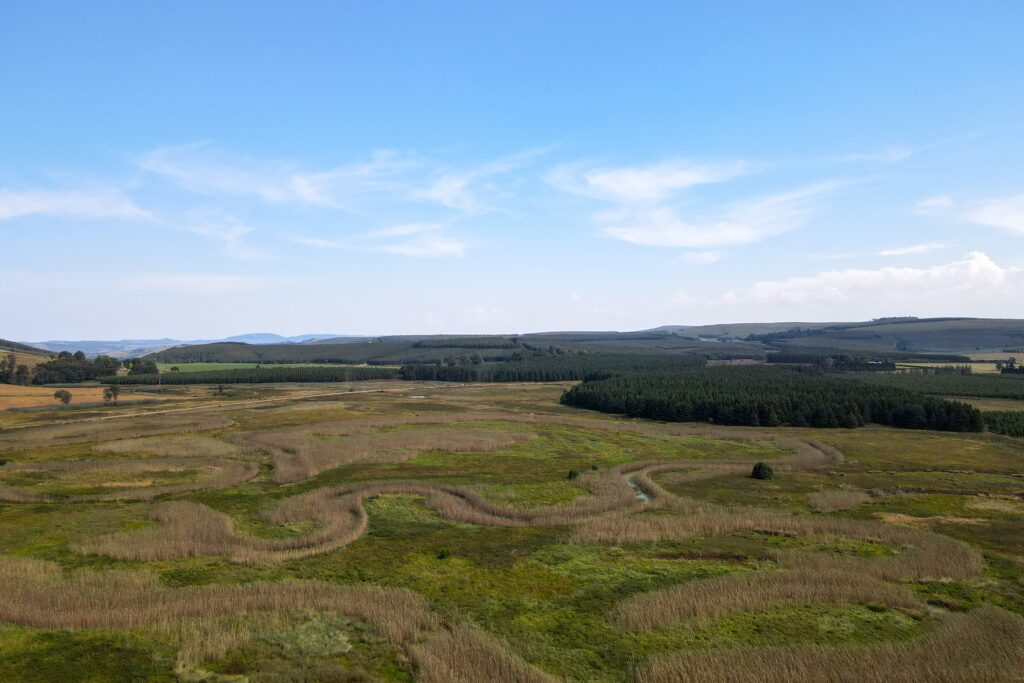
They are often the ecological corridors that allow nature to keep functioning inside a working landscape.
FSA and related forestry-sector material describe South Africa’s forestry landscape as a multifunctional environment where grasslands, indigenous forests, wetlands, rivers and streams weave between productive forestry compartments. These natural spaces provide habitat and movement routes for species, including endemic and endangered species.
This is where stewardship becomes practical.
A wetland is not only a wet patch of ground. It filters water, slows runoff, supports plants and animals, and helps regulate flows after heavy rain. A grassland is not empty land. It can be a species-rich ecosystem that supports pollinators, birds, small mammals and soil life. A riverine corridor is not merely a drainage line. It is a living system that links habitats across a landscape.
When these areas are damaged, biodiversity declines. When they are managed, they become part of a larger ecological safety net.
That is why forestry biodiversity should not be measured only by individual rare species. Species matter, of course. But the deeper value lies in keeping whole ecosystems functional.
Healthy ecosystems provide clean water, healthy soils, carbon storage, erosion control, pollination, climate resilience and natural habitat. These are not abstract environmental benefits. They are the foundation of agriculture, forestry and rural life.
The 300,000-Hectare Figure: More Than a Number
The FSA press release’s strongest figure is the one that should lead the story: more than 300,000 hectares of natural ecosystems are preserved within forestry landholdings.
That number gives the article weight.
Previous forestry-sector reporting has placed the figure at more than 305,000 hectares of natural areas managed within forestry landholdings, describing them as part of a mosaic of natural spaces and planted forestry landscapes that create conservation corridors.
Another related article notes that South Africa’s planted forests have conserved more than 300,000 hectares of natural ecosystems, including indigenous forests, grasslands, wetlands, fynbos and riverine ecosystems. These areas are described as being managed, monitored and maintained by forestry companies.
For readers, the number does two things.
First, it changes the scale of the conversation. This is not about a few small conservation pockets. It is about a national network of natural ecosystems within working forestry landscapes.
Second, it changes the perception of forestry. A plantation is not simply a block of trees. It can be part of a broader landholding where significant natural areas are excluded from planting and managed for biodiversity value.
That is a useful message for Nufarmer Africa’s audience because it speaks to a wider farming and land-use question: how can productive land also contribute to environmental resilience?
Forestry is offering one answer. Set aside natural areas. Manage them properly. Monitor them. Remove alien invasive plants. Maintain wetlands. Protect indigenous forests. Use fire carefully where ecosystems require it. Work with conservation partners. Treat biodiversity as part of the land’s long-term value.
That is practical stewardship.
Case Study 1: MTO Forestry and the Hewitt’s Ghost Frog
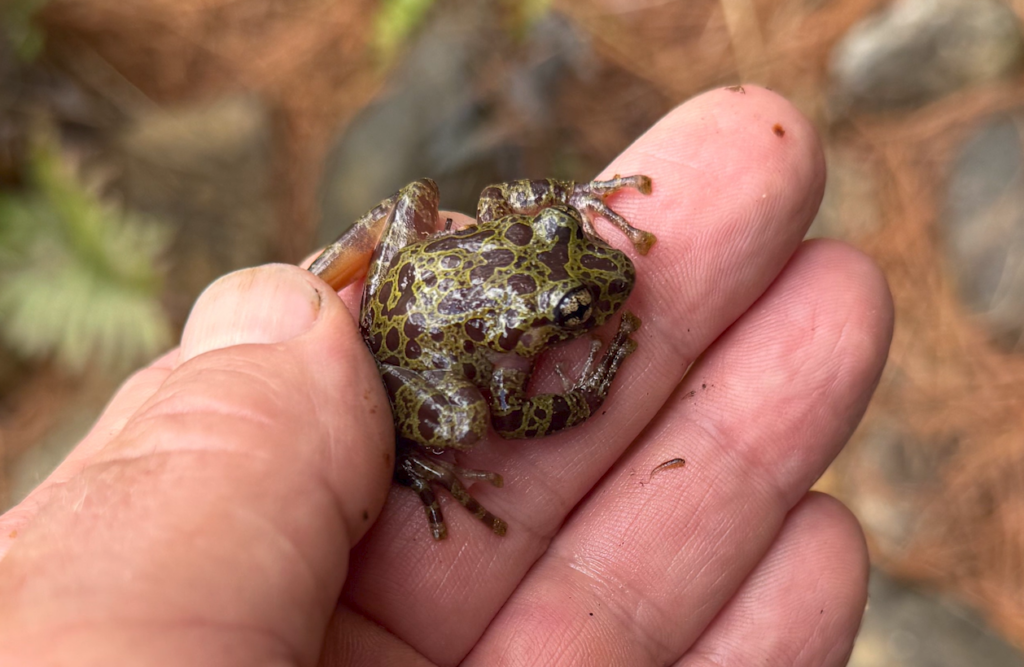
One of the strongest examples in the FSA press release is the conservation work linked to the Hewitt’s Ghost Frog within MTO Forestry landholdings.
The frog is rare, highly threatened and closely tied to specific stream and wetland habitats. The press release notes that conservation efforts at MTO Forestry help protect the species, which is found in only a few locations globally. But the important point is not only the frog itself. The point is the ecosystem the frog represents.
If the wetland and stream system are healthy enough to support such a sensitive species, then the wider habitat is doing ecological work.
The Hewitt’s Ghost Frog depends on clean, suitable aquatic habitat. SANBI’s Red List information describes the species as associated with fynbos heathland and grassy fynbos, breeding in permanent, fast-flowing streams with rocky beds.
That makes the frog a powerful symbol for the article.
It shows why biodiversity stewardship cannot be reduced to one animal, one tree or one protected patch. The frog depends on water quality, stream structure, surrounding vegetation, responsible fire management, erosion control and the protection of natural habitat. If those systems fail, the species fails with them.
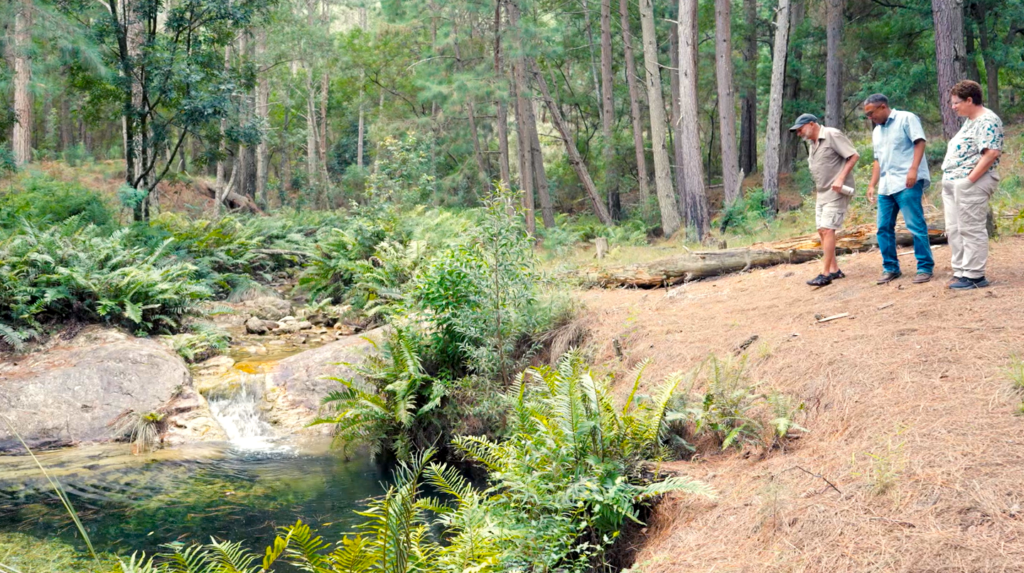
The FSA press release notes that at MTO’s Longmore plantation, approximately half the landholding remains unplanted natural habitat, with large portions designated as high conservation value areas. It also notes that revenue generated from planted areas helps fund conservation management activities such as alien invasive plant removal, controlled ecological burning and environmental maintenance.
That is an important model.
It shows how productive forestry can help carry the cost of conservation. Timber production and biodiversity stewardship are not presented as separate worlds. The production area supports the management of the natural area.
That is the heart of working-landscape conservation.
Case Study 2: Sappi’s Rare, Threatened and Endangered Species Programme
The Sappi Rare, Threatened and Endangered Species Programme provides another strong example of forestry stewardship in action.
According to the FSA article on the programme, Sappi launched the initiative in 2013 to help safeguard medicinal trees from extinction. The programme began with the critically threatened Pepperbark tree, Warburgia salutaris, which was under severe pressure from overharvesting.
The programme works with partners including the Agricultural Research Council, SANParks and Ezemvelo Wildlife. It also involves traditional healers and local communities, providing sustainably grown seedlings and cuttings to reduce pressure on wild populations.
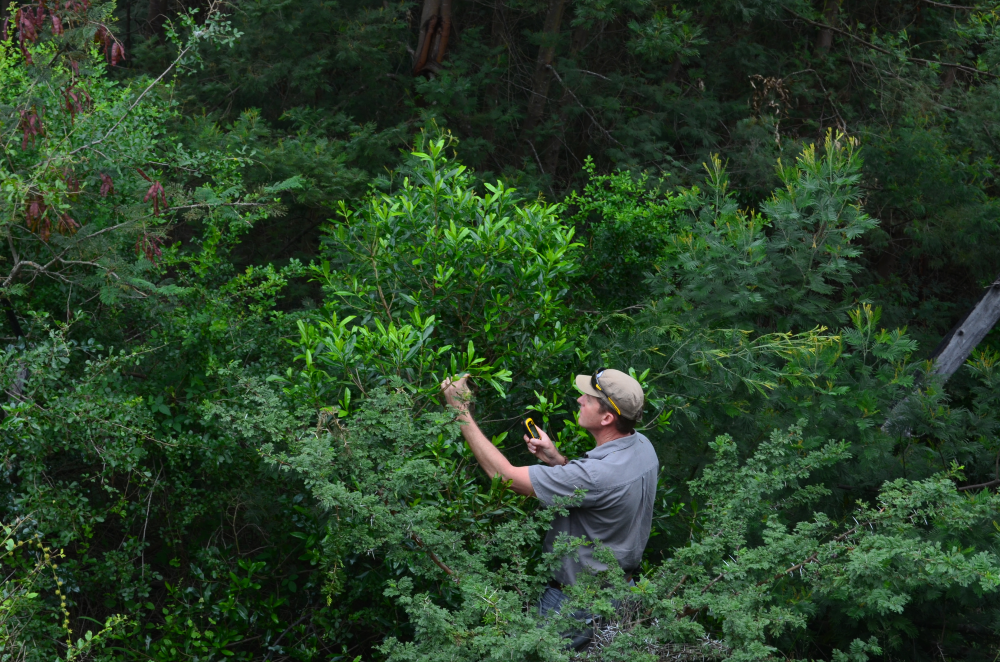
This is important because biodiversity conservation is not only about protecting plants from people. It is also about finding ways for people and plants to survive together.
In many parts of South Africa, medicinal plants are part of cultural tradition, local health practices and rural livelihoods. If wild populations are overharvested, both biodiversity and cultural knowledge are placed at risk. A successful stewardship model must therefore include propagation, community access, training and long-term supply.
The FSA article states that the programme has expanded from protecting 40 Pepperbark trees to cultivating more than 95,000 trees in Kruger National Park and 45,000 in KwaZulu-Natal, while supplying 22,000 plants annually to communities. It also notes that rooting success rates of 75% in 2025 enabled the Pepperbark tree to be reclassified from endangered to vulnerable.
That is a conservation success story with practical meaning.
It combines science, forestry research, propagation, cultural respect and community access. It reduces pressure on wild plants while supporting traditions that depend on them. It also shows why biodiversity stewardship works best when it includes people.
For a Nufarmer Africa audience, this case study is especially useful because it links conservation to rural communities, knowledge systems and sustainable natural resource use. It is not conservation locked behind a fence. It is conservation that recognises human need and works with it.
Case Study 3: Sappi, WWF South Africa and the uMkhomazi Catchment
Water is one of the strongest reasons forestry biodiversity matters.
Forestry, agriculture, rural communities, livestock systems, municipalities and industry all depend on healthy catchments. When a catchment is degraded, everyone downstream feels the impact. When it is restored, the benefits spread through the landscape.
The Sappi and WWF South Africa Water Stewardship Partnership in the uMkhomazi catchment is a practical example of this.
According to FSA, the partnership focuses on protecting, conserving and managing water resources in the uMkhomazi catchment. The catchment forms part of the globally significant Maputaland-Pondoland-Albany biodiversity hotspot and is home to endangered species, important wetlands and one of South Africa’s last large free-flowing rivers.
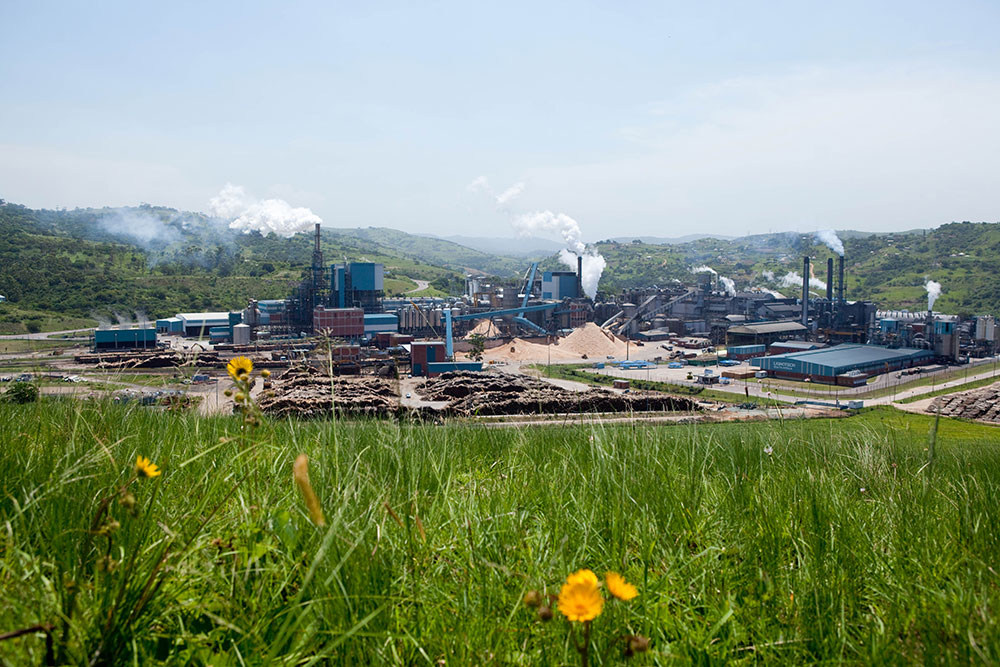
The catchment also supports up to two million people and provides freshwater to Sappi’s Saiccor Mill, while supporting livelihoods across agriculture, forestry and municipal systems.
This is exactly where environmental stewardship becomes business stewardship too.
A healthy river system supports biodiversity, but it also supports production, jobs, communities and long-term water security. That is why catchment restoration cannot be treated as a side project. It is central to the resilience of rural economies.
The results reported by FSA are tangible. Since 2021, the partnership has cleared 188 hectares of invasive alien vegetation, replenishing an estimated 205 megalitres of water. It has restored 2,323 hectares of rangeland, created 83 jobs through restoration activities and supported citizen scientists who monitor water quality and guide catchment management.
Those figures give the blog practical authority.
They also show how biodiversity work can deliver social and economic benefits. Clearing alien invasive plants supports water flow. Restored rangeland supports grazing and biodiversity. Citizen science builds local capacity. Jobs create community value. Water stewardship becomes more than an environmental slogan.
It becomes a working model.
The Role of Certification and Independent Verification
The FSA press release also makes an important point about certification. It notes that environmental stewardship across the vast majority of the forestry sector is independently verified through internationally recognised certification systems.
This is an important detail because readers are increasingly alert to greenwashing. A biodiversity claim is stronger when it is linked to monitoring, standards, auditing and verification.
For the forestry sector, certification helps demonstrate that land management is not based only on internal promises. It requires systems, records, evidence and continuous improvement. While certification is not the only measure of good stewardship, it adds credibility to environmental claims.
This is especially important for the agricultural and forestry sectors because both operate in landscapes where environmental outcomes are visible over long periods. Soil health, water quality, invasive plant control, species recovery and habitat condition cannot be improved through short campaigns. They require disciplined, repeated management.
That is why the word stewardship fits this story so well. It suggests responsibility over time. It is not a once-off action. It is a long-term way of managing land.
Why Grasslands and Wetlands Deserve More Attention
Forests often receive the most public attention in biodiversity stories. Trees are visible. They are emotionally powerful. They photograph well. But in South Africa, grasslands and wetlands are just as important.
The FSA press release highlights more than 170,000 hectares of grasslands and associated wetlands within forestry landholdings. This is significant because grasslands are among South Africa’s most valuable and often underappreciated ecosystems.
Healthy grasslands support birds, insects, wildflowers, reptiles, small mammals, soil organisms and grazing systems. They also play a role in water infiltration, carbon storage and erosion control. Wetlands, meanwhile, are natural water filters and regulators. They help slow floods, store water, trap sediment and support aquatic and semi-aquatic species.
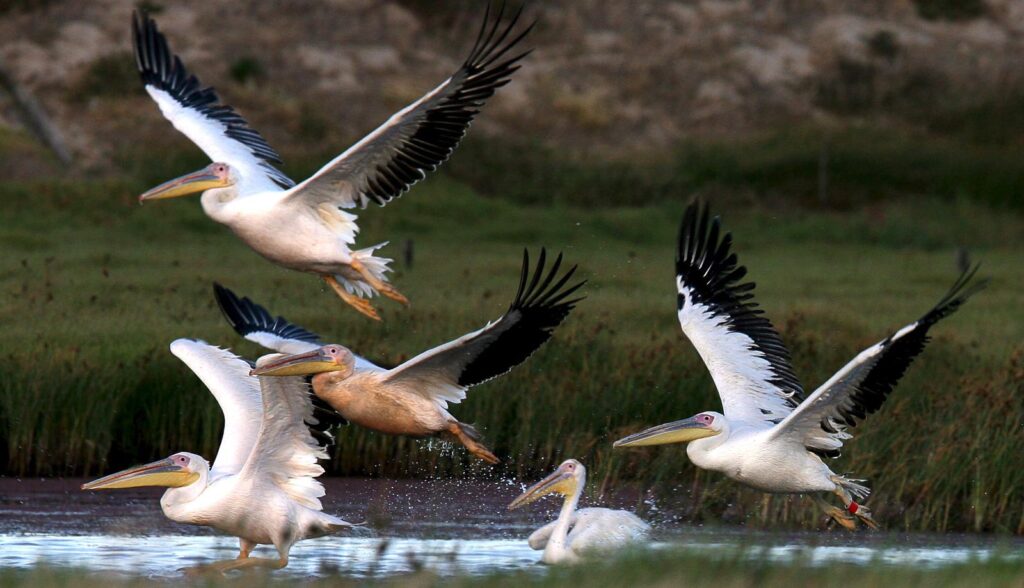
When grasslands and wetlands are fragmented or poorly managed, their ecological value declines. When they are protected and connected, they become part of a wider biodiversity network.
This is where forestry’s patchwork landscape can be valuable. Natural grasslands and wetlands between planted compartments can help maintain habitat continuity. They can also provide buffers around watercourses and sensitive areas.
But the key word remains management.
Leaving land unplanted is not enough. Stewardship requires active care. Invasive alien plants must be controlled. Fire must be managed according to ecological need. Erosion must be prevented. Wetlands must be protected from disturbance. River systems must be monitored. Indigenous forest margins must be safeguarded.
That is the difference between unused land and conservation land.
Fynbos and Indigenous Forests: Small Areas, High Value
The FSA press release also highlights approximately 61,000 hectares of indigenous forests and 10,000 hectares of fynbos within forestry landholdings.
These figures matter because both ecosystems carry high conservation value.
Indigenous forests in South Africa are limited in extent and historically came under pressure from timber harvesting and land use. FSA’s environmental stewardship page notes that timber plantations were originally established to provide an alternative timber supply, helping protect South Africa’s few natural forests from further deforestation. It adds that natural forests in forestry care are monitored and managed, with alien invasive plants controlled and forest margins protected from fire, pests and disease.
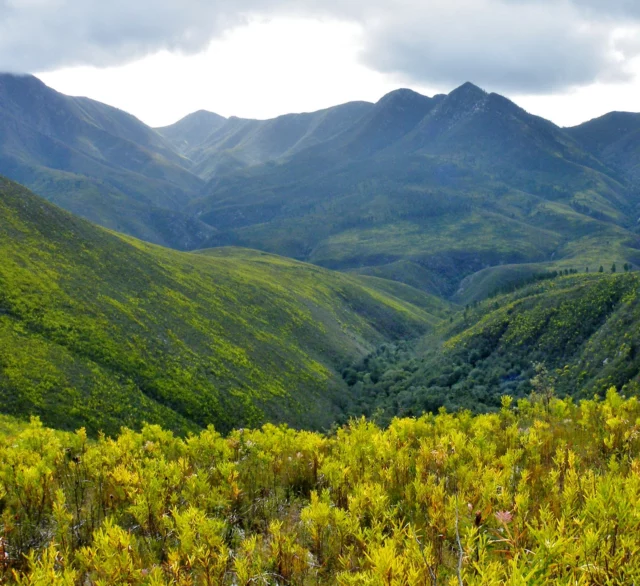
Fynbos, meanwhile, is one of South Africa’s most globally recognised biodiversity treasures. It is species-rich, fire-adapted and often highly localised. Where fynbos occurs inside forestry landholdings, its conservation value can be substantial, especially when linked to stream systems, grasslands and ecological corridors.
This again supports the landscape-scale argument.
Biodiversity is not protected only by fencing off one type of ecosystem. It is protected by maintaining connections between systems. Fynbos links to streams. Streams link to wetlands. Wetlands link to rivers. Rivers support communities and production. Indigenous forests provide habitat and genetic value. Grasslands support species and water cycles.
The whole landscape matters.
Productive Land Can Carry Conservation Responsibility
One of the most important messages in this story is that production and conservation do not have to be positioned as opposites.
South Africa needs productive land. It needs timber, paper, packaging, poles, construction materials, jobs and rural economic activity. It also needs healthy ecosystems, water security, biodiversity, soil protection and climate resilience.
The question is not whether land should be productive or ecological. The better question is how land can be managed so that production does not destroy the ecological systems it depends on.
Forestry’s answer, as presented by FSA, is landscape-scale stewardship.
This does not mean every forestry landholding is perfect. It does not mean forestry has no environmental challenges. It means the sector has examples of a working model where planted areas, natural areas, water systems and conservation partnerships exist in the same landscape.
That model has wider relevance.
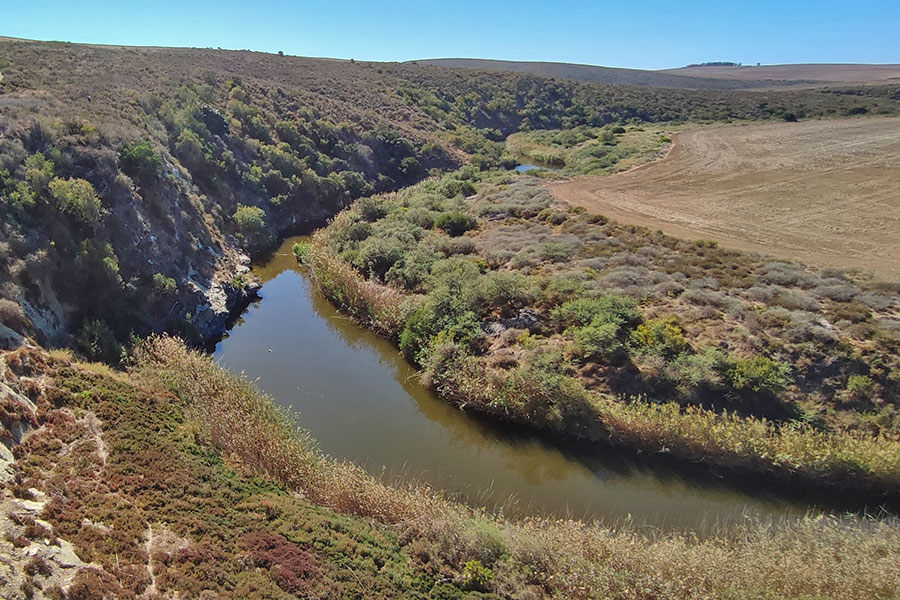
Agriculture, livestock, horticulture, mining rehabilitation, renewable energy developments and rural municipalities all face similar questions. How much land should remain natural? How should watercourses be protected? How should invasive alien plants be managed? How can production pay for ecological maintenance? How can landowners cooperate across boundaries?
The forestry sector’s biodiversity story gives one practical reference point.
It shows that stewardship can be built into land use.
Collaboration Is the Future of Biodiversity Conservation
The FSA press release is clear that the future of biodiversity conservation depends on collaboration between landowners, industries, conservation organisations and communities.
That point deserves emphasis.
Biodiversity does not follow farm boundaries, plantation boundaries, municipal boundaries or company boundaries. Rivers cross properties. Birds move across districts. Insects pollinate across landscapes. Invasive plants spread wherever they are not controlled. Fire risk does not stop at a fence. Neither does erosion.
This means biodiversity stewardship must be shared.
The Sappi and WWF South Africa water partnership shows how collaboration can link ecological restoration, community benefit and business resilience. The Rare, Threatened and Endangered Species Programme shows how conservation can involve researchers, national parks, traditional healers and local communities. The MTO example shows how forestry landholdings can protect sensitive habitat for rare species.
Together, these examples support one clear message: conservation success is no longer only about isolated reserves. It is about connected landscapes.
That is also where the International Day for Biological Diversity theme becomes useful for the article’s closing argument. “Acting locally for global impact” is not vague when applied to forestry. It means local alien clearing, local wetland protection, local species monitoring, local community partnerships and local land stewardship can all contribute to broader biodiversity goals.
Why This Story Belongs on Nufarmer Africa
For Nufarmer Africa, this is more than a forestry-sector announcement. It is a land-use story, a rural economy story, a water story and a biodiversity story.
Farmers and landowners across South Africa understand the pressure of balancing productivity with environmental responsibility. They also understand that degraded land is expensive land. Poor water systems, erosion, invasive plants and biodiversity loss eventually affect production.
That is why the forestry sector’s 300,000-hectare biodiversity story should matter beyond forestry.
It offers an example of how land-based industries can communicate conservation success without ignoring production. It shows how environmental stewardship can be linked to water, jobs, rural communities, cultural practices and long-term resource security.
It also gives Nufarmer Africa a strong anchor blog for social media traffic. The article is topical because of International Day for Biological Diversity. It is local because it focuses on South African forestry landscapes. It is positive because it highlights measurable conservation success. It is credible because it rests on FSA’s press release and supporting examples from Sappi, WWF South Africa, MTO Forestry and wider forestry stewardship material.
Most importantly, it is useful.
It gives readers a reason to think differently about forestry landholdings. It invites other landowners to ask what biodiversity assets exist on their own land. It shows that conservation does not always begin with grand national programmes. Sometimes it begins with a wetland left intact, an invasive plant cleared, a stream protected, a medicinal tree propagated or a grassland burned at the right time for the right reason.
That is local action.
And when repeated across 300,000 hectares, it becomes national impact.
The Bigger Message: Biodiversity Needs Working Landscapes
South Africa’s biodiversity future will not be secured by protected areas alone. It will depend on what happens across farms, forests, communal lands, catchments, private landholdings and production landscapes.
That is why the FSA press release deserves attention.
It highlights a sector that is quietly preserving more than 300,000 hectares of natural ecosystems inside working forestry landholdings. It shows that grasslands, wetlands, indigenous forests, fynbos and river systems can form part of a wider stewardship model. It also shows that conservation can be funded, managed and supported through productive landscapes when landowners take long-term responsibility.
The lesson is not that forestry has solved biodiversity loss. No single sector can do that.
The lesson is that forestry has something valuable to show.
In a time of increasing land pressure, climate uncertainty and ecosystem degradation, South Africa needs more connected landscapes, more practical partnerships and more landowners willing to manage natural ecosystems as assets rather than obstacles.
That is the quiet power of this story.
More than 300,000 hectares and counting.
Not locked away from production, but held within it.
Not conservation as theory, but stewardship as practice.
FAQ
What is forestry biodiversity in South Africa?
Forestry biodiversity in South Africa refers to the variety of ecosystems, species and natural habitats found within forestry landscapes. These include grasslands, wetlands, indigenous forests, fynbos and river systems that exist alongside planted timber compartments.
Why is Forestry South Africa highlighting biodiversity on 22 May?
Forestry South Africa is highlighting biodiversity on 22 May because it is the International Day for Biological Diversity. The 2026 theme, “Acting locally for global impact,” aligns strongly with the forestry sector’s stewardship work across natural ecosystems.
How much natural land is preserved within South African forestry landholdings?
According to the FSA press release, more than 300,000 hectares of natural ecosystems are preserved within forestry landholdings. These areas include grasslands, wetlands, indigenous forests, fynbos and riverine ecosystems.
Why is stewardship important in forestry?
Stewardship is important because forestry landscapes include both planted production areas and natural ecosystems. Responsible stewardship helps protect water, soil, biodiversity, endangered species and ecological corridors while allowing productive forestry to continue.
Are forestry plantations the same as indigenous forests?
No. Forestry plantations are planted for timber, pulp, paper, poles and related products. Indigenous forests are natural ecosystems. In South Africa, forestry landholdings can include both planted compartments and protected indigenous forest areas.
What role do wetlands play in forestry biodiversity?
Wetlands help filter water, reduce erosion, regulate flows, support wildlife and improve catchment health. In forestry landscapes, wetland stewardship is essential for both biodiversity and long-term water security.
What is the link between forestry and water stewardship?
Forestry landholdings often include rivers, streams and wetlands. Water stewardship focuses on protecting these systems through catchment management, alien invasive plant clearing, erosion control, monitoring and partnerships.
How does the Sappi and WWF South Africa partnership support biodiversity?
The Sappi and WWF South Africa partnership supports biodiversity through catchment restoration in the uMkhomazi area. It includes alien invasive plant clearing, rangeland restoration, job creation and citizen science monitoring.
Why is the Hewitt’s Ghost Frog important?
The Hewitt’s Ghost Frog is a rare and highly threatened species linked to specific stream and wetland habitats. Its protection highlights why ecosystem stewardship matters, because species survival depends on healthy habitat.
What can other landowners learn from forestry biodiversity stewardship?
Other landowners can learn that productive land can also support conservation. By protecting natural areas, managing water systems, controlling invasive plants and working with partners, landowners can strengthen biodiversity and landscape resilience.
Editor’s Note:
The following Forestry South Africa press release provides the full statement and supporting detail behind this biodiversity stewardship story.
“JOHANNESBURG – MAY 20, 2026 – Increasing land pressure, ecosystem degradation, habitat fragmentation and now a changing climate, mean all landowners now have a role to play in safeguarding biodiversity and ecological resilience says Forestry South Africa (FSA).
“Biodiversity stewardship must extend beyond the boundaries of protected areas,” says Dr Ronald Heath, FSA’s Director of Research and Protection. “Conservation has to happen across entire landscapes, where productive land uses and natural ecosystems coexist and support one another.”
As the world marks the International Day for Biological Diversity on 22 May, under the United Nations theme, “Acting locally for global impact”, FSA is highlighting how South Africa’s forestry sector is doing precisely this.
A recent survey revealed that the FSA members collectively preserve more than 300,000 hectares of natural ecosystems within forestry landholdings, over 20% of the total forestry area. This includes upwards of 170,000 hectares of grasslands and associated wetlands, 61,000 hectares of indigenous forests, 10,000 hectares of fynbos, alongside extensive riverine ecosystems.
These natural areas are actively managed, monitored and maintained as part of responsible land stewardship practices. Together, they form ecological corridors and interconnected habitat networks that support species movement, climate resilience and ecosystem functioning across broader landscapes.
Importantly, environmental stewardship across the vast majority of the forestry sector is independently verified through internationally recognised certification systems.
While forestry landscapes provide refuge for many endangered, endemic and rare species, biodiversity preservation extends far beyond protecting individual species alone.
True biodiversity stewardship focuses on preserving functioning ecosystems and the ecological processes that sustain life, notes Heath. Healthy wetlands, grasslands, forests and river systems provide essential ecosystem services including clean water, healthy soils, carbon storage, pollination, erosion control, climate resilience, as well as being home to a multitude of species.
One example can be found within the landholdings of MTO Forestry, where conservation efforts help protect the critically endangered Hewitt’s Ghost Frog, a species found in only a few locations globally. However, the conservation focus is not simply about saving a frog species in isolation. It is about protecting the wetland ecosystem on which the species, and many critical ecosystem services, depend.
At MTO’s Longmore plantation, approximately half the landholding remains unplanted natural habitat, with large portions designated as high conservation value areas. Revenue generated from the planted areas helps fund conservation management activities such as alien invasive plant removal, controlled ecological burning and ongoing environmental maintenance.
Similarly, NCT Forestry continues to preserve and manage natural conservation areas within its plantation landscapes, protecting rare endemic species and sensitive ecosystems as part of its environmental stewardship commitments.
The future of biodiversity conservation depends on landscape-scale stewardship and collaboration between landowners, industries, conservation organisations and communities. Sappi’s Rare, Threatened and Endangered Species Programme is a wonderful example of how partnerships between communities, industry, conservation organisations and other landowners are helping reverse the biodiversity crisis, bringing endangered species back from the brink.
Another example is the water steward partnership between WWF South Africa and Sappi that looks after the uMkhomazi catchment. This catchment forms part of a globally significant Maputaland-Pondoland-Albany biodiversity and wetland hotspot and home to endangered species and one of South Africa’s last large free-flowing rivers.
“South Africa needs connected landscapes where ecological corridors run through multiple land uses and landowners work together toward shared biodiversity goals,” Heath concludes. “The forestry sector has shown that productive landscapes can also sustain living ecosystems, and this model will become increasingly important in securing biodiversity and ecosystem services for future generations.”
ENDS“
(M.O)