Introduction
National Water Week 2026, observed in South Africa from 16 to 20 March 2026, comes at a time when the country’s water debate has become more urgent, more practical, and far more economic than symbolic. Officially, the campaign is designed to encourage public awareness, responsible use, and long-term conservation. In reality, it is also forcing South Africans to ask tougher questions. Is there enough water? Is it safe to drink? Can municipalities keep delivering it? And can agriculture continue producing food under rising pressure from drought, failing infrastructure, pollution, and demand growth? Is water security excellent?
Those questions matter because South Africa is not a country with water to spare. It is one of the driest countries in the world, and while some regions remain relatively well supplied, the national picture is uneven and fragile. Water is available in the country, but not always in the right places, not always in reliable volumes, and not always at the quality needed for households, farming, and industry. That makes water security the central issue of National Water Week in 2026.
For this reason, the search intent behind this topic is not merely educational. People want to discover the real quality and quantity of water available in South Africa for agriculture and for public consumption. They want to understand whether the country is facing a temporary infrastructure problem, a long-term supply problem, a water quality problem, or all three at once. The answer, based on recent evidence, is that South Africa’s challenge is layered. It is a supply issue in some regions, a management issue in many municipalities, a quality issue in too many systems, and a planning issue almost everywhere. That is why water security cannot be discussed only in technical terms. It must be understood as a national economic and social priority.
What National Water Week 2026 Means in South Africa
National Water Week is part of the broader National Water Month programme led by the Department of Water and Sanitation. In 2026, government messaging has focused on conservation, infrastructure maintenance, investment, recurrent droughts, deteriorating water quality, and unequal access to services. In other words, the campaign is not just about using less water while brushing your teeth. It is about whether South Africa can protect and manage its water systems well enough to support public health, economic growth, and food production.
That framing is important because awareness campaigns are often dismissed as symbolic. This one should not be. Water week matters because it creates a national point of focus around water security, and South Africa urgently needs that focus. Ageing infrastructure, pollution, municipal leakage, climate extremes, weak wastewater treatment, and growing demand are all colliding at the same time. If those issues are not addressed together, awareness alone changes nothing.
How Much Water Does South Africa Actually Have?
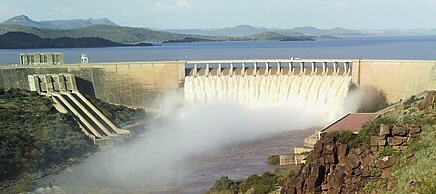
South Africa is a water-scarce country by global standards. Recent research and official commentary continue to reinforce that point. The CSIR has again warned against excessive water use and notes that South Africa remains among the driest countries in the world. The Department of Water and Sanitation has likewise stressed that South Africa’s water resources are under increasing pressure from climate variation, recurrent drought, pollution, and rising demand.
This does not mean South Africa has no water. It means available water must be managed with exceptional care. Nationally, the country is not yet at a point where every area has run dry. But regional imbalances are severe, and local shortages are common. Government has repeatedly indicated that while the broader national water balance may still appear manageable in planning terms, local systems are already facing deficits, interruptions, and quality failures. That is exactly where water security becomes local rather than theoretical.
Another critical point is that raw water availability and usable water availability are not the same thing. Water may exist in rivers, dams, or underground systems, but if treatment works fail, pipes leak, reservoirs are poorly managed, or catchments are degraded, that water cannot reliably support homes, farms, or businesses. South Africa’s challenge is therefore not just how much water exists, but how much can be delivered safely and efficiently. That is a core water security issue.
The Quantity of Water Available for Public Consumption
The latest national figures show progress, but not enough. Statistics South Africa reported that 77.1% of households had access to at least a basic level of drinking water in 2024. That means nearly one in four households still did not have basic access. Provincial differences are also stark. Western Cape and Gauteng performed near universal coverage, while other provinces lagged notably behind.
Urban areas remain much better served than rural ones. Stats SA found that 71.8% of urban residents had access to safely managed drinking water, compared with only 36.7% of rural residents in 2024. This is one of the clearest signs that South Africa’s water story is not evenly shared. Access depends heavily on geography, municipal performance, infrastructure condition, and the resilience of local supply systems. When discussing water security, that rural-urban divide cannot be ignored.
Time spent fetching water is another sign of unequal access. In provinces where households still rely on off-site collection, water access is not only inconvenient but also economically costly. It affects household productivity, safety, dignity, and health. A water system that exists on paper but requires long collection times is still a weak system. This is why South Africa’s public water challenge is not just about presence of infrastructure, but about functional and reliable delivery.
Is South Africa’s Drinking Water Safe?
Water quality is one of the biggest public concerns behind searches on this topic. According to the 2024 General Household Survey, 84.4% of households believed their water was safe to drink, 84.4% believed it was clear, 82.4% said it tasted good, and 85.0% said it had no bad smell. Those figures suggest that many households still have confidence in their water. But they also show that a meaningful minority do not.
That household perception aligns with broader institutional concern. GreenCape’s 2025 Water Market Intelligence Report, which draws on the latest official audits, notes a decline in top-performing drinking water systems. In the 2023 Blue Drop assessment, only 26 of 958 water supply systems achieved Blue Drop status by scoring above 95%. That was down from 44 systems in 2014. The same report notes that 277 systems were classified as critical. That is a major warning sign for water security, because it points to weakening treatment, monitoring, process control, and infrastructure management.
Wastewater performance is equally concerning because polluted return flows undermine raw water quality downstream. GreenCape’s review of municipal wastewater treatment systems shows that 334 of 850 wastewater treatment works, or 39%, were in a critical state. When wastewater plants underperform, rivers suffer, treatment becomes harder, ecosystem health declines, and communities face greater exposure to contamination. In practical terms, South Africa’s water quality problem is not isolated to one part of the cycle. It moves through the entire system. That makes water security a full value-chain issue.
Why South Africa Is Losing So Much Water
One of the most damaging realities in South Africa’s water system is loss before use. The Auditor-General’s 2025 water report found that disclosed water losses in the 2023/24 financial year totalled R14.89 billion, and that 56% of water service authorities reported losses above the norm of 30%. GreenCape reports that national non-revenue water rose from 37% in 2014 to 47% in 2023.
That means a huge amount of treated water is effectively wasted through leaks, bursts, poor metering, illegal use, and management failures. This weakens municipal finances, raises operating costs, increases pressure on already strained supply systems, and reduces the amount of water that actually reaches households and businesses. For a scarce-water country, this is a direct blow to water security.
The causes are well known. Ageing infrastructure, maintenance backlogs, poor planning, delayed projects, weak procurement oversight, and skills shortages all feed into the problem. The Auditor-General reported that more than half of audited water infrastructure projects were delayed, with an average delay of 32 months. That is not just a budgeting problem. It is a service delivery problem that directly affects quantity and reliability of supply.
Water and Agriculture in South Africa
Agriculture remains one of the largest water users in South Africa, which makes farming central to the national conversation. Water is the foundation of irrigation, livestock support, food production, and rural resilience. If the agricultural system loses reliable access to stored and usable water, national food pressure follows. That is why water security in South Africa is inseparable from agricultural performance.
The agricultural angle is especially important during National Water Week because the sector often sits at the intersection of climate risk and infrastructure weakness. Farms need dependable water storage, efficient irrigation, and healthy upstream catchments. With climate variability increasing, agriculture cannot rely on historical patterns alone. Water management has to become more precise, more measured, and more infrastructure-focused.
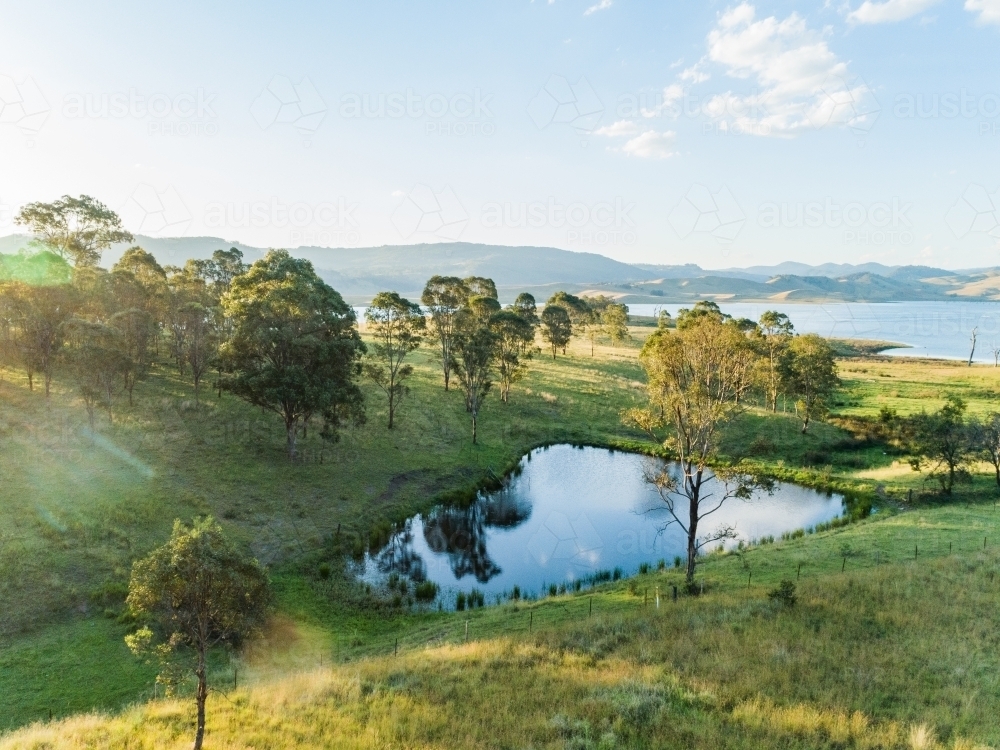
Earth dams remain vital agricultural storage solutions, but seepage and weak retention can gradually erode farm resilience. That is a practical and important observation. In South Africa, many agricultural gains will come not from discovering entirely new water sources, but from protecting the water already stored, reducing avoidable loss, and improving the performance of existing systems. That is a highly practical form of water security for the farming sector.
Dam Storage, Earth Dams, and Farm-Level Water Stewardship
On farms, water loss often happens quietly. A dam that seeps, a canal that leaks, a pump that is not operating efficiently, or an irrigation system that applies more water than crops need can create major cumulative losses across a season. In a water-scarce country, those losses are not minor technical issues. They directly affect yield planning, crop consistency, and financial resilience.
This is why water stewardship in agriculture needs to be practical. It means maintaining storage dams, investing in monitoring, improving application efficiency, and using every available litre more strategically. In a country where expansion in irrigation is increasingly expected to come from efficiency gains rather than simply new water allocations, the conversation around water security in agriculture is shifting from volume seeking to performance optimisation.
Efficient storage is not just a farm-level technical matter. It contributes to broader national resilience by reducing pressure on fresh abstraction, supporting productivity during dry periods, and strengthening local supply reliability.
The Role of Water Infrastructure in Public and Agricultural Supply
Equipment manufacturers, pump specialists, engineers, municipalities, and water boards all have a significant role to play in improving water delivery and treatment. That position aligns strongly with current evidence. South Africa’s challenge is not only about source water. It is about moving, treating, storing, monitoring, and managing that water correctly.
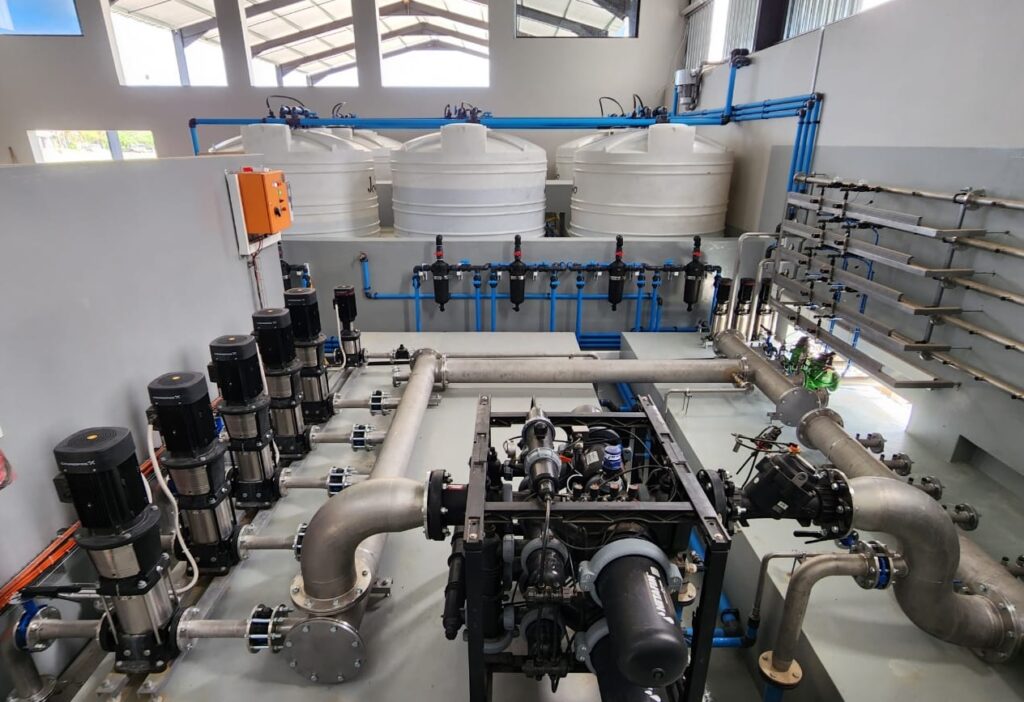
Infrastructure reliability matters from the river to the tap and from the dam to the field. Pump stations, treatment works, reticulation systems, and monitoring equipment all need to function consistently. When they do not, households experience interruptions and farmers face supply uncertainty. When they are maintained well, the same system can deliver far better outcomes without requiring entirely new resource development. That is one of the most overlooked dimensions of water security in South Africa.
South Africa does not only need more infrastructure funding. It needs better infrastructure intelligence and stronger technical capability inside the systems that already exist.
Why Catchments and Wetlands Matter More Than Ever
A lot of South Africa’s water discussion happens downstream, after problems have already become visible. But recent research continues to show that the most strategic interventions often begin upstream. WWF South Africa has highlighted the importance of strategic water source areas and warned that the country’s water crisis is not just a downstream issue. A relatively small share of land generates a disproportionately large share of river flow. If these landscapes are degraded, invaded by alien plants, polluted, or mismanaged, the whole system weakens.
Wetlands also play a major role in regulating flow, storing water, supporting biodiversity, and buffering drought and flood extremes. Protecting these systems is not a luxury. It is a practical part of national water security. If South Africa treats ecological infrastructure as optional, the cost of artificial infrastructure and downstream treatment only grows.
What South Africa Must Do Next
The evidence from the last two years points to a clear conclusion. South Africa still has water resources, but it does not yet have enough consistency, efficiency, quality protection, or infrastructure reliability to support strong national confidence. That means improvement must happen in several places at once.
Municipalities need to reduce leaks, improve maintenance, strengthen treatment works, and prioritise operational competence. Agriculture needs to improve storage efficiency, reduce losses, modernise irrigation where feasible, and treat water stewardship as a strategic production issue. Government needs to accelerate infrastructure delivery and improve accountability across the full value chain. Catchments, wetlands, and source areas must be protected more aggressively. Public awareness also needs to mature from general conservation messaging into a more informed national conversation about quality, quantity, and system resilience. That is how water security becomes measurable rather than rhetorical.
Conclusion
National Water Week 2026 should not be seen as just another awareness campaign on the calendar. It is a timely reminder that South Africa’s water future depends on what happens now in treatment plants, municipal budgets, farm dams, wetlands, catchments, and engineering decisions. The country’s challenge is not simply whether water exists. It is whether enough safe, usable, well-managed water can reach homes, farms, and businesses consistently. That is the real test of water security. For the public, the key issue is safe and reliable supply. For agriculture, it is dependable storage and efficient use. For government and industry, it is performance, maintenance, and long-term planning. South Africa can improve its position, but only if water is treated as a national asset that must be protected at every stage of the chain. During National Water Week 2026, that is the message worth amplifying: conservation matters, yes, but real resilience will come from better systems, better leadership, and a much sharper national focus on water security.
10 FAQs
1. What is National Water Week in South Africa?
National Water Week is an annual awareness campaign led by the Department of Water and Sanitation to encourage responsible water use, conservation, and public education around South Africa’s water resources. In 2026, it runs from 16 to 20 March.
2. Is South Africa a water-scarce country?
Yes. South Africa is widely regarded as a water-scarce country and is among the driest in the world, which makes careful management of water supply and infrastructure essential.
3. How many South African households have access to basic drinking water?
According to Statistics South Africa, 77.1% of households had access to at least a basic level of drinking water in 2024.
4. Is South Africa’s drinking water safe?
Many households believe their water is safe, but national audits show that too many municipal systems are underperforming, and water quality remains a concern in several areas.
5. Why is South Africa losing so much water?
Major causes include leaks, ageing infrastructure, poor maintenance, weak metering, illegal use, and delayed infrastructure upgrades.
6. How much water is lost in South Africa’s municipal systems?
The Auditor-General reported disclosed water losses of R14.89 billion in the 2023/24 financial year, while non-revenue water nationally reached 47% in 2023 according to GreenCape.
7. Why is water important for South African agriculture?
Agriculture relies heavily on stored and managed water for irrigation, livestock, and food production. Without dependable water access, crop and food system resilience are threatened.
8. What are the biggest threats to South Africa’s water supply?
The main threats include drought, climate variability, infrastructure decay, pollution, wastewater failure, catchment degradation, and rising demand.
9. Why do wetlands and catchments matter for water supply?
They help store, filter, regulate, and release water naturally. When these ecosystems are damaged, downstream water quality and availability are both weakened.
10. How can South Africa improve water security?
It can improve water security through better maintenance, reduced leaks, stronger treatment performance, improved agricultural efficiency, catchment protection, and faster delivery of infrastructure projects.
(M.O)